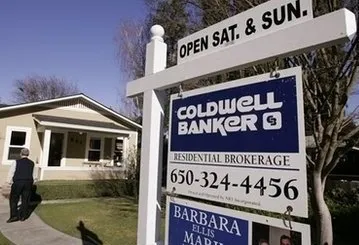
It was announced today that Obama will soon reveal a new economic strategy that would lower mortgage costs. But, we also need more realistic qualifying standards that reflect today's financial realities; otherwise, if few can get a new favorable mortgage loan, what is the benefit of having lower rates?
The general consensus in the mortgage industry right now is that more than 50% of refinance applications are being declined and some banks are financing less than 25%. Many of these applicants are not being declined due to poor credit, lack of income or payment defaults, they are being declined simply because the current credit standards are too tight during this credit crisis. Even applicants that are accepted are not being approved for the low average rates we are hearing about. Various points are being added to loans along with "penalty" interest rate increases. We have swung from the too loose sub-prime days to the credit crunch we are experiencing today and we must find an acceptable median.
Most homeowners that responsibly put 20% down on a home purchased anytime in the last 7 years (or longer in some areas) have seen their 20% equity vanish. Many people also have experienced pay cuts and small business owner revenue has declined, which has (hopefully temporarily) raised their income to debt ratios above 50%. Many banks are now requiring income to debt ratios of 45% or less and 20% equity so this new group of homeowners are getting squeezed out of the refinance boom. Money is tight, but these applicants are still making their mortgage payments. Without some rate relief, however, they might end up being forced into the next wave of foreclosures.
Acceptable equity requirements for refinancing should be 0-5% of the current home appraisal value (many bank appraisers are already low balling house values) and income to debt ratios should be raised to 55 or 60% (lower rates will also help lower this ratio). These are reasonable terms for today's responsible, working class that are being pulled down by our current economic slump. We need to help the working class weather this storm so that, when we get through this, they can rebuild their equity and enjoy reasonable housing costs.
Millions of households were sold ARMs that will begin resetting in 2009 to 2012. At current low interest rate levels, most of the resets in 2009 should be fine since their rates will remain similar to what they are paying now. But why allow this group to be a ticking time bomb sometime down the road when rates increase? We can help them into affordable lower rates now.
Experts are expecting another wave of mortgage defaults on Alt-A and Option ARMs mortgages which will dwarf the Subprime mortgage crisis. Plus, many small businesses which employ 1-10 employees (which represent millions of jobs total) will be caught in this mess. It is estimated by the National Association for the Self-Employed (NASE) that 3,709,800 small business owners hold Alt-A and ARMs that are coming due between 2009 and 2012. If these businesses -- many of which are owner home-based -- are overburdened with mortgage payment debt, many could fail. These business failures will accelerate job losses and contribute to the overall economic problems we are facing today.
By stipulating a 30 year mortgage lending rate of around 4.5% or less, the government can help homeowners refinance their current ARMs (and those with higher rate current 30 year fixed) into lower monthly payments. This does not mean we have to go back to weakened sub-prime loan criteria; but that current homeowners are given a real chance to stay in their homes with lower, stable interest rate payments.
I can already hear the groans of some readers, "why should they get bailed out, they took the risk of getting the loan" or "it's risky to loan money to someone who has little equity and might lose their job, let the free market sort it out". But if we continue to do nothing to help our neighbors during these difficult times, then this severe recession will most definitely turn into a full blow depression. It's time we stemmed this free fall from the bottom up. Instead of using tactics that support a "free market for the working class" and "socialism for the rich and corporations," it's time to accept today's reality.
The fact is the government is going to give out trillions of dollars to try and stem this economic collapse. We can continue bailing out the banks and Wall Street or, we can take a more reasonable approach by helping out the middle class in a real tangible way. I vote my tax dollars to help my neighbor into a stable, low rate 30 year fixed loan. And, if some of them still default, so be it. But for most, this will help stabilize their financial situation which will help us all by stabilizing the economy.
Lowering mortgage rates and easing qualifying standards for both new home buying and for refinances will help stimulate the economy and buoy the middle class. This directly puts money in the pocket of the middle class consumer instead of the helping fuel lavish banker lifestyles. We should be focusing on getting tangible relief to responsible homeowners caught in the housing meltdown and economic crisis by helping them get into stable 30 year fixed mortgages at current low rates. Any housing legislation needs to address the availability as well as the cost of loaned money.
Want to reply to a comment? Hint: Click "Reply" at the bottom of the comment; after being approved your comment will appear directly underneath the comment you replied to
Hi Mike,
I like your article and your ideas and it makes very good sense to me, being a homeowner in this situation and being a real estate broker there are many decent people unable to re-fi out of bad loans into good loans because their equity has dropped below 20%. There is no mortgage product out there to help these people and their homes could be on the foreclosure pile if help does not come in some form very quickly. Working in this real estate market is depressing and every foreclosure property on the market carries with it a sad story. Some people abused the system but most did not, they are victims of a corrupt lending system and economy spiralling out of control. Banks should be forced to negotiate with homeowners, ARMS should by law not be able to adjust and realistic mortgage products need to be made available for this current real estate market because if we don't stop these foreclosures the market will never stabalize. I would also like to add that the credit scoring system needs to protect consumers not just banks. This year could be much worse than last year if the government doesn't step in and do something urgently. It was great to read some common sense amongst all of the insanity out there, thanks again.
See Mike Garibaldi-Frick's Profile
Hi Suzeeq-
Thank you for your comment. Yes, I completely agree, we need to take reasonable measures now, or risk a much worse economic collapse later this year or next. Some people (in government and the general populace) do not understand the fact that this crisis has spread to responsible home owners and small businesses and that if we don't do something NOW the other huge shoe (more like a boot) will drop.
TARP was sold to the American public as a way to loosen bank credit for both businesses and in the mortgage market; but instead banks have swallowed up the money for large bonuses, pay down debt, etc. as they constricted credit (and mortgage standards) beyond the equitable point.
It's ironic, but we don't need looser credit in good times, we need it in bad. Some people are, naturally, resistant to having looser credit standards right now since having too loose of standards is what contributed to the mess we are in now. But, without getting "too loose", we have to find a happy medium. Right now the pendulum has swung too far to the right (IE: too constricted) and will cause millions of future defaults.
a few facts (opinions if you will !!).
1) Not everyone deserves to be a home owner. Not everyone should be a homeowner. Its NOT a right.
2) Way too many people are in homes who should have been renters and should go back to renting.
3) People citing job losses as one worthy of help, how about medical issue? how about divorce. I read that divorce is one of the leading cause leading to default (loss of income due to divorce)
So now it becomes bank's headache to accomodate every personal problem!! does that seem feasible to you? cmon !!
4) How are you going to make someone stay in a home if their loan is worth more than home. just force banks to reduce balances.
I would love to have that for my stock portfolio. geez!!
There are people now who were good borrowers, who didn't need ARM loans or need to lie about their income. They've made all their payments on time, but they're in danger of losing their homes because of job losses. It's one thing to punish people who abused the system, but how bout the people who played by the rules? Don't they deserve some special consideration?
I agree with you with one stipulation:
These favorable terms should only be used to refinance existing loans, and only if the new loan balance does not exceed existing principle plus refinancing costs.
If we let new home buyers use these rules, or let people refinance and include $30,000 for vacations/cars/"improvements"/credit card debt, we are just asking for more trouble.
Saving the folks in the homes and stabalizing those people, sure.
Propping up a market that still overvalues homes by about 20% and delaying the pain of the needed market correction, nope!
I think that the "down payment" is for the most part just a myth ... just an arbitrary hurdle that you are supposed to cross. And the significant thing about the requirement is: that you CAN'T cross it (or choose not to do so). Ergo, you "must" pay a higher interest rate.
If you want to buy a $140,000 house, and you've got $20,000 in liquid cash ... why would you want to put "$20,000 in liquid cash" on the line? Wouldn't it be smarter to finance the whole amount -- the difference in the monthly payment is actually very slight -- and to keep the cash in your own pocket so that you do not become "land poor" and find yourself cash-strapped from time to time? "Nothing beats having a reservoir when you need to take a drink of water."
Nevertheless: the "debt / equity ratio" IS an important litmus-test: you should not be allowed to borrow too much. Either "too much more than the asset being pledged is actually worth," or "more than you can reasonably repay."
When money was "too easy," what happened to house prices? Of course! Were the houses really better-built? A home inspector will quickly tell you in many cases, "no." You had more money to spend, so the price went up. Was it pegged to the actual value of the asset, "minus the euphoria?" Not anymore.
The down payment is what keeps people from dropping the keys off at the bank and walking away.
This is why if your equity is less than 10% of the home value, you have to pay for default insurance, which can cost as much as 1% of loan value.
The flip side is that if you put 10% down, it lowers your interest rate by 1%, which can be one of the best investments you will ever make.
When I was in high school, my mother sold real estate.. At that time, you needed 20% as a down payment and you could afford a house based on 3 times your earnings... .. A combined income of $40,000 could afford a $120,00 home, IF you had the $24,000 as a down payment..... Let's fast forward 25 years - suddenly you could afford a house based on 4 times your earnings (and now you only needed a 10% down payment) ... So, if your combined income was still $40,000 - you suddenly could afford a $160,000 home, and good news, you only had to have an $8,000 down payment.....it was MAGIC.... . fast forward to a few more years -- suddenly, you could get a mortgage with 5% down or better yet - NOTHING down, and the calculations determining what you could afford weren't even used... and we wonder what went wrong.....Remember, the buyer still makes $40,000 a year, but JOY OF JOY, he or she could now buy a $250,000 house with nothing done ---- MAGIC MAGIC MAGIC
Get mortgage rates low, as low as possible, but go back to some standards.... if someone makes $40,000, you can not, nor have your ever, nor will you ever be able to afford a house costing more than $120,000 -- forget about the 4th bedroom, or the walk-in closet or the hearth room ..... Reality needs to be re-introduced into America --
Today, NO ONE wants their parents FIRST house,,,,, they
We got into this mess in part because the government treats housing as a special class. Lots of tax benefits such as interest deductions, gain roll overs etc. that artificially increase the "value" of the house.
If you invest capital in building a house you put a few people to work for a few months and then it just is there....it doesn't employ anyone the next year.
If you invest in a machine tool and provide it to a worker, he becomes more productive not only that year but every year after...so he can be paid more.
Unfortunately we have built a lot of housing over the last thirty years and not a lot of productive capacity so we have places to live (that are valued at more than they are worth) and we have fewer good paying jobs.
Doing more of the same isn't going to get us out of this.
You're wasting your breath when you write articles like this. You will always run into "I was responsible, bla, bla, bla." Homes have been unaffordable for most people for years, even those with good credit. That good credit in a household depends more often on two incomes with very little room for disaster. It's not one income and the other for a rainy day. Any one of these people complaining here could find themselves on the other side of disaster for any number of reasons -- job loss, sickness, death, etc., crippling medical costs. You can't talk to me-oriented, selfish people who care nothing about their neighbors but their little patch of perfect-lawn suburbia. But don't worry, if you don't want to help your neighbors now, we will be happy, very happy, to serve you in the local food pantry or give you comfort when you're down when it's your turn to lose everything as we slide into the second Great Depression.
And no, I'm not a subprimer and I don't own the home I live in, but I have been in my home paying off the owner's first mortgage faithfully for over 20 years, dreaming of buying this place, but with costs zooming faster than my income I couldn't get a down payment together. The good news is that home prices are going to keep falling for a long time to come, so my day may yet come.
See Mike Garibaldi-Frick's Profile
Yes, thank you for your comment Samalabear. It can be frustrating trying to warn people that the situation can only get worse FOR ALL OF US unless we do something now to help stem this downward spiral.
This has gone far beyond the greedy lending decisions of the banking / investment industry: pushing sub-prime loans on those who obviously could not afford them (and, yes, responsibility for those that took those loans). This is now threatening to bring down an entirely new class of homeowner (which I detail in my blog) which will tip our already battered economy right into the Great Depression II. So, of course we can pretend it's the "other guys problem" and clean up the mess again on the back-end again, or we can do something very reasonable about it right now.
Luckily, the Obama administration and many leading economists understand this and they are tying to loosen the credit markets and lower interest rates with their new policies.
Without jobs it won't matter WHAT you do with these bad mortgages, the people won't be able to afford them.
Gee, lets fix a bad mortgage problem with, wait for it..., more bad mortgages?
HORRIBLE HORRIBLE idea !!
Nobody should be given a new loan if they dont have 20% down. Make that the LAW !! if govt. is going to allow judges to rewrite mortgage document in the future (not done yet but its in the works), doesnt it make common sense to make it a law that no one without 20% downpayment in cash be allowed to qualify for a loan.
You cannot refinance someone who is underwater. there must be equity in the home. Rememmber, if you default on a refinanced home, you cant hide behind "non recourse" clause in the mortgage agreement. i hope people know that fact.
See Mike Garibaldi-Frick's Profile
I knew I would be hearing from many readers who would feel that we should just let this new wave of foreclosures happen without doing anything. It's an understandable knee-jerk reaction: we should now tighten credit because loose credit is what led us to this crisis. But, now is actually the time (counter intuitively) to loosen credit (and not to the degree it was before) so that a large group of responsible home owners will be able to stay in their homes without defaulting.
And, AGAIN I am differentiating between the loans that have already defaulted (mostly sub-prime loans to people who put no money down and would never have the income to cover their mortgage payments) that got us into this mess and those who have been caught in the downdraft and will be part of this impending second wave of foreclosures (those who DID put 20% down, have enough income to cover their mortgages, great credit, etc.) that could very likely send ALL OF US into the next Great Depression.
So, if you'd like to continue the waves of defaults my suggestions do not make sense. If you have an alternate idea about how to keep these Alt-A loans from falling into default, I'd love to hear them.
i think there is nothing wrong with the banks trying to work with the homeowner to make sure they dont default. i am ok with the govt. telling the banks to work on that agenda too.
What i DO NOT want to happen is:
1) reduce the principal on the home. very bad precedent. Unless the congress passes a law saying that if the principal is reduced on an outstanding loan (because the owner is underwater), the owner should NEVER be able to sell the house and keep the capital gains. Meaning, if the banks reduce principal by say 100K, if the house is sold, the banks get back 100K of the profits first and if any profits is left, the homeowner can take it.
I bought a home to stay in there. what do i care if the property value comes down. Homes are for living, not as a means of investment.
2) if the banks are asked/forced to reduce interest rates (convert teaser to 30 year fixed), let it not be something ridiculously low like 4%. meaning, smart borrowers who borrowed 30 year at say 5.5% fixed shouldnt be made to feel stupid about their decisions, if we now allow the morons who borrowed at 2.5% teaser rates to be converted to 2.5% fixed.
Btw, 6% or above sounds a reasonable interest rates to convert teaser to 30 year fixed. Not prohibitively expensive, not ridiculously low !!
It doesn't make sense for trouble financial institutions to take on more risky loans. Some more stable financial entities, however, have been loosening lending standards to some degree already (on Bloomberg just this morning). Also, another report that came out recently revealed that the majority of borrowers given more favorable mortgage terms by their lenders have become delinquent again within less than 12 months, so this isn't an end all either.
See Mike Garibaldi-Frick's Profile
And, that's the crux of it. What should be considered a "risky loan" now? My suggestion is that this next wave of ARMS is less risky since most have income, have put down money on their homes (many 20%) so they are less likely to let their houses go and will want to hold on until the market recovers and they gain their equity back. Plus, many of these homes house small businesses so there is an even greater stake in making the payments.
But, again, if any reader simply wants to see this next wave of defaults and feel the system should just collapse and we should do nothing, then my suggestions would fall on deaf ears.
I'd like to hear from readers with other ideas about how to stem this economic collapse. Especially if they feel that we should continue letting more people default on their homes during the housing downturn.
we think that this is an excellent, on the spine of the problem response that must be part of a solution to this debacle.
Wow, these recommendations are like suggesting that the best way to extinguish a fire is to douse it with gasoline. It is these exact lax lending standards that put us in this mess. Why should anyone, private investors or taxpayers be forced to take bad risk? The private investors have walked away, the American public should demand that its leaders do likewise. Take the pain, and move on. Write down all banks' bad debts, recapitalize them, repeal the bankruptcy changes of the past couple of years and go from there.
See Mike Garibaldi-Frick's Profile
Oh yes, we certainly can let the entire system collapse, wipe out millions of people's life savings, etc. We can send the middle-class in a downward spiral that they will not recover from for years. It's not as simple as just "taking the pain". Quite a few people in this country still have no idea about how bad it can really get. This is not a simple matter of people defaulting on sub-prime mortgages any longer.
If you don't own a home, still have a good paying job and have not bought a home during the past 10 years, it's easy to say from the sidelines, "take the pain." But, what some people do not realize is that we are really on the verge of a worldwide economic collapse. That is why governments are taking drastic measures. Your suggestion puts the entire burden of the financial mess created mostly by large banks on Wallstreet on the little guy.
My suggestions do not put us even close to how lax the lending standards were during the height of the subprime boom. Thank goodness government officials are now starting to propose the same solutions I am. There might be hope yet.
Why not push for the existing loans to be frozen at the low teaser rate when these loans were written for the ARM's, if the individuals could afford the homes at that rate then why not leave it there instead of bailing anyone out, the banks took the risk at the low rate knowing they would be even riskier at the higher rate.
If the homeowners cannot afford the homes at that rate then they never should have bought the home in the first place.
I have played by the rules my whole life and if we as a country bailout the people who got themselves into financial distress because of their own irresponsibility then I want my home paid for too, it's only fair! Why should I and others like me be punished for being responsible in our actions while the irresponsible ones are constantly rewarded?
How about helping the leisure class into fixed-rate mortgages so that they can provide affordable, minimal-risk home rentals to the working class? How about eliminating home ownership incentives from the tax code? How about warning people that owning your primary residence is a huge risk, not a shrewd investment? How about we stop developing an economy based on putting all your eggs in the basket where you raise your family?
The ownership society is dead. It turns out that if everybody starts living on equity instead of salary, the asset values cannot hold. It's productive income that ultimately supports asset prices, and we can't sustain the housing market without sustaining the labor market.
What we need is an earnership society -- where we apply the same ambitious zeal to placing Americans in well-paying jobs that we used to apply to placing them in well-leveraged real estate investments.
643T$ derivative debt.
60T$ TOTAL US debt including all home loans, gov and commercial debt.
Home owners are the scapegoat.
Banksters gambling is the problem.
You must be logged in to comment. Log in or connect with