
iPhone app iPad app Android phone app Android tablet app More

Featuring fresh takes and real-time analysis from HuffPost's signature lineup of contributors
Mindy S. Lubber

GET UPDATES FROM Mindy S. Lubber
 

Economists Urge Honest Accounting of Carbon's True Costs

Posted: 07/15/11 07:47 PM ET

With all eyes riveted on the debt talks and efforts to avert an economy-busting government default, little attention is being paid to another debt that is similarly ballooning out of control and threatening to spur its own economic chaos:

The carbon debt.

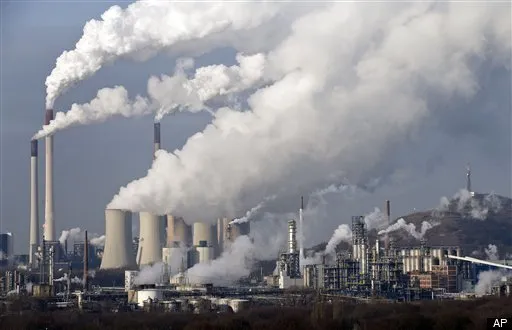
Those pesky greenhouse gas emissions that we spew to power our businesses, drive our cars and heat and cool our homes are accumulating in the atmosphere like an unpaid bill with compounding interest.

Economists now say that the bill for all that unchecked carbon pollution is a lot bigger than previously thought -- and that the longer we wait to pay it, the more it's going to cost us.

A new peer-reviewed report released this week by the Economics and Equity for the Environment (E3) network found that each ton of carbon dioxide emitted in the atmosphere results in as much as $893 in economic damages, far greater than the government's current estimate of $21 per ton.

This figure, known as the "social cost of carbon," is used by federal agencies when weighing the costs and benefits of carbon-reducing regulations, such as appliance efficiency standards or fuel economy standards for cars and trucks. It's an estimate of the monetary damages caused by higher global temperatures, such as extreme weather events, rising sea levels, agricultural losses and wildfires.

The government's substantially lower social cost of carbon, which E3 calls "fundamentally flawed" and a "gross underestimate of the potential impacts of climate change," means that it is much harder to justify more stringent regulations to limit carbon pollution.

E3's new report further concludes that "it's costing us more to do nothing about climate change than it would to adopt mitigation measures."

"Investing in reducing our emissions is clearly the prudent option," says Frank Ackerman, an economist with the Stockholm Environment Institute and a report author. "It's the difference between servicing your car or waiting for it to break down on the highway."

A second report released the same day by the World Resources and Environmental Law institutes similarly agrees that the government's model for estimating a social cost of carbon oversimplifies assumptions about climate change and discounts the costs of future mitigations, resulting in an underestimate of true costs.

But look no further than recent headlines for real-world proof that government economists may be lowballing the costs of climate change.

Earlier this week the New York Times reported that unprecedented drought and heat across 14 states from Florida to Arizona is creating huge agricultural losses (they're expected to exceed $3 billion in Texas alone) and exacerbating long-standing water feuds between southern states.

La Niña may be the underlying cause of the drought in the South, but rising temperatures from global warming make that drought more severe. Moreover, extreme drought and heat are precisely the impacts scientists tell us we can expect to see more of in the U.S. Southwest in a warming world.

Meanwhile, insurers have already declared 2011 a year for the catastrophe record books, with losses from thunderstorms and twisters topping a record-setting $23.6 billion from just January to June.

Peter Hoppe, head of Munich Re's Geo Risks Research, has no qualms about associating these record losses with climate change. Hoppe says that even when the role of rising population in storm paths is removed from the accelerating trend in losses, climate change emerges as a clear factor in the increased losses.

Scientists, and now economists, are telling us that we are long past due for a more honest accounting of the true costs of carbon dioxide, which is being emitted into the atmosphere largely at zero cost. Our accounting mistake is wreaking ecological and economic damage across the U.S. and the world.

"We are literally rewriting the economic and financial history of disasters on a global scale," Robert Hartwig, chief economist and president of the Insurance Information Institute, told a ClimateWire reporter.

Beyond an upward revision of the U.S. government's social cost of carbon -- which will more accurately capture the benefits of emissions-cutting measures like tighter fuel economy standards -- we must eventually move to an economy-wide price on carbon to spur innovation in clean technologies.

Just as we now face painful choices on the bill due from deficit spending, we can expect painful choices the longer we delay reconciling the bill for our carbon debt.


Follow Mindy S. Lubber on Twitter: www.twitter.com/CeresNews

With all eyes riveted on the debt talks and efforts to avert an economy-busting government default, little attention is being paid to another debt that is similarly ballooning out of control and threa...
 
 
  • Comments
  • 25
  • Pending Comments
  • 0
  • View FAQ
Comments are closed for this entry
View All
Favorites
Recency  | 
Popularity
This user has chosen to opt out of the Badges program
01:42 PM on 07/18/2011
Great, once you finish with that, let's run the GHG emissions comparisons between rooftop solar and Chevron Solar that permanently kills healthy, CO2-sequestering arid ecosystems, wastes huge amounts of water and requires SF6-spewing transmission.

In other words, if GHG emission reduction is urgent, we don't have time to waste on Big Energy welfare and further ecosystem destruction - we need to get it right the first time, which means huge efficiency improvements and LOCAL PV within the built environment.
10:28 PM on 07/17/2011
Climate chance is real and has been part of the Earth's evolution from the beginning.

Human beings do NOT control the Earth's climate.
photo
ILoveFiction
That's unbelievable!
06:41 AM on 07/18/2011
Thank you for misinforming us.
photo
ILoveFiction
That's unbelievable!
04:57 PM on 07/19/2011
That's all I need to hear.
photo
HUFFPOST SUPER USER
niumarmion
a temporary being
06:03 PM on 07/17/2011
See Could a "Techno-Fix" be an Answer to Global Warming?
photo
abbienormal
What hump?
10:22 AM on 07/16/2011
Thanks Mindy. I would like to see your writing more often.
06:24 AM on 07/16/2011
So far, nothing record shattering about the drought except that it is occurring now rather than the 1930's. Also 1974 was quite dry, and had lots of tornadoes and thunderstorms. ( also a La Nina year ).

There is no accurate way to put a price on carbon, as it is also a necessary part of the system. No carbon and life wouldn't exist.

Also, the largest source of carbon in the atmosphere comes from China and India, not the U. S..
ubrew12
that crazy uncle from Amarcord
07:11 AM on 07/16/2011
You made three points. On all three:
1. record-shattering drought is being felt all over the world: Sudan, China, US. Last years Amazon drought was supposed to be a once in 500 year event, except another such drought hit the Amazon in 2005.
2. The particular form of carbon they are 'costing' is carbon dioxide in the atmosphere, as should have been obvious from the article. Water is essential for life as well, so, taking it out of context, go scuba diving without oxygen tanks.
3. The largest source of the human-made carbon dioxide in Earth's atmosphere is the United States. But more to the point: so what? Does the cost of carbon dioxide somehow change if the source is China rather than the United States?
09:29 AM on 07/16/2011
Sigh, wrong on all your points.

Especially on number 3, maybe 20 years ago you were right, but not now. China and India are emitting more CO2 than the U.S., and they are increasing their output. What you basically want to do with CO2 emissions is for the United States to commit suicide economically, for no change in world CO2 output. I call that extremely unintelligent.
photo
maslin
At 6 bn km, it's mostly small stuff.
10:39 AM on 07/16/2011
China has passed us in CO2 emissions in the past couple years. We are no longer the most CO2 intensive economy in the world.
HUFFPOST SUPER USER
lbsaltzman
Permaculture and Sustainability
10:24 AM on 07/16/2011
A small point about blaming China and India. Much of their carbon pollution comes from factories that are supplying the U.S. with everything from cheap clothing to 100 inch flat screen TVs. And this is one planet burn fossil fuel anywhere and we all pay the price.
11:39 PM on 07/18/2011
and you solution is we should do what? tell China they can't make TVs?
04:07 AM on 07/16/2011
Just wondering Mindy,how much $$$ does Ceres and you personally spend monthly to offset/pay your
carbon debt? Just a general idea would be interesting to know. Does Ceres or you receive any type
of "wavier" from any onerous environmental regulations that would prove to be too costly or impede productivity?
ubrew12
that crazy uncle from Amarcord
07:13 AM on 07/16/2011
translation: you jump first. yawn.
photo
abbienormal
What hump?
10:24 AM on 07/16/2011
There aren't any carbon regulations, onerous or otherwise, to speak of at this time in the US.
photo
HUFFPOST SUPER USER
mmulkeen
God hates facts.
09:25 PM on 07/15/2011
It is ironic how those from the south and midwest are less prone to accept the science of climate change, yet are going to be suffering disproportional as their climate changes to hotter and drier. It is also too bad that conservative and libertarians view the pricing of carbon as a threat to capitalism. Quite the contrary, if done well, the monetization of carbon emissions could foster economic growth and innovation, while reducing the risk of climate change to future generations.

"Our accounting mistake is wreaking ecological and economic damage across the U.S. and the world." Couldn't agree more. I hope the accounting of the future will also take into account planet and people, not just profits.
HUFFPOST SUPER USER
deweaver
Scientist, businessman, semi-retired
08:54 PM on 07/15/2011
We need a $100/bbl oil tax. Not just for the carbon dioxide issue, but to cover our military costs. Without oil dependence, we could let the middle east pound sand and buy food from us.