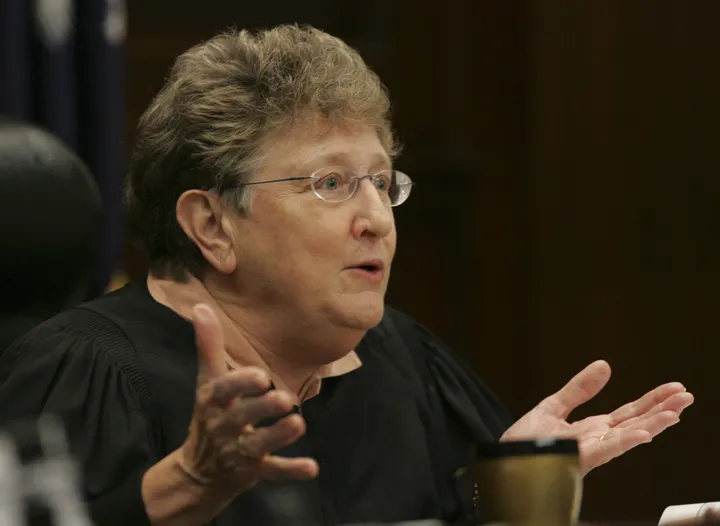
The South Carolina Supreme Court has ordered an insurance company to pay $10 million for wrongly revoking the insurance policy of a 17-year-old college student after he tested positive for HIV. The court called the 2002 decision by the insurance company "reprehensible."
That appears to be the most an insurance company has ever been ordered to pay in a case involving the practice known as rescission, in which insurance companies retroactively cancel coverage for policyholders based on alleged misstatements - sometimes right after diagnoses of life-threatening diseases.
The ruling emerges from a conservative Southern state with one of the most pro-business climates in the country. And it comes as progressive Democrats on Capitol Hill are pressing for health care reforms, such as a public insurance option, that reflect wariness about the private insurance industry's motives.
The Supreme Court on Monday upheld a lower court's verdict against Fortis Insurance, now known as Assurant. The trial jury had awarded the former college student, Jerome Mitchell, $15 million in punitive damages; the Supreme Court reduced that amount by $5 million.
Mitchell learned that he had HIV when, while heading to college, he donated blood. Fortis then rescinded his coverage, citing what turned out to be an erroneous note from a nurse in his medical records that indicated that he might have been diagnosed prior to his obtaining his insurance policy.
Before the cancellation of the policy, an underwriter working for Fortis wrote to a committee considering whether or not to rescind his policy: "Technically, we do not have the results of the HIV tests. This is the only entry in the medical records regarding HIV status. Is it sufficient?" The underwriter's concerns were ignored and the rescission went forward.
In the ruling, Chief Justice Jean Hoefer Toal wrote: "We find ample support in the record that Fortis' conduct was reprehensible ... Fortis demonstrated an indifference to Mitchell's life and a reckless disregard to his health and safety."
An investigation this summer by the House Energy and Commerce Committee, and earlier ones by state regulators in California, New York and Connecticut, found that thousands of vulnerable and seriously ill policyholders have had their coverage canceled by many of the nation's largest insurance companies without any legal basis. The congressional committee found that three insurance companies alone made at least $300 million over five years from rescission. One of those three companies was Assurant.
In Febuary 2008, a private arbitration judge in Los Angeles ordered Health Net Inc. to pay more than $9 million to a breast cancer patient whose health insurance it revoked shortly after her diagnosis and while she was undergoing chemotherapy. The plaintiff in that case, Patsy Bates, a then-52-year-old grandmother and hair-salon owner, was unable to continue her chemotherapy for several months.
During the case, evidence emerged that Health Net had paid bonuses to employees to reward them based on the number of policyholders they had rescinded. The judge who awarded Bates the $9 million said in his decision: "It's difficult to imagine a policy more reprehensible than tying bonuses to encourage the rescission of health insurance that keeps the public well and alive."
William Shernoff, the attorney who represented Bates, said in an interview Wednesday that he was not unhappy that there was a new verdict larger than the one he won for Bates. "I am glad to see that the courts in other parts of the country are coming down hard on this reprehensible practice of dumping sick patients," he said. "It has been a practice going on decades, is widespread, and ruins lives."
Shernoff currently said he has more than 100 pending cases against California insurance companies on behalf of patients he alleges were wrongly rescinded. He said he has already settled about 90 similar cases over the last three years.
President Obama cited other cases of rescission in his recent speech before a joint session of Congress as a major reason that health reform is necessary.
Obama cited the case of a retired Texas nurse, Robin Beaton, who had her heath insurance canceled by her insurance company as she was about to undergo breast cancer surgery. As a result, Beaton had to delay her surgery for five months. In the interim, the size of the mass of her tumor had grown from 2 centimeters to 7 centimeters, greatly reducing her chances of survival.
A "woman from Texas was about to get a double mastectomy when her insurance company canceled her policy because she forgot to declare a case of acne," the President asserted in his speech, "By the time she had insurance reinstated, her breast cancer more then doubled in size. This is heart breaking. It is wrong. And no one should be treated that way in the United States of America."
Obama wasn't exactly correct in his telling of Beaton's ordeal. Beaton's insurance was canceled because a doctor wrote that she potentially had a precancerous lesion on her face. Further investigation showed that she instead had acne. But even after her physicians pointed out the error, her insurance remained rescinded. Only with the help of her congressman, was she able to pressure her insurance company to pay for her breast cancer surgery--five months later.
Related stories by Murray Waas (added after publication of original article):
Murray Waas, "WellPoint Routinely Targets Breast Cancer Patients," Reuters, April 24 2010.
Murray Waas, "Insurer Targeted HIV Patients to Drop Coverage," Reuters, March 17, 20010
Paul Krugman, "Demons and Demonization," the New York Times, March 17, 2010.
Ryan Chuttum, "Reuters is Excellent in Digging of A Health Insurer's Tactics," Columbia Journalism Review, March 17, 20010.
Murray Waas can be contacted via his Facebook page.