iPhone app iPad app Android phone app Android tablet app More

Featuring fresh takes and real-time analysis from HuffPost's signature lineup of contributors
Nancy Huehnergarth

GET UPDATES FROM Nancy Huehnergarth
 

Why Americans Are Angry About Pink Slime

Posted: 03/12/2012 11:17 am

The meat industry and the USDA just don't get it.

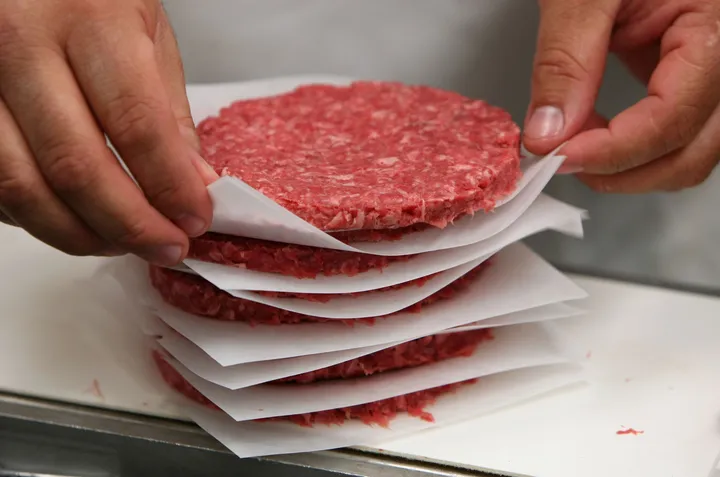
Americans are repulsed to learn that "pink slime," an unappetizing industrial slurry of cow connective tissue and low-grade beef scraps, is being added, surreptitiously, to supermarket ground beef as well as meat served in the National School Lunch Program. These ground-up tissues and scraps, formerly used for dog food, have been quietly included in our nation's ground beef supply since the 1990's thanks to a process invented by Beef Products Inc. (BPI). Since beef tissues used in pink slime are predisposed to E. coli and salmonella contamination, the filler is treated with ammonium hydroxide to kill the pathogens, before being mixed into ground beef as an additive.

After chef Jamie Oliver went on a televised tirade about the substance, also known as "finely textured lean beef," McDonald's, Taco Bell and Burger King announced in January, 2012 that they would no longer use pink slime as filler in their ground beef.

But this past week, to the horror of consumers, ABC News reported that the pink slime is even more ubiquitous than we think. 70 percent of supermarket ground beef contains the gelatinous additive, even though no mention of this filler is required on the label.

All of this begs the question, is it ethical for the meat industry and USDA to force consumers to ingest pink slime? Why isn't inclusion of this ingredient revealed on ground beef labels? And why on earth would our National School Lunch Program purchase for the nation's schoolchildren, ground beef that contains this unsavory filler? Anger over pink slime has dominated the news all week. Last Tuesday, "The Lunch Tray" blogger, Bettina Elias Siegel, started a petition to remove pink slime from school food. As of Monday, over 169,000 people had signed.

The responses from both the meat industry and the USDA to this controversy have been telling. The American Meat Institute (AMI) issued a statement through Food Safety News in support of pink slime:

"The fact is, BPI's Lean Beef Trimmings (BLBT) is beef. The beef trimmings that are used to make BLBT are absolutely edible. In fact, no process can somehow make inedible meat edible; it's impossible. In reality, the BLBT production process simply removes fat and makes the remaining beef more lean and suited to a variety of beef products that satisfy consumers' desire for leaner foods.

In fact, BLBT is a sustainable product because it recovers lean meat that would otherwise be wasted. The beef industry is proud to efficiently produce as much lean meat as possible from the cattle we raise. It's the right thing to do and it ensures that our products remain as affordable as we can make them while helping to feed America and the world."

I find that statement remarkable in that the AMI doesn't even address what I think is the major issue. How can the beef industry silently include an ammonia-treated slurry of low-grade beef scraps and connective tissues in our ground beef supply -- beef parts that few Americans would willingly choose to consume? And as far as AMI's contention that they are ensuring that ground beef is lean, sustainable and affordable, I suspect that the addition of this cheap filler actually helps the meat industry increase its profit margin.

The USDA's remarks on the pink slime debacle, as reported by many news outlets, are equally curious:

"All USDA ground beef purchases must meet the highest standards for food safety," the agency said in a statement. "USDA has strengthened ground beef food safety standards in recent years and only allows products into commerce that we have confidence are safe."

Safe? Let's assume, for argument's sake that pink slime is safe (although the New York Times reported some disturbing findings about the slurry in December, 2009). Just because the USDA has deemed a food ingredient safe, doesn't give the agency the right to include it, secretly, in our nation's food supply.

Our industrial food system and the government agencies that police it, have been allowing questionable ingredients in our food supply for some time. These ingredients would turn off consumers in droves, if labels provided more detailed or clearer information. Just this week, Coca-Cola and Pepsi announced a change in the recipe of the caramel coloring used in their beverages, to avoid placing a cancer warning label on their products. The change was spurred not by the FDA but by a California law as well as lab tests performed by Center for Science in the Public Interest. Not surprisingly, the FDA maintains the chemical is safe.

In the case of pink slime, the additive isn't even required to be mentioned on ground beef labels. Normally, food ingredients -- many with long chemical names -- are required to be listed on food labels. However, most consumers would need a degree in chemistry to decipher the lists. That's why so many food reform advocates and medical professionals recommend that consumers stop purchasing processed food products that contain a long list of unidentifiable, unnatural substances.

The pink slime uproar shows that Americans are finally fed up with unsavory ingredients/additives in their food. Congress should mandate the labeling of ALL food ingredients, in simple and understandable English. Consumers should always have the information they need to make fully-informed decisions about which additives, if any, they feed their families.


Follow Nancy Huehnergarth on Twitter: www.twitter.com/nyshepa


  • Comments
  • 63
  • Pending Comments
  • 0
  • View FAQ
Comments are closed for this entry
View All
Favorites
Recency  | 
Popularity
Page: 1 2  Next ›  Last »  (2 total)
04:33 PM on 03/16/2012
Add me to the list of people who are furious to learn they've been unwittingly eating this stuff for years. I've lost my trust in the food industry and the government. They will rationalize that the product is safe because no one dies the minute they consume it. No, it will take years before studies are done to learn the harmful long term effects from eating this processed food. It's so frustrating that the government does not put a value on the consumer's right to know. This product should be clearly labeled.
11:34 PM on 03/27/2012
Can you say Tuskegee Experiment? We have been used as this country's guinea pigs. Again.
08:17 PM on 03/15/2012
ANd to the former BPI employee... This is garbage, this product was made in the beginning to be used as dog food. This is what we get when we have huge companies like Tyson, Armour and others making all the ground been for the consumers. Most local grocery stores do not employ butches any more, or make ther own ground beef, it comes ion vacume sealed trays that are opened and repackages for consumers. And you wonder why cancer is so high in this country, why we have such a high rate of kids with ADD, why so many allergies to foods.. STOP PLAYING WITH OUR FOOD.. Consumers are willing to pay the proper price for meat,, as long as they know what they are getting. Tell me Mr. BPI from the midwest, aRE YOU SO OWNED BY YOUR EMPLYER, THAT YOU CAN'T TELL RIGHT FROM WORNG ANYMORE. This is wrong period.
02:54 PM on 03/14/2012
This is not a ground meat when ammonia is added to make it. What is the dirty little secret when the FDA will not require the processors to include ammonia on the labeling. Seven million pounds and a savings of three cents per pound. 210 thousand dollars saved at what risk to our children. 20 billion dollars to Pakistan last year while our kids are forced to eat it or go hungry. The military won't eat it, prisoners won't eat it, how can the FDA approve it and the department of Agriculture require schools to serve this slime in their school lunch programs. Everything associated with this issue comes to one conclusion. Follow the money trail. This is an additive not a process. I have researched the use of ammonium hydroxide and I was amazed by how many foods use this chemical in the processing the foodstuff we eat. This is not a meat eater versus Vegan issue. This process is used in all types of foods. I believe the FDA should make the information available in the packaging of our food so we can make informed decisions on what we put into our bodies
photo
HUFFPOST SUPER USER
MeinNH
Ooooo Silly Me
09:05 AM on 03/14/2012
Luckily our local school does not buy this stuff.
11:36 PM on 03/27/2012
Consider those dear children lucky.
04:08 AM on 03/14/2012
This article is silly. So-called "pink slime" (talk about your loaded language!) is ground, and it's beef, so therefore it's (very finely) ground beef. If it were called "pâté", would that be better? What do you think is in a package of off-the-shelf ground beef at the discount store? Filet mignon lovingly hand-ground by local artisanal butchers? Get a grip, people. It's cheap meat, and there's a market for it.

Obviously from a gourmet's perspective, including lower quality trimmings in a ground meat product is a definite no-no. But this is no way justifies the suggestion that finely ground beef trimmings are some sort of "dangerous additive".
cosmicdart
paragon of paradigms
09:50 AM on 03/13/2012
Eat beans, rice, and fruit instead, and feed all that pink slime to chickens and then sell these chickens to the Middle East and Russia in exchange of petroleum. We can't feed pink slime to cattle cuz cow cannibalism might cause mad cow disease in cows. If school children begin to do the mad-cow dance we should stop feeding pink slime to them too. Try to keep brain tissue out of pink slime cuz ammonium hydroxide has no effect on the mad-cow prion.
This user has chosen to opt out of the Badges program
photo
08:54 PM on 03/14/2012
It's MEAT TRIMMINGS not spinal or brain cord tissue. That's where mad cow comes from, not MEAT TRIMMINGS. Haven't you ever trimmed the fat off a chunk of meat and there is meat still mixed in with the trimmings. Those are MEAT TRIMMINGS. So are little pieces that aren't big enough to sell as a common cut.
09:47 AM on 03/13/2012
As a former employee of BPI, I can lend a little fact to the inflammatory and min-informed statements being made about their product. First of all, where does BPI's raw material come from? It comes directly, and I do mean directly, from the cutting areas of meat processors like Tyson Foods. In most cases, the buildings of the two companies are joined and the conveyor belt is extended directly from Tyson to BPI through sanitary, refrigerated tunnels. The cuttings aren't scraps from the floor and the only thing that distinguishes the beef being used by BPI from the "steaks" coming out of Tyson is how precisely the person doing the trimming cuts the primal. Because a beef cutting operation must move quickly to be profitable, some beef, that would otherwise be part of your steak, gets trimmed off. Rather than having that meat go to waste, BPI came up with an efficient, high-tech method of recovering those bits of beef. Regarding the treatment of the meat to reduce pathogens, this is not because the trimmings are "predisposed to E. coli and salmonella contamination". The treatment is done to improve not only the safety and extend the shelf life of the trimmings but also that of the hamburger it is incorporated into.
Now, I won't argue that BPI's product makes hamburger more appealing from a culinary perspective. However, I think that it is unfair to characterize it as unsafe or as dog food being fed to humans. It's beef!
This user has chosen to opt out of the Badges program
04:21 PM on 03/13/2012
Even so, this is actually just more proof that Americans should be buying local beef to avoid eating meat treated with chemicals. Either way you swing it, the facts are there, and Americans are saying they don't want to eat this garbage.
10:08 AM on 03/14/2012
First off - this is "local beef"
Second, last I checked, I was an "American" and I don't believe you speak for me. Let's lay out the facts and let each individual American decide for themselves, rather than continuing to hang labels on it like "garbage".
Third - there are hundreds of "Americans" that are employed by BPI and if the company is put out of business based on sensationalism, rather than scientific fact, that would truely be a shame.
photo
HUFFPOST BLOGGER
Nancy Huehnergarth
11:05 AM on 03/14/2012
The beef scraps used in "pink slime" are most definitely more predisposed to E.coli and salmonella contamination. They tend to come from the outermost part of the animal, closer to the hide, and are therefore more susceptible to contamination from excrement. This fact is agreed upon by all parties. That's why BPI came up with their "BLBT" process in which they cleanse these trimmings using ammonium hydroxide. A 2009 New York Times expose found that ground beef containing pink slime was 4 times more likely to contain salmonella than ground beef without the filler. All ground beef should be labeled if it contains pink slime or other fillers. Why keep the consumer in the dark?
This user has chosen to opt out of the Badges program
photo
09:01 PM on 03/14/2012
So you don't eat rump roast because it's closer to the...rump?
09:24 AM on 03/15/2012
BPI clenses the trimmings because they do recognize the potential for pathogens and they are doing something about it. What you say is only tells half the story of the location of pathogens. It is correct, that the most likely place for pathogens is on the outside surface when the section of beef arrives at the meat cutting operation (e.g. Tysons). However, if those pathogens have not been cleaned off prior to the beef arriving at the person cutting it, then you can bet that those same pathogens will end up on the outside surface of the steaks, roasts, etc. that come out of that cutting operation, due to three separate means of cross-contamination. The first comes from the conveyor/work surface that the person cutting is working at. If the outside of the original piece of meat has pathogens, they will get onto the surface and subsequently the surface of the steak or roast will come in contact with the surface. The second means is via the knife being used to do the trimming. Again if there are pathogens on the surface, they will get conveyed to the finished meat during the cutting process. The third means is via the gloved hands of the person doing the cutting. So in other words, you should not imply that the steaks and roasts are somehow safe from pathogens. Some method of cleansing the surface of the beef should be used both before and after cutting in my opinion.
01:29 AM on 03/13/2012
Any time fat is heated, as required for this fat removal process, gelatin will be produced.
Chemistry is often called upon to improve food safety, remember ham and salt pork.
For all the high and mighty organic is pure folk, this is a list of ingredients that may be added to organic foods.
http://ecfr.gpoaccess.gov/cgi/t/text/text-idx?c=ecfr&sid=6f623e1de5457587ccdfec12bc34ed1c&rgn=div5&view=text&node=7:3.1.1.9.32&idno=7#7:3.1.1.9.32.7.354.6
11:42 PM on 03/27/2012
I will continue to be real high and a little mighty with my organic food. At least I'll have half a chance at a quality life. Food is supposed to nourish you, not cause your body harm.
01:26 AM on 03/13/2012
Typical first-world problems, man. Spoiled Americans, I swear. Other people starve in other countries and you people complain about something you've been already eating for years, just because the media works you in a frenzy. Ridiculous. I am sure someone starving somewhere else wouldn't give a crap about eating "pink slime."
photo
PunisherWarJournal
Freedom of speech is pending approval...
10:30 AM on 03/13/2012
Profit trumps all.
cosmicdart
paragon of paradigms
11:19 AM on 03/13/2012
Worms are also a good source of protein. Fish love 'em!
photo
HUFFPOST SUPER USER
whyus
San Francisco native
11:32 PM on 03/12/2012
Our food corporations run their businesses for profit, not our well being.
11:22 PM on 03/12/2012
I'm so glad to be a vegetarian.
08:43 AM on 03/13/2012
Me too!
cosmicdart
paragon of paradigms
10:03 AM on 03/13/2012
We need a vegetarian alternative within our School Lunch Program. Children should be taught how to prepare vegetarian meals from grade school on. McD's should have alternative vegetarian meals for children. Call it McV's.
08:15 PM on 03/12/2012
So why dont Americans demand better foods?
07:21 PM on 03/12/2012
But the trade off seems to be throwing millions of pounds of spoiled food away every year
08:03 PM on 03/12/2012
Not so, there are a lot of dogs out there that would be more then happy to eat all the pink slime you will feed them. I see that as a much better alternative to feeding it to our school children!
This user has chosen to opt out of the Badges program
photo
09:59 AM on 03/13/2012
If there is something inherently wrong with it, which I don't believe there is, why would you feed it to your dogs?
11:47 PM on 03/27/2012
Not my dog. His organic dog food has no artificial ingredients or fillers, which means Benny has been eating better than my children.
photo
plantbasedpunk
live from the PHX
06:01 PM on 03/12/2012
I'm not as angry with the gov't and big ag as I am the American people. Demand better! We need to stop living out of drive-throughs and TV dinners and start actually giving a damn about our food. GMO? Don't wanna hear about it, don't care. Processed junk? Don't care. Causes cancer? No problem. Animal cruelty? Factory farm cruelty? Look away!

Yes, we have a right to know what's in your food. And you can find out, if you like! Go down to your farmers market and ask them what's in their bell peppers. Go out to your garden and ask your tomatoes if they are GMO, or picked by exploited workers, or are products of animal cruelty.

Again, I'm not angry. But if pink slime is what it takes to get people to care about their food, then by all means slime it up, USDA!
photo
HUFFPOST SUPER USER
IrishEyes21
Where are the games on this thing?
01:17 PM on 03/13/2012
The only thing these companies will understand is an impact to their bottom line. If people refuse to buy - it impacts their profits. The more people refuse to buy, the more the impact.

Realistically, right now there are people who can't afford to buy organic/grass-fed beef. It's expensive. But it will get a lot less expensive if it becomes more available and if people start demanding it more. And the people that can afford to buy organic and impact the companies are the ones who can force the change to bring the cost down so that those who want to but can't - might be able to.

The only way businesses lose their power is when people band together. We do have more power then the businesses if we band together and make an effort to stop them. They know, we should know it - but for some reason we don't act.
11:48 PM on 03/27/2012
And stop making fun of people who choose to eat fresh, organic food.
04:57 PM on 03/12/2012
Here's the deal... how long has this been going on? Who's the Champion of the School Lunch Program? Michelle Obama. Why have some schools deployed "Lunch Monitors" to remove parental prepared lunches in favor of the cafeteria school lunch? Why hasn't there been any noise out of the First Lady? Does she believe in this practice?
04:26 PM on 03/13/2012
I'd like to know more about these "lunch monitors" taking away homemade lunches. Where is this happening? My son is out of school and on his own. I would not stand for it. This meat additive sounds awful to me, like butchers who add intestinal fat to the chopped meat, and if not done carefully get E-COLI in the ground round. This has to stop! Why worry about what is in a child's brown bag when the food corporations are adulterating our food. Not too sure how much M Obama is involved in all this, though. Nice try.