Strange how generational consciousness changes and we don't even notice. When Sixties' economist Paul Sweezy wrote the classic book, Monopoly Capital, we were suddenly filled with a impending sense of doom. Economists created charts showing how monopolies could charge consumers any price they liked, and in 1974 the U.S. Justice Department began breaking up AT&T, "Ma Bell," into regional pieces.
By the year 2000, just a generation later, a friend teaching at UC Berkeley was shocked to find her undergraduate students did not know what monopoly or oligopoly was, let alone why either might be bad for us.
AT&T is back and stronger than ever. AT&T is part of a U.S. telecommunications (telephone, cable TV and Internet) oligopoly. Clearly antitrust laws have languished on dusty shelves for decades. So why is the Justice Department dusting them off to sue Apple and five book publishers?
The oligopoly behind book publishing in the 21st century
What you need to know is that an oligopoly of six giant multinational media companies now control the market for published books in the US. These companies include CBS, Rupert Murdoch's empire, and four other conglomerates located in Great Britain, France, and Germany. (For details, see my free report on Brucenomics.com)
Apple is alleged to have made deals with five imprints, i.e., subsidiaries, of these media empires: HarperCollins (News Corp.); Hachette Book Group (Hachette Livre); Macmillan (Verlagsgruppe Georg von Holzbrinck Publishing); Penguin Books (Pearson PLC ), and Simon & Schuster (CBS). Of the big six conglomerates, only Bertelsmann is absent.
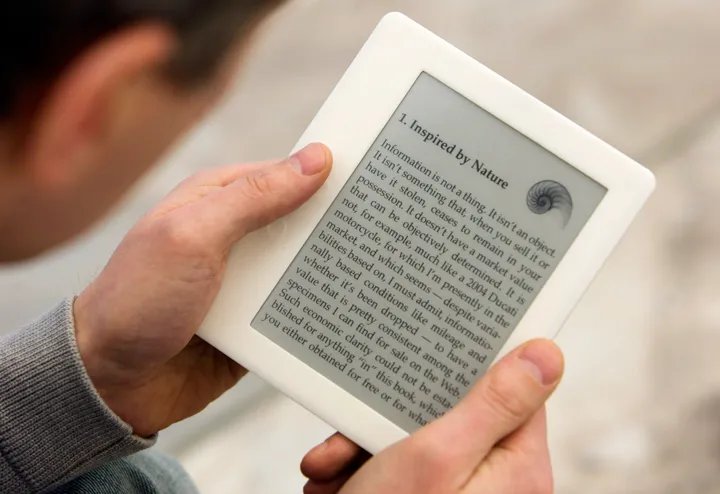
The alleged result of these deals is that Apple and the publishers can price e-books higher than the $9.99 maximum Amazon sets. Why did Apple do this? Because unlike Amazon, which sells millions of e-book titles, Apple sells only 100,000 or so e-book titles. To grow, Apple's iBookstore needs to collect more money per e-book copy than Amazon gets. So Apple raised prices of its e-books instead of raising author fees.
Amazon can afford to collect less per e-book title because it sells over 10,000% more titles and tens of millions more copies of e-books than Apple. Even Barnes & Noble can't compete on Amazon's price terms. B&N was considering selling its Nook division. Microsoft just bailed out B&N with a big cash infusion.
But which kind of price-fixing?
Amazon was the first to price-fix books. In 2007 it limited new e-books and bestsellers to $9.99. Three-quarters of U.S. books each year are by novice self-publishers who get an Amazon incentive to price their books between 99 cents and $4.99 and have no idea how few copies they will sell at that price.
The truth of book pricing is that very few published authors have ever made more than expenses on a book. That's because the chief cost is the content of the book. Production and distribution are small in comparison and costs are similar for either an e-book or a POD print book.
But books are not mass-produced items like toothbrushes. By U.S. copyright law, every single one of the 1,000,000 book titles published each year must contain unique content. The DOJ may be following the letter of the law, but not its spirit, by assisting Amazon to destroy its closest competitors with its maximum price for e-books now, so it can charge any price it wishes in the future.
This is why the UK, France, and other countries use minimum fixed book price agreements. They want to prevent the kind of downward price competition that encourages publishers to focus only on blockbuster books. These agreements fix a minimum price on retail sales of books in order to promote a variety of books by lesser-known authors.
If the Justice Department prevails over Apple on behalf of Amazon, it will mark the end of books as we now love them, and it will mark the beginning of monopoly for Amazon, Walmart, and every other megastore that undercuts its competitors by lowball pricing.
Which kind of price-fixing do you prefer? Low-cost books with lower quality sold by one bookstore until its competitors die off and it can charge as much as it wants? Or higher-cost books with higher quality that foster competition among e-bookstores?
Amazon didn't "fix" prices at $9.99--it sold some titles at that rate, and the rest of the industry was free to sell at any price it saw fit. To fix the price, it would have had to somehow control all retail outlets (Apple, B&n) and it clearly didn't.
Apple, working with the publishers, set up the agency pricing system, where the publisher sets the price. As it was used, this allowed the publishers to set the same price for all retail outlets--if a book--say, the Jobs bio--was 14.99 at the itunes store, it was the same price at Amazon and at B&N and any other ebook seller. Hmmmm--a book the same price, wherever you shop? THAT sounds like price fixing.
Finally, yes, in many countries in Europe, book prices are "fixed." However, it's done by that country's respective government, not by the people selling the books (an obvious conflict of interest). The idea being, the government seeks a price that's both fair to the consumer and reasonably profitable for the publishers.
IN the agency system, the publisher sets the price, across the industry. Do you think, since price competition between retailers is eliminated with the agency system, they're going to worry about fair prices to the consumer?
Ebooks are not free or even low-cost. The author has to create a PDF manuscript before it can be turned into an ebook. It costs money to produce and promote an ebook: editing, designing, proofreading, indexing, formatting the book for the different eReader devices, and marketing all cost money. That doesn't even count the cost of the author's time in writing it.
Whatever fee on the retail price that ebookstores choose to charge determines how much the author gets. If it's a 30% fee; 70% goes to the publisher/author. If it's 45-50% as I have heard Amazon charges some customers, then the publisher/author gets even less. If a publisher/author does not get high volume, or even average, sales on an ebook title, then only by raising the price of the ebook can a publisher/author recover the costs of producing that ebook.
So, neither get my $$.
I go to the one remaining independent bookseller across town and spend to support the growth of my own community.
And sorry trees, but I'm not only frequently smitten by the written word, I'm also an ardent binding sniffer and page stroker.
I prefer to disappear behind great crowded shelves...dig for my own treasure...unmolested by electronic recommendations and crappy Mturk'd reviews.
- Downward price competition discourages publication of lesser known works, only if we stay within the traditional publishing paradigm.
- The chief cost of book production is not the content of the book. It is promotion and marketing, and only for books that promise to be bestsellers. And only if we stay within the traditional publishing paradigm.
- The only value traditional publishers add to less known authors, is by picking them to the exclusion of others. That's because the barriers to entry into this business are so high, if we stay within the traditional publishing paradigm.
If online businesses innovate, new kinds of publishers/promoters appear, and traditional bookstores downsize and add unique value to the reading experience, then the traditional book will survive and thrive.
So, innovation is the answer, not subsidies to traditional publishers.
When you want to sell something, you go where the eyeballs are. Amazon has an excellent proposition for the author and the copyright owner. If Apple or anyone else can come up with a similar one, they are of course free to do so. But they shouldn't do that by forcing a competing retailer to raise its price, or even to pretend that Amazon has not built up substantial technical advantages for itself.
The price of an e-Book is actually roughly the going price of a paperback (at the price which you actually pay for it, not what's first on the cover), and everyone in the marketplace knows that clearly.
Neither Amazon nor Apple are the only place where electronic files can be legally purchased.
So if someone wants to sell a cookbook at ~$600, good luck to them.
Personally, I hope that they go the way of digital music and are offer ebooks in a DRM-free format so that I can do whatever I want with the files, including consolidating them under one app for reading books.