You, the common peasants, aren't supposed to know this, but the wheels are coming off the world monetary system.
The reason you aren't supposed to know this is because governments around the world need to sell you a ton of their bonds. They are addicted to debt and you are their source. If you understood what "wheels coming off the world monetary system" means, then you would probably not want to buy their bonds -- as has already happened to Greece, Ireland, and now Portugal, Spain and Italy.
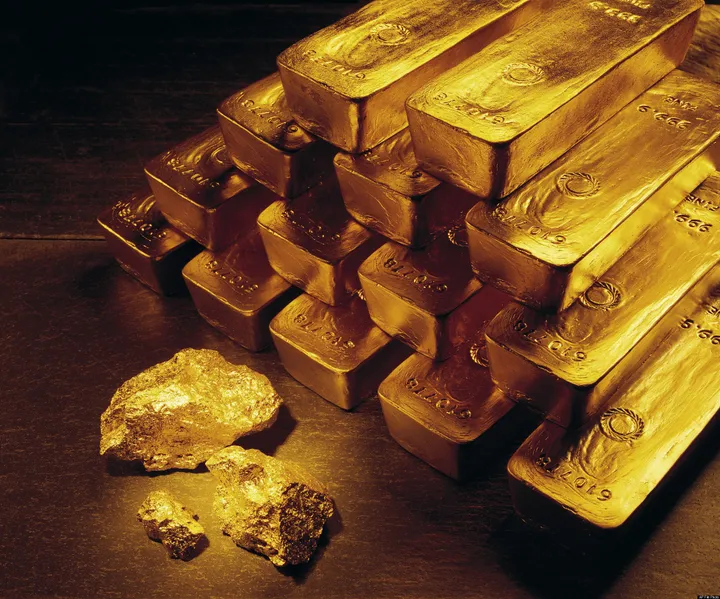
The real situation is described by the gold market. Gold itself has served, for thousands of years, as a stable measure of value. You can think of it as a world currency, just like the dollar or euro. The difference is that gold is stable in value, while the dollar and euro are floating currencies.
When it takes more and more dollars to buy a euro, for example if the "price of euros" goes from $1.00 to $1.50, then most people understand that the dollar is probably falling in value. The same is true of gold. When the "price of gold" goes from $1000 to $1500, that means the value of the dollar is falling. The value of the euro has been falling, too. And the yen. And the Chinese yuan, the Russian ruble, the Brazilian real, and most every other currency on earth.
We are now in the latter days of the "Keynesian Experiment." Sometimes, governments undertake experiments. For example, the Soviet Union was an experiment in running an economy on central planning principles -- rather than capitalist principles. It probably seemed like a good idea in 1917. However, the experiment was ultimately a failure. Russia and communist China later returned to capitalism. They tried the experiment, came to a conclusion, and then they moved on. It happens.
The Keynesian Experiment began in 1971. Before 1971, all of the world's developed countries used some variant of a gold standard. This had been the case for literally hundreds of years, back to medieval times. Beginning in 1971, the world then moved to a floating-currency system. This was actually an accident -- the unplanned result of Richard Nixon's "easy money" policy. But then, the Russian Revolution was a bit of an accident too, resulting from the turmoil of World War I. (Communist China grew out of the turmoil of World War II.)
The immediate result of the Keynesian Experiment was an explosion of worldwide inflation during the 1970s. Then, there was a period of rough stability and recovery during the 1980s and 1990s. Today, we are in another period of currency turmoil, which will probably lead shortly to a crisis.
Eventually the Keynesian Experiment will be regarded as a failure, much like the Communist Experiment. At that point, people will want to go back to the principles that have formed the foundation of the Western World's success over the last half-millennia. Unfortunately, most people have forgotten those principles today.
If I had twenty minutes with Barack Obama, Angela Merkel, or Hu Jintao -- we will assume they know little about monetary economics -- here is what I would say:
Tenet #1: Stable Money is superior to Unstable Money. "Stable Money" is money that is stable in value. Capitalist economies work best with conditions of stable money. "Discretionary" monetary policy doesn't really solve any problems, and actually causes new ones.
Tenet #2: Gold is stable in value. Unlike other commodities, gold does not go up and down in value. For this reason, it is the premier monetary commodity and has been for literally thousands of years. Although it is a bit of a stretch to assume that gold is perfectly unchanging in value, nevertheless, after centuries of experience, we have established that it is sufficiently stable in value to serve its purpose as a monetary benchmark. Also, gold is a better measure of stable value than any other available reference or statistical concoction.
Tenet #3: Therefore, if your currency's value is pegged to gold, that currency will be as stable as gold. A gold-value peg is the best means to accomplish our goal of stable currency value. For the last 500 years, every government that has wished to implement a stable-currency policy has used some variant of a gold standard. It is proven, it works, and there is no need to invent another, inferior solution.
Tenet #4: A token currency, whether coins or notes, can be pegged to gold via the adjustment of supply. "Supply" is technically known as "base money," which consists of notes, coins, and bank reserves. If the currency's value sags below its gold peg, then supply is reduced. If the currency's value is higher than its gold peg, supply is increased. No gold bullion is needed to maintain this peg -- only a mechanism to increase and decrease the supply of base money. Central banks accomplish this today by buying and selling government bonds in "unsterilized" transactions. This is effectively the same as currency board systems in use today.
Tenet #5: A "lender of last resort" can be provided within the context of a gold standard. The original "lender of last resort," or what we today call a central bank, was the Bank of England during the 19th century. The Bank of England was also the world's premier champion of the gold standard. The Federal Reserve was originally constituted in 1913 to serve as a "lender of last resort" within the context of a gold standard system, and did so for 58 years until 1971. Central banks' original purpose was perverted during the 20th century due to the rise of Keynesian soft-money ideology, causing them to come into conflict with the proper operation of a gold standard system.
Of course, there will be many who will say that I am wrong. You would expect this after forty years of the Keynesian Experiment. In the Soviet Union, they used to put people in jail for "economic crimes" if they esposed capitalist principles.
However, history is on my side. The entire course of the Western World, from the late medieval period to the 1960s, when men walked on the moon and the U.S. middle class reached its high point of prosperity, took place with a gold standard system. Although there were ups and downs, the long-term trend was up.
We've had our ups and downs during the Keynesian Experiment too, just as the Soviet Union had its good and bad times. It is not quite clear yet, but will be as the Keynesian Experiment comes to a close, that the long-term trend during the Keynesian Experiment was down. At that point -- not before! -- the political consensus will conclude that it is time for something new.
In 1979, Deng Xiaoping, the premier of China, declared that centrally-planned communism was bunk. China took a new way, which was really the old way, and it was a huge success. It is not too long -- less than a decade I would guess -- before the Keynesian Experiment also comes to an end, and the world can finally get back on a more productive and healthy track.