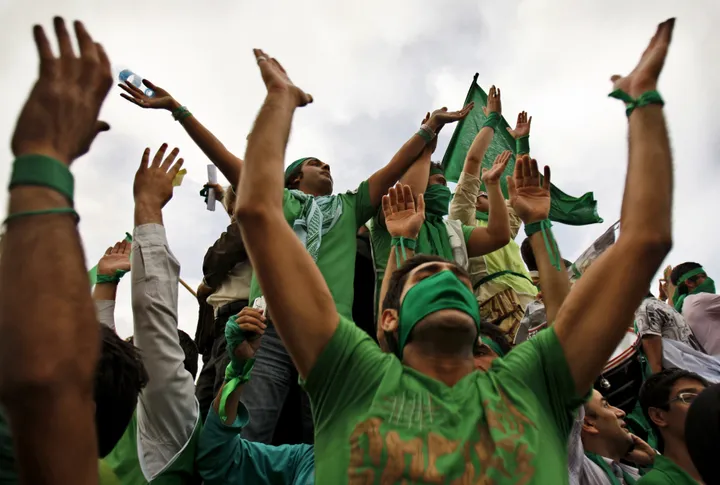
Since the beginning of the Islamic Revolution thirty years ago, Iran has asked many sacrifices of its youth in building and defending the Islamic Republic. In return, it promised education, jobs, and better standards of living. With every passing decade, the continuity of the Islamic Republic hinged on ensuring that each generation of Iranians was better off than their parents. Today, the dissension in Iran's polity emanates from a growing gap between the promises and the dim reality facing its young citizens. The current political turmoil marks the breakdown of an intergenerational bargain.
Young Iranians are now at the vanguard of a new movement for change. Young people are always drawn to movements because they have less invested in the status quo. But in Iran, their stakes are much higher. Iranian baby boomers make up a large share of the population and endure the worst economic outcomes. The disparity in the welfare of the young and the old has grown since the founding of the Islamic Republic, and it continues to grow. Regardless of what government emerges, unless the Republic can cope with the demographic and development pressures, it will remain inherently unstable. This is the crisis beneath the crisis.
Iran is a young nation, with 35 percent of its population between the ages of 15 and 29, one of the highest shares in the world. As seen in the recent demonstrations, the young, who now account for nearly 40 percent of the voting age population, are fighting for a role in shaping their country that is commensurate with their numbers. But the thrust of revolt comes from the fact that the basic building blocks of a good life -- education, work and marriage -- have become brittle.
One of the main achievements of the Islamic Republic has been granting widespread access to education. However, the educational system has been relatively ineffective in giving young people the skills they need to succeed. In the quest for securing government jobs, the competition for a limited number of university spots has grown intense with the youth bulge. Rather than fairly accommodate the rising demand for education, the government has created an education system in which few win and most lose. Every year 85 percent (1.2 million) of young Iranians who take the concour, the notorious university entrance exam, fail to score high enough to enter a university. These "rejects" end up in vocational education tracks, faced with the stigma of acquiring a second class education.
The most profound breakdown of ideals of the Islamic Republic has been in the labor market. Employment prospects for young workers have grown worse over the past 20 years. Indeed, while unemployment rates among adult men have held constant during this period, the unemployment rate among youth has climbed from 15 to nearly 25 percent. The disparity between the opportunities available to adults versus young people has deepened in both urban and rural areas. A stagnant labor market has meant that the average young Iranian graduate waits nearly three years for his first job and that his earning power is, and will almost always be, less than his parents.
The lack of decent jobs have forced young adults to delay marriage. Unmarried men and women between the ages of 25 and 29 have more than doubled over the last two decades. The cultural and religious restrictions on intimate relationships outside of marriage increasingly exacerbate a sense of exclusion and frustration. Furthermore the inability to marry and buy home forces most young Iranians to live with their parents, and survive under the watchful eyes of the moral police.
Iran's establishment -- from Ayatollahs Khomeini and Khamenei to presidents Khatami, Rafsanjani and Ahmadinejad -- has championed the lofty goals of justice and equity but they have largely failed in their promise to the youth of Iran. The reformist era policies, which strove to diversify Iran's economy away from oil and undertook significant education and labor market reforms, do not seem to have been successful. Further, the policies pursued under Ahmadinejad's tenure, which supported young Iranians through the redistribution of oil wealth and employment, credit and marriage subsidies, have faced equal difficulties.
Over time not only did the intergenerational bargain falter but it became grossly lopsided: Iran's baby boomers gave up social freedoms for little economic advancement. While the state keeps the young off the streets, security and sermons will not fix the fundamental problems of Iran's economy. "The country belongs to you. The revolution and the system is your heritage," said a recent message posted by Mir Housein Mousavi. It remains to be seen whether the courage and outrage of young Iranians can pave the way for a Republic that finally turn its ideals into reality.