
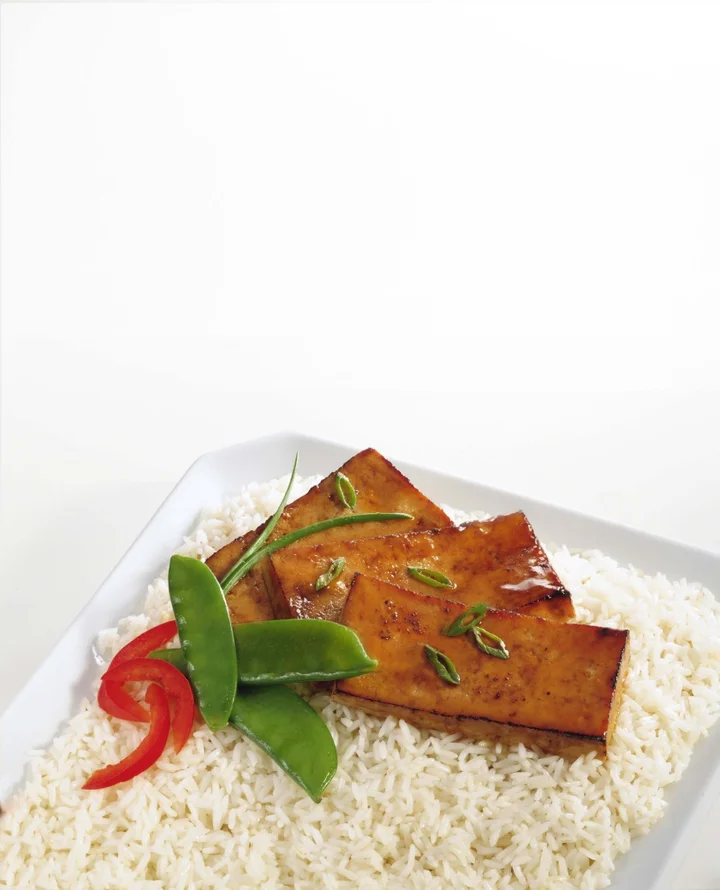
Soy products are remarkably versatile. Manufacturers have found ways to turn them into soymilk, veggie burgers, hot dogs, ice cream, yogurt--you name it. One day, they'll probably turn soy into snow tires.
Because soy products are so widely consumed, some people have raised the question as to whether they are safe. The biggest question mark was whether they affect the risk of breast cancer and, for women who have been diagnosed with breast cancer, whether they would help or harm their chances for survival.
After years of research, science is weighing in. Here is what the studies show:
Cancer Prevention and Survival
Women who include soy products in their routines are less likely to develop breast cancer, compared with other women. In January 2008, researchers at the University of Southern California found that women averaging one cup of soymilk or about one-half cup of tofu daily have about a 30 percent less risk of developing breast cancer, compared with women who have little or no soy products in their diets (1). However, to be effective, the soy consumption may have to occur early in life, as breast tissue is forming during adolescence (2-3).
What about women who have already been diagnosed with breast cancer? A study published in the Journal of the American Medical Association in 2009 shows that soy products may reduce the risk of recurrence (4). In a group of 5,042 women previously diagnosed with breast cancer who were participating in the Shanghai Breast Cancer Survival Study over a four-year period, those who regularly consumed soy products, such as soymilk, tofu, or edamame, had a 32 percent lower risk of recurrence and a 29 percent decreased risk of death, compared with women who consumed little or no soy. An accompanying editorial suggested that inconsistencies in prior research may be attributable to the comparatively low soy consumption in the United States, making beneficial effects harder to identify (5).
Why should soy products reduce cancer risk? Most research has zeroed in on phytoestrogens found in soybeans (phyto means "plant"). These compounds are in some ways similar to the estrogens (female sex hormones) in a woman's bloodstream, but are much weaker. Some have suggested that phytoestrogens attach to the estrogen receptors in a woman's body, blocking her natural estrogens from being able to attach and stopping estrogen's cancer-inducing effects.
By analogy, the estrogens in a woman's body are like jumbo jets that have landed at an airport. Phytoestrogens are like small private planes that are occupying the Jetways, blocking the jumbo jets from attaching. This explanation is probably overly simplistic, but it may serve to illustrate how soy's weak hormonal compounds can have beneficial effects.
Fibroids
Soy products may reduce the risk of fibroids, knots of muscle tissue that form within the thin muscle layer that lies beneath the uterine lining. A study of Japanese women found that the more soy women ate, the less likely they were to need a hysterectomy, suggesting that fibroids were less frequent (6). In a study of women in Washington State, soy did not seem to help or hurt, perhaps because American women eat very little soy, compared with their Japanese counterparts (7). What did have a big effect in this study were lignans, a type of phytoestrogens found in flaxseed and whole grains. The women consuming the highest amounts of these foods has less than half the risk of fibroids, compared with the women who generally skipped these foods. So, again, phytoestrogens seem beneficial, countering the effects of a woman's natural estrogens, although in this case the benefit comes from foods other than soy.
Soy and Male Hormones
How about men? Although compounds in soy products have been likened to very weak female hormones, they have no adverse effects on men and may actually help them prevent cancer. A meta-analysis to be published in Fertility and Sterility, based on more than 50 treatment groups, showed that neither soy foods nor isoflavone supplements from soy affect testosterone levels in men (8). An analysis of 14 studies, published in the American Journal of Clinical Nutrition showed that increased intake of soy resulted in a 26 percent reduction in prostate cancer risk (9). Researchers found a 30 percent risk reduction with nonfermented soy products such as soy milk and tofu.
Thyroid Health
Clinical studies show that soy products do not cause hypothyroidism (10). However,
soy isoflavones may take up some of the iodine that the body would normally use to make thyroid hormone (11). The same is true of fiber supplements and some medications. In theory, then, people who consume soy might need slightly more iodine in their diets (iodine is found in many plant foods, and especially in seaweed and iodized salt.) Also, a note for people with hypothyroidism: Soy products may reduce the absorption of medicines used to treat the condition (10). People who use these medicines should check with their healthcare providers to see if their doses need to be adjusted.
Other Health Effects
Soy products appear to reduce low density lipoprotein ("bad") cholesterol (12). They may also reduce the risk of osteoporosis-related hip fractures. In a study published in the American Journal of Epidemiology, women who consumed at least one-fourth cup of tofu per day averaged a 30 percent reduction in fracture risk (13).
Protein: A Little Goes a Long Way
Many soy products are high in protein. Manufacturers have exploited this fact, packing isolated soy protein into shakes and turning it into meat substitutes. But some have raised the concern that pushing protein intake too high--from any source--might not be wise. The concern is that an overly high protein intake may boost the amount of insulin-like growth factor (IGF-I) in the bloodstream (14), a phenomenon known to occur with cow's milk (15). High IGF-I levels are linked to higher cancer risk. Some reassurance comes from the fact that soy intake is linked to lower, not higher, cancer risk, and simple soy products, such as tempeh, edamame, or soynuts, are unlikely to affect IGF-I levels, in any case.
In summary, evidence to date is reassuring. Soy products may reduce the risk of breast cancer and breast cancer recurrence. They do not appear to have adverse effects on male hormone function or on the thyroid gland, but may reduce the absorption of thyroid medications.
Having said that, soy products are certainly not essential. Many people who start a healthful vegan diet, as I and many other doctors recommend, seem to feel they must have soy products. But the fact is, a vegan diet can follow a Mediterranean tradition, focusing on vegetables, fruits, beans and pasta. Or it might follow a Latin American tradition of beans, rice, and corn tortillas. Soy products come from an Asian tradition with many healthful delights and the most enviable health statistics on record. So soy is handy, but it is certainly not essential. If you choose to include soy products in your routine, you'll have science on your side.
References
1. Wu AH, Yu MC, Tseng CC, Pike MC. Epidemiology of soy exposures and breast cancer risk. Br J Cancer 2008;98:9-14.
2. Korde LA, Wu AH, Fears T, et al. Childhood soy intake and breast cancer risk in Asian American women. Cancer Epidemiol Biomarkers Prev 2009;18:OF1-10.
3. Shu XO, Jin F, Dai Q, et al. Soyfood intake during adolescence and subsequent risk of breast cancer among Chinese women. Cancer Epidemiol Biomarkers Prev. 2001;10:483-8.
4. Shu XO, Zheng Y, Cai H, et al. Soy food intake and breast cancer survival. JAMA. 2009;302:2437-2443.
5. Ballard-Barbash R, Neuhouser ML. Challenges in design and interpretation of observational research on health behaviors and cancer survival. JAMA. 2009;302:2483-2484.
6. Nagata C, Takatsuka N, Kawakami N, Shimizu H. Soy product intake and premenopausal hysterectomy in a follow-up study of Japanese women. Eur J Clin Nutr 2001:55:773-7.
7. Atkinson C, Lampe JW, Scholes D, Chen C, Wahala K, Schwartz SM. Lignan and isoflavone excretion in relation to uterine fibroids: a case-control study of young to middle-age women in the United States. Am J Clin Nutr 2006:84:587-93.
8. Hamilton-Reeves JM, Vazquez G, Duval SJ, Phipps WR, Kurzer MS, Messina MJ. Clinical studies show no effects of soy protein or isoflavones on reproductive hormones in men: results of a meta-analysis. Fertil Steril. June 11, 2009. DOI:10.1016/j.fertnstert.2009.04.038.
9. Yan L, Spitznagel EL. Soy consumption and prostate cancer risk in men: a revisit of a meta-analysis. Am J Clin Nutr. 2009;89:1155-1163.
10. Messina M, Redmond G. Effects of soy protein and soybean isoflavones on thyroid function in healthy adults and hypothyroid patients: a review of the relevant literature. Thyroid 2006;16:249-58.
11. Divi RL, Chang HC, Doerge DR. Anti-thyroid isoflavones from soybean: isolation, characterization, and mechanisms of action. Biochem Pharmacol 1997;54:1087-96.
12. Pipe EA, Gobert CP, Capes SE, Darlington GA, Lampe JW, Duncan AM. Soy protein reduces serum LDL cholesterol and the LDL cholesterol:HDL cholesterol and apolipprotein B:apolipprotein A-1 ratios in adults with type 2 diabetes. J Nutr. 2009;139:1700-1706.
13. Koh WP, Wu AH, Wang R, et al. Gender-specific associations between soy and risk of hip fracture in the Singapore Chinese Health Study. Am J Epidemiol. 2009;170:901-909.
14. Dewell A, Weidner G, Sumner MD, et al. Relationship of dietary protein and soy isoflavones to serum IGF-1 and IGF binding proteins in the Prostate Cancer Lifestyle Trial. Nutr Cancer 2007;58:35-42.
15. Heaney RP, McCarron DA, Dawson-Hughes B, et al. Dietary changes favorably affect bone remodeling in older adults. J Am Dietetic Asso 1999;99:1228-33.