A Jane Goodall Thanksgiving
My Thanksgiving list this year includes Jane Goodall, who was interviewed by my colleague Bill Moyers for this week's edition of Bill Moyers Journal on PBS.
When a person experiences relief from any treatment, conventional or alternative, one should not necessarily assume that a real healing has occurred.
The release of Sarah Palin's book, Going Rogue, has been an occasion of great frivolity amongst those of us on the left.
Bill Bryson has created "A Really Short History of Nearly Everything," and he's done me -- and you, and every curious kid burdened by a dull textbook or a brain-dead science teacher -- a huge favor.
The idea that the Puritans (and Pilgrims) suffered from religious persecution in England is probably a myth. What they suffered from was unease at the general licentiousness of English life.
The concepts of creationism and "intelligent design" deserve no more credibility than that given to those who continue to "believe" in a flat earth.
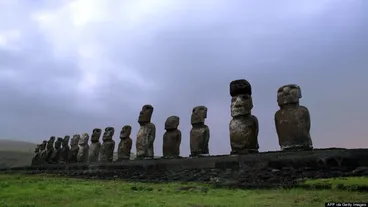
2012 pillages an ancient culture, deliberately misrepresents its traditions, and then claims its all true. More important, it taps into the serious vein of crazy that we have in this country.
Our unique American intellectual tragedy is that of all Western countries we have the largest percentage of people who propose that modern humans essentially descended intact from the clouds.
In 1974, when I was a graduate student in anthropology at Columbia University, I wanted to organize a discussion of universals. At the time, I was working for Margaret Mead as one of her assistants.
Virtually every biography of Charles Darwin refers to his health problems and acknowledges that the one physician who provided an effective treatment for him was Dr. James Manby Gully.
Once intelligent design squeezes its way into the pages following evolution in our biology books, we might as well add astrology to our astrophysics lectures and toss some alchemy into the chemistry lab.
Have you ever thought about how far we've come in our ability to connect with others and how far we'll go? I've been thinking a lot about connectivity recently and have always found that looking back to where we came from can help us better understand where we are today and, more importantly, where we may be going in the future.
We must be ruthless in our rationality in order to authentically transmit the light of the trans-rational God in the twenty-first century. This is an enormous task, but our willingness to take it on will slowly but surely make a profound difference.
We believe that independent bookstores can have a great future and we are betting our careers on it.
The sum of the matter is this: physical reality begins and ends with the observer. We cannot go beyond the observer with our concepts of space and time.
Slow Thinking is intuitive, woolly and creative. It is what we do when the pressure is off, and there is time to let ideas simmer on the back burner. It yields rich, nuanced insights and sometimes surprising breakthroughs.
The problem for the working scientist is that the essence of science is a self-conscious and mandatory objectivity -- which means dogma and doctrine are essentially antithetical.
"Growth is in...
I am not an evolution doubter. I believe it is real. I believe it has happened to bring us to where we are now. However, I also believe that it is on hiatus.
It can be exhilarating to contemplate the digital and evolutionary future. But I don't know if I could bear a world of "vookcases," "vook reports," and God forbid, a New York Review of Vooks.
What if we descend, not from a blustering chimp-like ancestor, but from a gentle, bonobo-like ape? What if we share characteristics with both of these relatives instead of the one favored by our political ideology?