The scope of the event was vast, the presentations compelling and the ideas soaring. These are the mavericks among mavericks and, despite the fact than many will fail to accomplish their current goals, some will lead us to a better- and private- future in space.
Twenty years ago, a cosmic oddball was photographed by a team of three scientists. The dry language of the announcement in the International Astronomi...
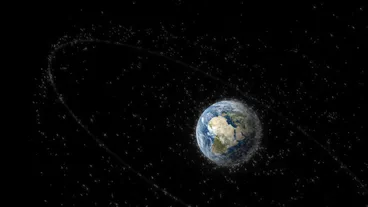
Today scientists are closely tracking 434 asteroids that are large enough and come close enough to the Earth to be of potential future concern, and while none of these pose any significant risk today, increased surveillance is required.
As much as we celebrate writers and poets as speakers of truth, sometimes I can't help but think that the real voice of a generation is someone like Stephen Hawking.
Our goal is nothing less than the human breakout into space, the expansion of human civilization and the life of Earth beyond our world, to all worlds and all places in between.
Should we take measures to thwart an impending asteroid collision if we're able to do so? Of course. But if we expend too much energy in anticipation of such a rare and unlikely event, then we're drawing resources away from more homegrown challenges that are far less remote and much more likely to occur in our lifetimes.
Unfortunately for us, earth has experienced at least five mass extinctions during the past 540 million years. Some scientists believe it may be as many as twenty. In other words, mass extinction events are not uncommon.
The underlying theme of this fascinating speech is of course much more fundamental. The real issue at hand here is governance. How do we, as a species, handle impending catastrophes? How do we allocate resources to initiatives that will benefit us in the long-term?
The probability of impact by one of these before the end of the century is 0.0005 percent. On the other hand, recent research suggests a 2 percent probability of global catastrophe from anthropogenic climate change by the end of this century.
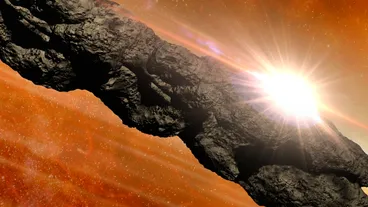
It only takes one asteroid, 100 or so meters across, impacting the Earth to explode with the force of a dozen nuclear weapons. This is something we might wish to avoid! So what do we do?
Buying insurance is seldom gratifying. But here's a case in which plunking down cash for a policy is just ... good policy.
There is no doubt that a huge asteroid impact on Earth would be devastating to many life forms. However, we often forget that asteroid impacts may have played a crucial role in the emergence of life on Earth, and possibly even in the fact that humans are here to talk about them!
Will we again be hit by the sort of asteroid that ended the dinosaurs? Probably, but we'll never see it coming; in fact, we already missed it if we can assume that maybe we've been threatened by menacing space junk in the past and our modern technologies might have already prevented us from a painful case of mass extinction.
What should have been a global wake-up call of massive proportions has so far ended up being yet another push on the snooze button. If the public doesn't understand the threat - how can we expect them to react to it and put pressure on the politicians?
There's something so visceral and frightening and seductive about the idea of Earth's destruction that it manifests itself through human art, and it has for millennia.
Apophis' chief claim to fame is that it briefly achieved the highest level ever measured on the Torino Impact Hazard Scale before it was downgraded. Nevertheless, it still has a one in 250,000 chance of hitting Earth on its second visit.