Bipartisan Blight
Health care reform suffered the torments of partisan obstruction. Now gird yourself for financial reform and the perils of bipartisan blight.
As the year and the decade draw to a close, I'm strangely optimistic. True, there are many reasons for pessimism. But over the past week, I have found reasons to at least be cheerful in popular entertainment.
The future of the American economy will depend to a great extent on consumers' attitudes, which have changed deeply and perhaps permanently in this recession.
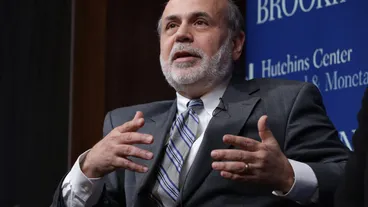
This week, Time named Fed chair Ben Bernanke its Person of the Year. The magazine says its choice is "not an award," but rather a recognition of the person who "most influenced the news during the past year -- for good or for ill." Based on that criterion, Time should, without a doubt, have picked Washington lobbyists -- because no person or group was more influential in 2009. After an inspiring presidential campaign that promised to take on the special interests, the lobbyists flexed their muscles (and their wallets) and showed who really runs the show in DC. Lobbyists carried the day on health insurance reform, banking reform, financial reform, drug pricing, cramdown legislation, and credit card interest rates, to name just a few. And every time they won, the American people lost. It's Time for a reshoot. The Lobbyists: The Real Persons of the Year.
While it is true that Bernanke "most influenced the news during the past year," Time is embarrassingly wrong in declaring Bernanke our financial lord and savior.
Looking beyond Ben Bernanke's merits as an effective chairman, there are three reasons why this was a poor selection on Time's part.
Time Magazine's editors got a jump on April Fools Day when they named Fed Chairman Ben Bernanke its Person of the Year. Here's what Bernanke did sin...
Time magazine had several contenders for its annual Person of the Year issue, including Timothy Geithner, Stanley McChrystal, Usain Bolt and, of cours...
Even if utilization rose to 71.3 percent, more than a quarter of our nation's productive capacity is still lying idle.
Goldman Sachs has announced that its Treasury Dept. has completed a debt for equity swap with the People's Republic of China, effectively solving most of America's problems.
After taking more time off than George Bush ever did, Congress finds itself at the year's end with a whole stack of things to accomplish. Which results in a frenzy of things getting passed, or at least debated.
Bernanke has been called "the definition of moral hazard" because if he is confirmed, it will send a message to all other federal regulators that they can fall down on the job and still get promoted.
Thanks to a bipartisan effort to stop the reappointment of Fed Chairman Ben Bernanke, there's a slim -- but distinct -- possibility that his reappointment can actually be successfully thwarted.
It is striking how the media view blaming Mr. Bernanke for the Great Recession as being out of bounds. Bernanke bears much of the blame for this economic collapse.
The "great moderation" of business cycles once extolled by many economists, Ben Bernanke, is history. The trend rate of growth is shriveling. In other words, business cycles are back with a vengeance.
Bo views Geithner as a martyr subjected to unfounded, ungrateful attacks for his actions that prevented the Second Great Depression. Bo doesn't have much use for Americans that are upset with finance industry.
America voted last year to put the interests of ordinary people ahead of the greed of Wall Street. What they didn't bargain for was another four years for one of the key architects of the Bush economy.
Is Ben Bernanke the change we voted for? How can anyone believe that? What is the matter with Obama? Picking the same guy as Bush, and the same exact guy who was at the helm when the economy crashed.
Obama's Office of Management and Budget transition team leader Bo Cutter has presented the best possible defense of Treasury Secretary Geithner.
In its new regulations, the Fed did Americans a huge disservice, doing away with consumers' potential right of recovery of overdraft charges -- which will total nearly $37.5 billion in 2009 alone.