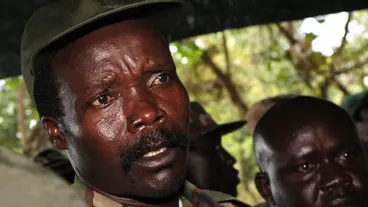
"As soon as I was abducted, the LRA taught us their language, Acholi, and told us their rules. We had to wash three times per day, prepare the food well for the fighters, keep their clothes clean, and if we tried to escape, we would be killed."
"Kony 2012" and why people can only help if they know what is going onBy now you have all most likely seen the "Kony 2012" video and I'm guessing you ...
Being a catalyst for change is not easy, especially in a media-driven world where the press often instigates controversy solely to induce greater viewership.
I'm not sure if this is generation-wide, but a good number of my classmates are largely unaware of current events, both foreign and domestic. A prime example of this is the recent Kony 2012 movement.
Two African warlords were in the news in the last week and they did more than remind the world of their barbarity. One demonstrated the power of the social media. The other demonstrated the hypocrisy of the United States.
The video itself, and its unprecedented viral spread, is breaking new ground for the power of social media to effect social and political change, and has sparked an international conversation -- both around the atrocities of the LRA, and of the video itself.
So Africa is not a country and Africans don't speak "African." What about the most pernicious stereotype -- that in the face of ongoing civil war and unending famine, "Africans" are powerless and need our help?
While physical service is likely more admirable than distant check-writing, the human resource distribution of the world is asymmetric and we need all kinds of pathways to assist those in need.
Remember, a long, long time ago President Obama announced that he was "dispatching about 100 U.S. troops to central Africa to advise in the fight against the Lord's Resistance Army"? Well, less than five months later, how is that military operation going?
A refrain that is often repeated by Invisible Children's supporters is that the organization's goal is not to "get bogged down by history" but rather to "raise awareness" thus leading to "action." But what kind of action can come in Central Africa if one ignores the region's history?
The UN estimates more than 30,000 children were abducted and forced to become soldiers in Kony's militia. We interviewed survivors: a young woman, kidnapped when she was eight, forced to cut the head off a little boy who was her neighbor and then carry his head around all day.
If the U.S. wants deliver democracy and help the impoverished masses, we must stop the techniques employed in Kony 2012, and the concept of giving aid rather than providing economic structure.
Don't be one of the zombie followers of the KONY 2012 movement. Buying t-shirts and wristbands and bankrolling another film will not help. Keep it about Joseph Kony, not KONY 2012.
How do you grab the world's attention these days? How do you bring warlords to justice? You start a movement via the web.
Russell's newest idea was to make Kony popular by using social media. The 27-minute video was posted on YouTube by Invisible Children and became a worldwide trending topic on the Internet.