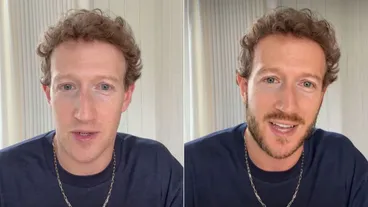
Mark Zuckerberg's widely reviled, rapidly dissolving DC lobby group heralds itself as the bringer of "different and innovative tactics" to the usual Beltway brand of back room politicking. How did so many smart, powerful people so thoroughly screw up such a simple and straightforward task?
Fwd.us' lobbying approach reflects the worst of DC-style politics: it's cynical, it's transactional, and it's predicated on using critically important social and ecological issues as pawns in a chess game. Worse for Mark Zuckerberg, it's ineffective.
By Jessica Camille Aguirre, OnEarth Usually when hordes of people threaten to quit Facebook, it's over an unpopular redesign or a sneaky switch in the...
It is both the best of times and the worst of times for the Internet. It's also the best and worst of times for the freedoms the Internet is supposed to nurture.
Mark Zuckerberg has in the past been eloquent in his support for transitioning from fossil fuels to knowledge-powered and New Energy economies. Now that his financial ties to the pro tar sands advertisements are public knowledge, many of us hope he will disassociate himself from their dubious content.
"Self-making" requires tough work, and it requires that we undertake an ongoing journey. After all, if we don't self-make or re-make our leadership approach, we won't succeed, and many of us will be out of a job, supplanted by others who are more attuned to our new sources of advantage.
What does this mean for marketers and their advertising budgets? Facebook believes what's good for Facebook users is good for marketers.
Social media has created opportunities for us to be brag about the great-yet-totally-unimportant events of our lives to people that we don't truly care about in the first place.
Even as technology makes everything more impersonal, it's never been more personal. Far too personal, even intimate, actually. And there's far more protection against identity theft than against relationship wreckage in social media.
Today, skip the Starbucks coffee (it's burnt anyway) and put your dollars towards a cause that you believe in -- because to impart real, meaningful change in the world, people will need to believe that the underlying causes of poverty are solvable. I do.
By Chris Rovzar, Vanity Fair By Chris Rovzar. "It's almost a theorem that can be mathematically proven," said Russian investor and early Facebook ...
"The Supreme Leader is still getting used to the last time everything was changed by the Internet aggressor Zuckerberg," says Chung Mun-hee, spokesperson for Pyongyang's Foreign Ministry.
The rock star status of today's scientific celebrities encourages aspiring scientists to focus on the retail possibilities that can result in fast fame and wealth. While understandable, this unwittingly neglects a crucial part of the scientific equation.
In college, most students dream up an extremely predictable set of "big ideas" -- and there's absolutely nothing wrong with that. Actually, many of these common college startup ideas can still make it big if executed properly.
Feuding with Zuck, calling out the NY Times, and groupie love In 2009, after a day spent debating the meaning of a Cam'ron lyric, three Yale undergra...
he way I see it, this is a triumph of the little guy over the powers that be, a defiant blow against the corporatization of America. I'm just honored that "I'm With Stupid" gets to be a part of it.