While the executive director for corporate communications at Verizon claims that I've been doing variations on a theme, it would seem that I've been creating whole symphonies of new findings.
The battle for America's entire communications future is playing out this week in two small towns in New Jersey.
Verizon today is vibrant and profitable. We changed with the times. We shed businesses, such as printed phone directories, to focus on meeting and anticipating the changes in customer demand.
Verizon is now making it clear that it is no longer expanding FiOS, its fiber optic cable service. So what did they accomplish? What did they build? And how much did it cost?
Earlier this week, the Dutch government gave final approval to one of the strongest open Internet laws in the world. Imagine that. A government guaranteeing through law that Internet connections can't be manipulated by big telecom companies.
Today's Verizon shareholder meeting in Huntsville, Alabama was disrupted six separate times by members of the 99% Power coalition, part of the 99% Spring movement.
If Americans believe the phone company hype -- and are seduced into believing that a slow and expensive wireless infrastructure is better than a fast wireline infrastructure -- the economic consequences could be grave.
For the last 20 years, the nation's major telecom companies have been playing the public and regulatory officials for fools. Now they're claiming they shouldn't be obliged to provide affordable landline service to everyone anymore, as they take the money and run to wireless.
Competition in the U.S. broadband market is virtually nonexistent. That means that millions of Americans live without high-speed Internet access, and those who do have it experience slower speeds and higher prices than their European counterparts.
Cable companies and Verizon are now trying to deregulate digital phone service, also known as VoIP, in Albany. If this proposal were to become law, all consumers would lose out.
Consider the many ways you need to check in with your social network and the all-seeing, almost totalitarian power of the text message. Yes, communication is all-but-instant, but so is observation.
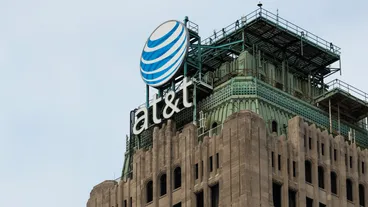
On the menu are AT&T's failed takeover of T-Mobile, a bill to set rules for spectrum auctions, a payroll tax bill pending in Congress, a bill to change FCC procedures, and Verizon's planned collaboration with Comcast and other cable companies.
We all remember the 1980s and its awesome fashion and music. While some may want to revisit those aspects of the past, I don't think anyone wants to return to the era of the cable and Ma Bell monopolies.
Subscribers to Verizon Wireless will be able to watch the February's Super Bowl live on their smartphones in what will be the first time the game is ...
AT&T, Sprint, T-Mobile, and Verizon do so many bad, annoying and anti-consumer things that it's almost impossible to document it all.