
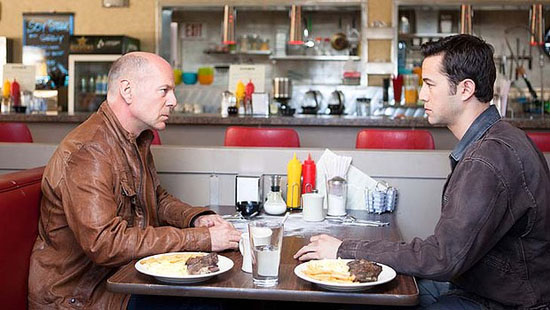
WARNING: MASSIVE SPOILERS TO COME. If you haven't yet seen Looper, then you shouldn't be here. And, if possible, you should travel back to the start of the weekend and tell your past self to catch the next showing. It lost the box office to Hotel Transylvania. Seriously? Trust us: It'll be worth your, err... time.
DISCLAIMER: We are not here to ruin anyone's movie-going fun. We greatly enjoyed Looper. But we are here to fry your brain like an egg. It's kind of our thing. A detailed analysis of Looper's time travel whys and wherefores is to follow. Just keep in mind that delving into the details is one reason we love time travel movies, so don't take our showcasing of inevitable plot holes as an indictment of the film.
So break out your diner straws. It's time to make some diagrams.
The Rules
The only fair way to examine a time travel movie is to follow the rules the movie itself sets up. You can take issue with the method (Superman flying backwards around the Earth, the Enterprise slingshotting around the sun, etc.), but from there a simple examination of causality will reveal all you need to know about the time travel trickery at work. On this front, Looper mostly does a good job.
Here's what we know:
Rule 1: There is a single timeline
This is made clear by the fact that alterations to Young Seth's body instantly manifest in Old Seth. And, when Young Joe carves "BEATRIX" into his arm, it instantly appears on Old Joe as a gruesome scar.
Rule 2: Sending someone to the past creates a divergent timeline
This is made clear by the the quick peek of Joe's life in which he does "close his loop" (that is, he kills his future self, played by Bruce WIllis). It's different than the one he experiences in the story of the film. Put another way: time travel to the past obliterates the pre-existing timeline. Even though it still happened, you can't get it back. Typically, this isn't as alarming as it sounds. When an old looper is sent to the past to close their loop, for example, no alterations take place.
Where it gets messy is when, say, Seth or Joe let their loop run. Then the life that Old Joe experienced (which we see in a rapid montage through 30 years) is suddenly gone. And the one that Young Joe experiences will be something different. Probably.
The movie also accepts that there is a certain degree of probability built into everyone's life. This is why Old Joe's memories aren't instantly obliterated the moment he arrives in the past and socks Young Joe in the face, even though Old Joe has made a huge change to the course of Young Joe's life. As events become more certain (or occur), they displace Old Joe's memories. We see that Old Joe is still able to hold on to the memory of his wife, because the events he has altered haven't yet disallowed for their meeting in the future. If he were to change something critical to their meeting, like, as Young Joe tells him, showing Young Joe her photo, so that he is able to avoid her in the future, Old Joe's memory of her would be instantly eradicated. It's like Marty McFly's family polaroid in Back To The Future -- it fades slowly as events play out and become less likely. Always changing, the future is. (Oh, now you get it.)
This leads us to a third rule, born naturally from the first two:
Rule 3: Paradoxes are not possible
The Looper universe is self-correcting (see Rule 1). And, even when a divergent timeline is created (like when Old Joe comes back and runs), the previous timeline still occurred. It preceded and was necessary to set up the new, divergent timeline (see Rule 2).
In the film itself, we experience two timelines. The timeline of Old Joe, which we see via montage, and the timeline of Young Joe, where the story of the film takes place. But the movie implies at least two preceding timelines. Let's lay them all out so that we can see how the rules manifest and how time works in Looper's universe.
The Timelines
Timeline A
In the original timeline, there are no loopers in 2044. Abe has not been sent back from the future to create them, because time travel has not yet been invented. Presumably, the Young Joe in this timeline grows up to be a drug-addicted criminal (that's a joke), or otherwise a poor streetrat. There's no one there to see his potential and "put a gun in his hand," as Abe says.
Eventually, some 30 years in the future, time travel is invented, deemed illegal and used by the mob. They then send Abe to the past, creating...
Timeline B
Arriving in the past, Abe creates the loopers some time in the 2030s (the film takes place in 2044 and Joe has already been a looper since he was only as tall as a blunderbuss). Abe finds streetrat Joe and puts said gun in said hand, altering the course of Joe's life.
Young Joe eventually grows old. What exactly happens in his future, we can't be sure, but we do know that either a.) He does not meet his wife, b.) His wife is not killed, or c.) He does not break free from the mobsters and send himself back in time with the intention of saving his dead wife. We know this because of when Old Joe does arrive in the past, creating...

Timeline C
Old Joe does not fight for his life. He has a sack over his head and Young Joe kills him, closing his loop. Young Joe then grows old and, eventually, does meet his wife. This is the timeline we see when the film presents a flash-forward of Old Joe's life. When the mobsters capture him, his wife is shot and killed. Joe makes changes to the timeline by taking out the mobsters and sending himself to the past, determined to change the future and save his wife's life, which creates...
Timeline D
In this timeline, where most of the film takes place, Old Joe is rewriting the timeline: he averts death, Young Joe does not close his loop and... well, things get a little hairy. When Young Joe kills himself at the end of the film, he prevents any future Joe-related loops from occurring. Old Joe is instantly eliminated from the timeline because Joe died, right there in that field, by self-inflicted blunderbuss wound. Ouch.
To recap: The movie we see comprises Timeline C and Timeline D. But Timeline A and Timeline B are implied, and necessary to set up the story, which occurs in Timelines C and D.
It's also important to keep in mind that these timelines are not simultaneous, but sequential. Each time Joe is sent to the past, it creates a new, divergent timeline that takes the place of the preceding one. But that does not mean that the preceding one never happened. It (or they) were necessary to set up the current timeline. Objects and people displaced from those timelines, even if they cease to exist, still occurred before and are still able to occur again. Thus, Joe's memories can influence the final timeline without creating paradoxes.
The Rainmaker: An Evil Dude Who Doesn't Make Sense
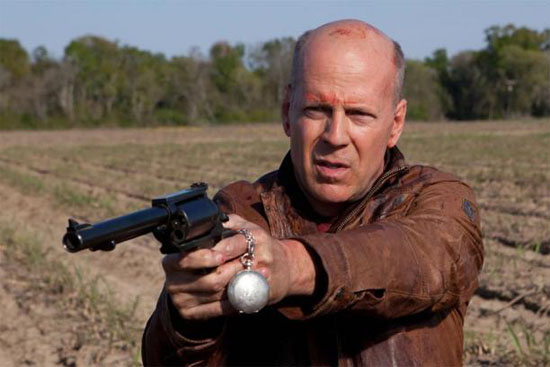
The primary plot of Looper is based on a shadowy crime lord known as the Rainmaker -- an evil dude so super evil, he's taken over all the crime syndicates of the future single-handedly. As the film plays out, we gather more theoretical information about the guy: he maybe killed his mother, he maybe has a fake jaw and he's closing loops with all available haste.
When Old Joe returns from the future (Timeline C) to the film's present, he uses information he's gleaned about the Rainmaker to go eliminate him when he's a child (his arrival and escape creates Timeline D, changing the timeline Old Joe remembers and experienced). There are a few non-time-travel-related plot points that make this strange: Being a looper means knowing what you signed up for. One day, you'll have to close your own loop. Old Joe knew that the mob would come for him eventually. So right off the bat, it would seem that the existence of the Rainmaker is irrelevant. The Rainmaker didn't start the mob and didn't invent time travel. He merely took over the mob (with terrifying speed and efficiency).
Couple that with the fact that it was a fluke shot from a mobster that killed Old Joe's wife, not the Rainmaker himself, and it's fair to question Old Joe's fascination with killing the enigmatic mob boss in child form. Why not just go eliminate the child version of Henchman 42?
Does Joe create The Rainmaker?
What looper wants us to believe is that Old Joe is actually the factor that creates the Rainmaker by screwing up Cid's life when he's young; that by killing himself, Joe is preventing the creation of the Rainmaker. But following the rules that the film sets out, we quickly find that this is not possible.
In Timeline C, Joe closes his loop, killing Old Joe before even knowing Old Joe is the guy who shows up on his tarp. This implies a Timeline B and creates Timeline C, where Old Joe makes no attempt at changing history. It's only later in Timeline C, when Joe has lived his 30 years, that his wife is killed and he gets the inkling to change the past -- because of the Rainmaker.
So in order to motivate Old Joe to go to the past and prevent Rainmaker's existence (thusly, as the film implies, causing the Rainmakers existence), the Rainmaker has to exist already. As we noted in the timeline rundown, the movie shows us a timeline in which Young Joe continues through his life, and the Rainmaker -- who was already there, pre-Joe-murder spree -- eventually causes the murder of Joe's wife. It's the reason that Joe jumps back in time with the intention of changing the future in the first place.
We know that the Rainmaker existed before Joe interfered, because we saw how that timeline played out.
So what created the Rainmaker?
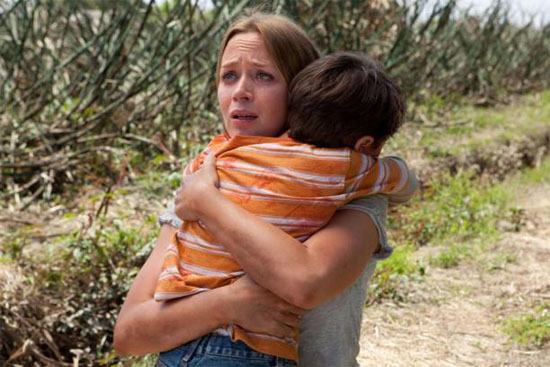
Theoretically, it's the death of Sara, the mother of Cid, the super telekinetic boy genius who will grow up to be the Rainmaker. Looper's plot works on the notion that Cid turns all evil because Sara dies before she has a chance to influence Cid to turn into a superhero, rather than a supervillain. In Cid's un-Joe-ified timeline, however, the Rainmaker still exists -- so there must be an antecedent, a Rainmaker creator, that was not Joe-related.
It gets a bit tough to see the sense of it, because Looper is supposed to be about a time loop. The trouble there is that time loops only work on a premise of predestiny -- the events of the past and the future have to be inexorable, and thus the repetition happens every single time through the loop because people keep making the same mistakes. Throughout the film, however, we see that the future is malleable; in fact, it's a rule of Looper's universe (see also: The Rules).
If Joe was the creator of the Rainmaker, he would only be so for one timeline. And, following the tale of the film, Young Joe would remember what created him. He wouldn't repeat Old Joe's actions and create the Rainmaker again.
We've already seen that Joe uses knowledge of the past to return and change it; any consecutive trips through the loop, Joe would have knowledge to alter the loop. Even if he created the Rainmaker once, he wouldn't do so again -- he'd already know better.
So was Joe's sacrifice for nothing?
Uh... yeah. Kinda.
What we know for certain is that it's very possible Joe's suicide at the end of the film does nothing to stop the Rainmaker's creation, because there must have been an event that created the Rainmaker in the first place (in Timeline C). That means there's probably some other event, waiting in the future beyond the scope of the film, that results in the creation of the Rainmaker. Someone else could kill Sara, for example. Or Sara's influence doesn't help.
We don't know for certain if Joe's sacrifice actually amounts to anything. We do know that he manages to stop Old Joe from creating the Rainmaker right then, eliminating him from the timeline by killing himself. And it's possible that their experiences with Young Joe cause Sara and Cid to change their lives -- maybe in Timeline C, Cid went off the handle and accidentally annihilated Sara, but in this timeline (Timeline D) he's learned a degree of self-control because of the scene in the canefield. In that case, maybe the Rainmaker no longer is created.
But we have no idea. And neither does Joe.
All we do know is that, by killing himself, Joe eliminates his ability to have an effect on the timeline going forward. And he definitely saves his future wife from Joe being the cause of her death (we no longer know what kills her in the Joe-free Timeline D). He doesn't create the Rainmaker that day, for certain. But his sacrifice might not have been enough to save the lives the Rainmaker destroys in the future, if there's some other event that turns him into telekinetic Lex Luthor any way.
And besides all this timeline stuff, one question remains: Why didn't Joe just shoot off his own gun hand instead?
Logical Problems with Looping
The breakdown of the timelines above reveals at least one large logical fallacy in the Looper universe. Because sending someone to the past creates a divergent timeline, the act of sending a looper to the past to "close their loop" actually creates the loop in question.
Additionally, having the loopers kill themselves, and giving them knowledge of when and where that event takes place, compounds issues with the time loop the gangsters are hoping to destroy.
We see throughout the film that the future can be reworked when a person has the right information -- this is the whole premise of Old Joe's actions. In Timeline C, he closes his own loop, gains the knowledge of when that will happen, and uses that knowledge to escape from Young Joe in Timeline D. The question is: Why would you knowingly provide time travelers with the information of their own futures?
Obviously, the mobsters in Looper don't have degrees in theoretical physics, because they would have realized a quick and easy solution to this issue: make the loopers kill one another.

Imagine it's a typical day for Seth. He heads out to his tarp in the canefields. A target appears with a bag on his head. Joe shoots him and collects his pay. The end.
Seth has no idea who that person was. He never even looks at the face of the person; he just dumps the body. If that person was Old Joe, for example, then Young Joe would gain none of the necessary information for his escape. He wouldn't get the golden payday that informs him the guy he just killed was himself. He wouldn't know the date and time of that event. He wouldn't know how to change the loop in the future.
So Seth closes Joe's loop, giving Young Joe no new information about the time loop he's in. And without new information, Joe is incapable of changing the loop in a meaningful way.
Or, just let your loopers grow old and die in the future. They pose no additional threat on the day they're sent back than they did for the previous 30 years, as they waited for their time to come. (That was a pun). If you don't send the looper back, there is no loop.
Of course, in either of these scenarios, there's no movie. But it still makes way more sense if you're a time travel-employing mobster.
Time-Travel Fried Brain
Does your brain still work? If so, let us know what you think in the comments. If not... well, sorry about that.
For more zany, pop culture time travel fun, check out our book, So You Created A Wormhole: The Time Traveler's Guide To Time Travel. It's the first and only field manual for the intrepid time traveler on the go and it's available wherever books are sold.