"It was a good week to be a black man in America," smiles Darryl Burton, thinking back to the week of August 28, 2008. President Obama was the first black man to be nominated for the presidential office, and Darryl Burton was exonerated one day later -- after spending 24 years in prison for a crime he didn't commit.
Sitting in the office of the Catholic Charities TurnAround Program in Kansas City, where he now devotes his time to helping ex-offenders turn their lives around, Darryl describes the events that led to his conviction. Step by step, he recalls the troubling sequence of a wrongful conviction -- his incompetent council that never examined the key witness who would play a pivotal role in establishing his innocence 24 years later, as well as two other witnesses who recalled a "light-skinned, short-haired, man around 5 feet 6 inches." (Darryl is very dark skinned, had long hair and is 5 feet 9 inches.)
Aside from the questionable accounts of two informants facing hefty criminal charges in various jurisdictions, there was no evidence -- no weapon, DNA, confession, fingerprints. And ultimately, no evidence for an appellate court to review.
In 2002, after 18 years of incarceration, Darryl's long hours mastering the law in his cell led to consideration by the Eighth Circuit Court of Appeals -- a notoriously conservative jurisdiction.
In a heartbreaking opinion, the court expressed its deep sympathy that they were unable to review his case for lack of jurisdiction, but emphasized, "One cannot read the record in this case without developing a nagging suspicion that the wrong man may have been convicted of capital murder and armed criminal action in a Missouri courtroom."
The court added:
"New evidence has come to light that shakes the limbs of the prosecution's case. One eyewitness has recanted and admitted perjury. The other eyewitness's veracity has been questioned by a compatriot who avers it was physically impossible for him to have seen the crime." Yet, the petition was denied.
He was crushed.
Darryl Burton grew up in a poor, large family in St. Louis. The middle child of nine, his parents separated when he was young, and he rarely saw his father again. As a youngster, he had issues with the law -- arrested at age 17 for second degree burglary -- but had completed reform school and applied for college by the time of his arrest at 22 years old. His trial ended in a guilty verdict after one hour of review by the jury -- with a capital murder charge and a life sentence plus 50 years.
"My crime is that I was poor and black," he explains, still unable to fully grasp how he had been so betrayed by a criminal justice system that was supposed to protect people like him.
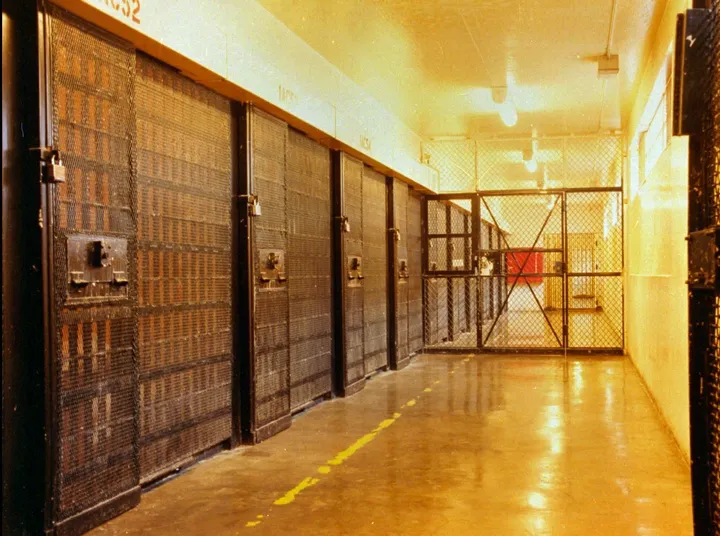
His description of his time in maximum-security prison is haunting. He recalls the screams that would echo through the facility, the suicides, the rapes, the constant state of paranoia and the brutality of the guards. He was diagnosed with PTSD upon his release, and was unsurprisingly unable to leave his room for a month when he was released.
"I had spent over half of my life -- and most of my adult life behind bars, I was terrified."
Ironically, because Darryl was exonerated, he was not eligible for the benefits (housing, counseling, etc.) that offenders receive upon release. He literally had to start from scratch, now as a middle-aged man. He hadn't seen his daughter, Tynesha, who had become a ward of the state after his incarceration, in 26 years and he received no compensation for his time in prison.
Unfortunately, Darryl is not alone in his experience. A recent Ohio State study found that an estimated 10,000 people in the United States are wrongfully convicted of serious crimes each year. (There is an estimated false conviction rate of 7 percent.) The results are based on a survey of 188 judges, prosecuting attorneys, public defenders, sheriffs and police chiefs in Ohio and 41 state attorney generals. The most important factor leading to wrongful conviction is eyewitness misidentification.
When Darryl was finally released in 2008, with the help of Centurion Ministries and their attorneys, he knew he had to share his story.
"My mission now is to educate the public about wrongful convictions, to spread the message of hope and forgiveness and to share how my journey from an unbeliever to a Christian convert gave me the faith to carry on during my darkest hours."
Listening to the list of names of people he is confident have also been wrongly convicted, it is clear Darryl is coming to terms with his purpose in this life.
"The real problem is the cases with no DNA evidence, like mine. For those guys, it's like paddling upstream with one paddle -- actually a half of one paddle."
Remarkably, Darryl now preaches forgiveness and compassion -- mainly because he understands the impact that the prison system has on the people shuffled in out and of its confines.
"Men are literally sold for boxes of cigarettes in prison. They suffer from shame, grief, and fear -- it's no wonder that so many of these men return -- many of them are simply unable to transition after complete dehumanization."
With a 67.5 percent recidivism rate nationally, the flaws in the American justice system extend beyond people like Darryl who are wrongfully convicted. They shake the very core values of the society we want to live in. We crusade to rescue people who suffer abuses abroad, but tolerate the fact that human beings in our own country are treated worse than animals and that prisons have revolving doors -- and very expensive ones at that.
As Darryl continues to lobby against wrongful convictions at the state level, he will never forget the injustice that he suffered, but he has faith that he didn't suffer in vein.
"I have to share my story," he explains, "I have to hope that something can change."
For more information on Darryl or to contact him directly, please check out his website.