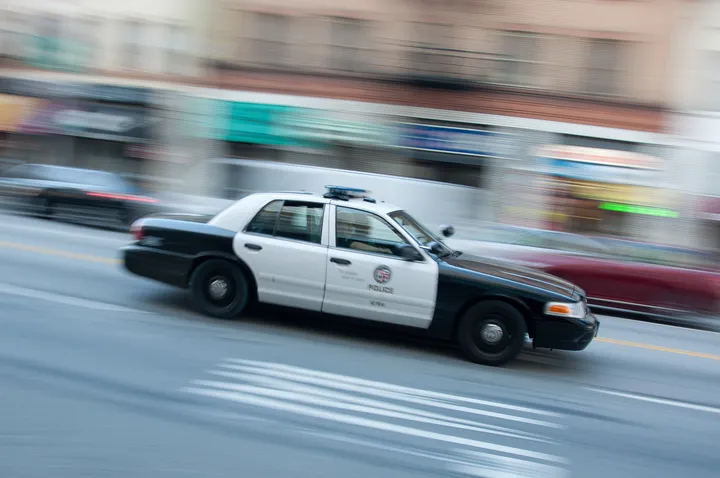
In the fall of 2010, I lived in Los Angeles as I prepared to direct Rampart. Rampart is a movie about a very bad cop (Woody Harrelson) who refuses to surrender his brutal sense of street justice. Set in 1999 -- a time of great change -- the LAPD, hemorrhaging prestige and money from the extensive Rampart anti-gang unit Scandal, was put under the microscope, restructured, reworked and rebranded.
Like some post-Western Hollywood movie, the LAPD of the late 90s presented its cops with a very simple choice: change your ways, help rebuild the LAPD image, or fade away. Evidence tampering, police brutality, robbery, drug dealing, perjury, even murder charges were all lobbed at the Rampart police department, based on one or two corrupt cops' testimonies, and the flood gates opened to accusations that still resonate today, many true, many false, all palpable in the war zone that is the world of law enforcement in this country.
That fall, I was talking with cops, trying to get into their heads, get a sense of their heart, who they are as human beings. One white cop, leaning confidently on his idled squad car in downtown LA, took his time explaining to me that the battle for the streets of Los Angeles is never ending and it's the same everywhere. He laid out a grim picture that ultimately defined his world: there are criminals out there who play their parts brilliantly as bad guys so that the police only have to play their part as the opposing force. It's all very well defined, a cat and mouse game that lasts all day every day. Each side is under siege and each side reacts with a vengeance. The rules of the game are a matter of who gets away with what and for how long.
He told me endless stories in great detail about capers and heists, about gangbangers and shootouts, and he told me many stories about the sex lives of cops (which made a lot of sense as he was basically describing the thrill of power games. Sex, as we know, goes hand in hand with fantasies of domination, to use a metaphor). He told me a few stories about the horrors he's seen and then hinted at the horrors he's committed. Over 20 years on the department, he's been penalized for many misdeeds, but he says he just can't get enough of the grind, the action, of "hitting the street, getting down with the game" and trying to win for his team every day.
Hours later I found out that even though many of his stories were laced with cheerful racism, homophobia, sexism and ant-Semitism, his girlfriend was black, his brother gay, and his sister a Jewish convert who married a Jewish man and raises her kids within the faith. He told me he loved his family.
In a word, it was a show. He was a performer. And he had me from the get-go. He played his part, he wasn't kidding, there's a certain theatricality to police work. He was a character, in the same way I was about to make Woody Harrelson a character in a movie, except for him the consequences were real.
Before we said goodbye, I asked him "how does it stop?" How is this war, this occupation mentality, this theater of siege and retribution get resolved? He gave me a long baffled look, as if I've asked a ridiculously inconsequential question. He was almost embarrassed for me. I was a glasses-wearing movie director, for god's sake, I should have been smarter than asking a question like that. "How does this get resolved?" he asked appalled "Are you kidding? He said the endless loop of police brutality and criminal behavior has to do with the education system in this country, it has to do with jobs. He said it wasn't his "department." His mission was not to solve the crime problem in this country, his duty was to kick ass in the name of law and order.
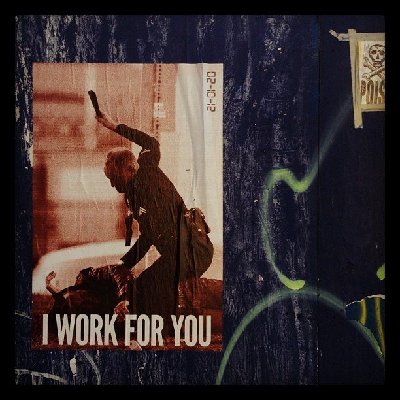
I knew he was on to something. In a society that makes incarceration of minorities and the poor a lucrative business, a society that falls further and further down in its level of public education in comparison to other advanced countries and offers fewer and fewer job opportunities for its working-age population, this war on the streets is the only game in town. That look of bafflement he gave me was also an indictment. It said "I am doing your work, I am living out your desire for uncompromising law enforcement; you are looking the other way, you are tolerating me and you mostly don't want to know about the shit I pull on the streets so you could sleep well at night in your comfortable bed and not ever think about what's really going on in a world where jail cells replace jobs and incarceration replaces education." "I work for you," that look was telling me, "How dare you ask me how to resolve this problem? You threw me into this game, and maybe I love it, maybe I love putting on the uniform and getting away with misconduct which I excuse for myself as reactions under pressure and as a result of traumatic situations experienced on the streets, but don't pretend for a second that I can resolve the problems that make society sick.
I work for you, he was clearly saying. You, Mr. Tax-Paying-Citizen, control the environment for this game; I just play it. You want it to be different, change the game, because you're not going to change the behavior of a bad cop or a power structure that delves into the darkest corners of human behavior. Sure, individual responsibility goes a long way, and cops must be accountable for breaking the law, but the brutality cops sometimes show, be it in the Occupy demonstrations or a random beating of a motorist, is society's brutality. It's just a mirror. Bad apple excuses and department-wide systematic fixes will keep us going in circles. They work for us. What are we going to do about it for their sake and ours?