More

Featuring fresh takes and real-time analysis from HuffPost's signature lineup of contributors
Pamela Haag, Ph.D.

GET UPDATES FROM Pamela Haag, Ph.D.
 

Are We In the Post-Romantic Age?

Posted: 02/09/11 08:45 AM ET

Romance fades. Everyone knows this.

The first flush of true love in marriage mellows into something less combustible. Some spouses mourn that loss quietly; some divorce when it happens; others welcome it.

I've got something else in mind, however, when I propose that we're entering a post-romantic age. New ideas and ideals about marriage are beginning to coalesce into a larger cultural mood.

There are fashions to everything -- including love and marriage.

In the 19th century, Americans mostly viewed marriage as a social institution and duty. It wasn't "about" romance, which isn't to say that spouses weren't ever in love, but that love wasn't the big point of marriage. In the 20th century the romantic ideal emerged for marriage as an emotional bond forged by love, as Stephanie Coontz has described.

But the romantic fashion of the 1900s can't last forever. Good riddance, some would say. Already, the traditional marriage imperatives have crumbled on us: We don't need to marry for a meal ticket, for a legitimate and fun sex life (the opposite's true, perhaps), to secure social standing, to convince people we're not gay, to certify paternity, or even to raise children. Now, maybe the wobbly romantic foundations of marriage are getting revised, too.

Among other characteristics, the "post-romantic" age means that we marry people more like us than ever before. The opposites attract, "you say tomato, I say tomahto," staple of the romantic plot is over. With the strong trend toward "assortative mating," as researchers call it, like marries like today. Post-romantic spouses are more equal in the office and classroom, and more alike in attitudes, experiences, roles and goals.

By the post-romantic inflection, marriage is becoming more like other types of relationships in our lives. There's a kind of intimacy blur afoot, whereby one type of relationship blurs more easily into another, with less emotional distinction or singularity assigned to marriage. Post-romantic spouses act more like friends; friends (with benefits) act more like spouses; colleagues become "workplace spouses," spouses become professional collaborators, and so on.

The post-romantic will tell you that the best qualities of marriage are interchangeable with other intimacies. Spouses say they're like best friends, or "soul mates." Or, they're comrades and "life partners." It would be almost louche or vapid to suggest in whatever euphemized terms that you weren't marrying your best friend but, instead, your crazed red-hot lover, because he drove you mad with lust.

Romantic poets revered the "spontaneous overflow of powerful feelings," as Wordsworth wrote, and so do the vernacular romantics among us. Anything less is a soul-compromising sell-out. The post-romantic not only accommodates but idealizes the stable over the sublime. If the romantic imagines himself always 25, in the throes of youthful passion, the post-romantic imagines himself always 65, seeking the comfortable, anchoring marriage of companionship that we'd crave in a retirement community. "When you're 70, you don't care about all that [emotional] stuff," says one wife. "What you care about is a companion."

This post-romantic message gets reinforced, for different reasons and in different ways, from several quarters today, ranging from the "pro-marriage" political factions who warn that marriage takes "hard work" and isn't fun and games, to personal memoirs that contemplate settling for "Mr. Good Enough," to ordinary spouses who contentedly describe marriage as a "home base," or who cherish "the grit, and the everyday" routines of marriage over emotional vitality or inspiration.

We marry later. Marriage for the romantic was the start of the story, and the hub of adulthood out of which its other spokes were built. Today we marry in mid-plot of our lives. And many of us come to marriage pre-loved, and pre-heartbroken, so the idea of marriage as the capstone of the one-and-only love isn't quite the story. For the post-romantic, marriage is more like a mid-course adjustment.

For the romantic, passion and fidelity were the bricks and mortar of a relationship. In a post-romantic age, the status of monogamy has begun to falter. Not for everyone, of course -- especially not for those who see adultery as a cardinal sin. But for some post-romantics, there's a stirring of agnosticism or a new marital ethics around sexual fidelity. A 2008 study finds, for example, that nearly half of wives surveyed thought they'd be forgiven for having an affair, and more than half would forgive their husbands after the fact, if they did. "Monogamy isn't the thing. Truth is what's important," explains one post-romantic wife.

The romantic metaphor of commitment and intimacy was the closed circle of the wedding ring. The post-romantic metaphor is the web. Post-romantics imagine themselves more open, more connected in different and multiple ways to people -- a change accelerated by technology.

Maybe Bill and Hillary Clinton, the prototype post-romantics, had it right: It's hard to tell sometimes where eccentric ends and vanguard begins. It could be that their marital perseverance through infidelity (and how) isn't a story of Hillary being calculating or enabling, or a story of ambition's triumph over love, but just of fidelity's slightly demoted place in the post-romantic's heart.

The romantic imagines happily ever after. The post-romantic imagines differently. Maybe marriage can be semi-happy and forever, or maybe it can be blissfully happy and not forever, but probably not both blissfully happy and forever. So maybe marriages are ideally perishable, the post-romantic reasons, good for two decades or so, to raise children, and that's not so bad. "You could have a few successful marriages in one lifetime," a wife says. Even within marriage, the post-romantics can imagine separation -- of time or space -- as a preferable thing, not a failure. Some take "marriage sabbaticals," and spend time apart; some have separate spaces in their lives.

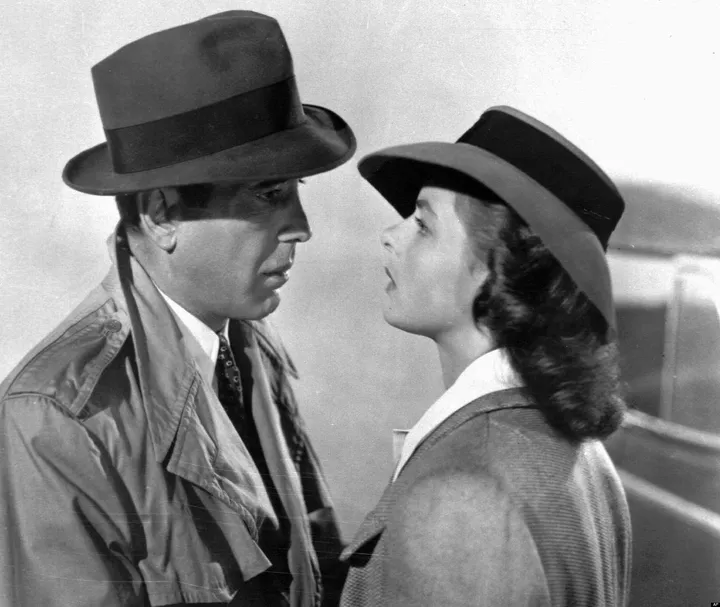
Like most Americans I've watched "Casablanca" for years. It's a good Rorschach test of where you stand on the romantic to post-romantic spectrum. The diehard romantics root for Rick Blaine, of course; the post-romantics secretly think that Victor Laszlo makes a good case for himself, not only as a noble (albeit drab) husband but also as a genuine (post)-romantic lead. The deeply post-romantic, however, thinks that the real love story is between Rick and Captain Rains, who walk off into the foggy night at movie's end, companionably anticipating the "start of a beautiful friendship."

Pamela Haag, Ph.D. has worked as director of research for the American Association of University Women and as a speechwriter, and has been published in the American Scholar, Christian Science Monitor, Michigan Quarterly Review, and on NPR, among others. She has held fellowships from the National Endowment for the Humanities, the Mellon Foundation, and a post-doctoral fellowship at Brown University. She is married and lives in Baltimore, MD.

"Marriage Confidential: The Post-Romantic Age of Workhorse Wives, Royal Children, Undersexed Spouses, and Rebel Couples Who Are Rewriting the Rules" ($25.99 hardcover) will be published by Harper Collins on May 31, 2011.

 
Romance fades. Everyone knows this. The first flush of true love in marriage mellows into something less combustible. Some spouses mourn that loss quietly; some divorce when it happens; others welc...
 
 
  • Comments
  • 148
  • Pending Comments
  • 0
  • View FAQ
Comments are closed for this entry
View All
Favorites
Bloggers
Recency  | 
Popularity
Page: 1 2 3 4 5  Next ›  Last »  (5 total)
02:25 PM on 02/15/2011
Thank you for this neatly considered, well written piece. I loved reading it. Especially the Casablanca conclusion.
07:31 AM on 02/13/2011
Who takes sides in "Casablanca"? I wouldn't have thought it possible to so totally miss the point as to think there was some romantic connection between Rick and Capt. Renault (played by Claude Rains, which you had a senior moment calling him Capt. Rains, above.)

Also, I would like to point out that Casablanca has been translated for viewing in at least 15 other languages (according to IMDB), so it is hardly an American obsession.

Lastly, in my small town, people still aspire to romance, weddings and children. If they happen to be divorced, there is quite an active singles scene for older people. They seem to want to do it again. So, perhaps your experience of a post-romantic age is not so universal as you make out.
02:53 PM on 02/15/2011
I would say you are not being insightful enough to get the writer's point. The 'romantic connection' she suggests between Capt. Renault and Rick is a metaphor for highly calculated, mutually-beneficial relationships. Whether you agree with the social commentary or not, I don't care, but the Casablanca reference was a light-hearted, fun (not to be taken too seriously) way if seeing on which side of the fence you stand.
photo
HUFFPOST BLOGGER
Tom Matlack
Man, Husband, Dad, Writer, Venture Capitalist
11:52 AM on 02/11/2011
Romance is not dead, at least among some men I know. Check out the love and marriage series at Good is Good (http://bit.ly/Good-is-good) with author Laura Munson.
photo
HUFFPOST SUPER USER
Ishmael1
A Man Born To Hang Ain't Gonna Die Of Drowning
07:11 PM on 02/10/2011
From the Manyoshu:

"You until 100,
I until 99,
Together while our hair turns,
Grey and White."
06:13 PM on 02/10/2011
"We don't need to marry for a meal ticket, for a legitimate and fun sex life (the opposite's true, perhaps)"
--- Just wondering if I can move to your community. Where I live most women won't even begin to have sex with you until you promise them that you are at least considering marrying them.
I am speaking of our culture here in the USA. I long to be back in the UK where the occasional woman would just want a good shag that we both enjoy. Here it is always seen as a swap.
I long for truly liberated confident women.
photo
HUFFPOST COMMUNITY MODERATOR
MIvoter1231
I rarely answer replies, too many are just hateful
09:41 PM on 02/12/2011
Wow, you really don't get out much. There are plenty of women that will do that, that's where friends with benefits comes from. Perhaps it's more you than the women you know. Could you perhaps be hinting at more than you ever have any intention of giving? I wouldn't be surprised.

Some of us, however, simply don't enjoy sex without being in love. Not because it's right, wrong or indifferent, It's just not in our make up to get hot and bothered enough about any man without an attachment emotionally. Sex starts in the brain.
This user has chosen to opt out of the Badges program
photo
04:23 PM on 02/10/2011
The mistake of the young is to think that they know what it is like to be older.
09:35 AM on 02/10/2011
The Problem, it seems, is that you're "out of touch..."
"Like most Americans I've watched "Casablanca" for years"

Casablanca is a simple script:
Two lovers that "meet again" after! one of them is deserted.
(What do you want outta that situation?)
07:30 AM on 02/10/2011
I once told a woman that I wouldn't pick up the check until women had to register with the Selective Service. She didn't take it very well.
photo
french queen13
my beloved is mine and I am his
02:47 AM on 02/10/2011
"Romance fades. Everyone knows this. "

How about, "Romance CAN fade." It doesn't always. And not everyone knows this.

I'd also question that romance has to refer exclusively to new love. If it does, how would one explain the couples who have been together for decades and are still head over heels in love? Who thrill to the simplest thing, like sitting in the garden in the evening and talking about what they did during the day? Who can look across a room at each other and get all fired up just by doing so?

I'm not making up these examples, either. I'm thinking of people I know.

For me - no friend would ever be a "friend with benefits". Not EVER. My beloved is my best friend as well, but he is unique, he is my one and only and I am his. That has not changed in decades, nor our romantic pleasure in each other, which goes right along with companionship.
photo
European1919
I am the Pigmâ’¶n
01:11 AM on 02/10/2011
The animals have it sorted: meet up for mutual physical fun and satisfaction, but do NOT co-habit or, even worse, marry.
This user has chosen to opt out of the Badges program
photo
antaeus
Marriage Equality Is Here
02:00 AM on 02/10/2011
Ah, be very careful of resorting to morality drawn from animal examples: some of them do mate for life.
photo
songoftherushes
I can think, I can wait, and I can fast
02:25 AM on 02/10/2011
And/or eat each other..and not in a nice way.
photo
french queen13
my beloved is mine and I am his
02:26 AM on 02/10/2011
Yes, and there are lots of variations in animal communities.
This user has chosen to opt out of the Badges program
photo
antaeus
Marriage Equality Is Here
01:06 AM on 02/10/2011
The character of Rick is calculating and pragmatic; even his rescuing of Ilsa is ascribed to a super-ego concern for Laszlo's "work." Laszlo himself is surely Romantic (in the 1805 sense of the word) given his quixotic and thrill-seeking actions. It strikes me as mistaken to view CASABLANCA as a paean to romantic love when so much of it concerns social action.

I also think your thesis doesn't explain the push for same-sex marriage. Of course, it is partly a proxy fight for larger social acceptance, but that seems an insufficient explanation to me.
photo
HUFFPOST SUPER USER
Nopinky
09:15 AM on 02/10/2011
It's really not that obscure. Marriage is the dominant social construct and carries dozens of benefits in society. It's also a familiar construct that prevents the "what do you mean by "partner"" questions and establishes a range of inherent perceptions that means spouses don't have to explain their relationship.
This user has chosen to opt out of the Badges program
photo
antaeus
Marriage Equality Is Here
12:40 PM on 02/10/2011
Perfectly stated.
photo
french queen13
my beloved is mine and I am his
05:08 PM on 02/10/2011
Interesting - I haven't read any discussions of Casablanca, so haven't encountered that take on Laszlo. Not sure I'd agree with the description of him as quixotic (in the most direct sense), simply because of what he is fighting. The Nazis were no windmills! :)
This user has chosen to opt out of the Badges program
photo
antaeus
Marriage Equality Is Here
08:55 PM on 02/10/2011
I find Lazlo's character incredible--the magical camp escapes, galloping across occupied Europe and surviving--and my meaning was that any notion of his effectiveness as a Nazi fighter is implausible. But I take your point.
12:25 AM on 02/10/2011
This is a smart and well written piece. It seems to me that what was once called "romantic" is today called "smothering."

It's too bad our perenial and fundamental longings have been usurped by pop culture du jour...
HUFFPOST SUPER USER
jeanrenoir
12:05 AM on 02/10/2011
The disaster of Boomer selfishness, narcissism, and hedonism in the Culture of Narcissism they built on the foundations of "if it feels good, DO it" and "doing your OWN thing" (and tough for anyone related to you, or for your society) may be collapsing at last, as the children and grandchildren of the disastrous Boomers see how the Boomers nearly destroyed America to have a party for themselves that lasted almost half a century, and then, with their usual selfishness, left all the BILLS for their poor descendants to pay. "Sex, drugs, and rock" are not exactly the best prescription for a sane personal life, much less for a sane, or sustainable (to use that favorite Boomer buzzword which they trashed with their actual actions) society.
This user has chosen to opt out of the Badges program
photo
antaeus
Marriage Equality Is Here
01:11 AM on 02/10/2011
Neither Dr. Kinsey, nor the researchers who created the Pill, nor Timothy Leary, nor Charles Manson, nor many others to whom you might easily point were Boomers.

Generation categories can be fun, but they can also be facile, reductive, and distorting, not to mention divisive.
10:04 PM on 02/09/2011
I can't think of a better way to kick-off the lead-up to the most dreaded holiday of the year: Valentine's Day. The conventions of romance that have been thrust upon us by commercial culture have reached such extreme proportions that virtually everyone is guaranteed to be disappointed by even the most thoughtful partners. Most of us fall in love with our spouses, but how many of us can claim the the same heat or spark that we had during those first magical 9 and 1/2 weeks? On what basis do we sustain our relationships past the first blush of love? This is a question certainly worth writing about, talking about, and reading about. I look forward to more insights from Ms. Haag in the coming months!
09:37 PM on 02/09/2011
Thank you, well-written post.
While I was reading it, I was trying to see where I fit, and it seems I fit everywhere, at some point or another!