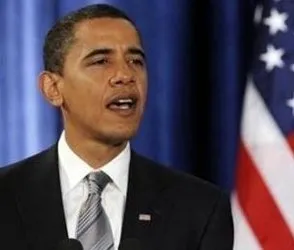
Our new President and Vice President rode the rails to D.C., echoes of history in the air. Obama's deliberate choice of a train for his inaugural journey and Biden's famed love for Amtrak raise hopes that the new Administration will make public transportation a priority. Unfortunately, the current recovery bill heads directly down the opposite track.
Transportation drives our oil dependence and our global warming impact. The sector is responsible for 70 percent of our oil consumption and second only to electrical generation in its global warming footprint. Congress finally raised fuel economy standards in the 2007 energy bill, for the first time in decades. And this will help. But far more needs to be done, and the current bill just cut allocations for intercity rail almost 80 percent from new House Transportation Committee Chairman Jim Oberstar's original proposal, and made similar cuts for public transit.
A month ago, Oberstar -- a longtime supporter of transportation alternatives -- proposed serious investment in rail and transit as part of the recovery bill. He did ask for $30 billion for highways (which could be new highways or repairs). But he also asked for $12 billion for public transit, and $5 billion for intercity rail (including high-speed rail). In an oil-addicted nation and a world of escalating climate change, this was far too much on roads, but at least transit was a significant part of the mix.
The recovery bill unveiled last week contains several important steps in other key environmental areas, including support of loan guarantees for renewable energy, weatherization programs for low-income families, and a boost to alternative energy research and development. But compared to Oberstar's proposal, let alone where we need to go, its transportation provisions are a major retreat.
The bill created by the House leadership, the appropriations committee, and the Obama economic team would cut $2 billion proposed by Oberstar to help transit agencies provide service for growing ridership. This follows a 6.5 percent increase in transit use from 2007, the biggest in 25 years. Meanwhile, local agencies are considering trimming services nationwide, due to fiscal strain from the slumping economy. Intercity rail faces even bigger cuts, from $5 billion to $1.1 billion. We already trail the rest of the developed world in public transportation of every kind. Europe now plans to build thousands of new miles of rail lines, and China is adding a high-speed rail link between Hong Kong and Beijing. After eight years of malign neglect during the Bush administration, we now risk falling even further behind, when this kind of infrastructure is critical to both our economic efficiency and our ability to tackle global climate change.
In a problem with both versions of the bill, the highway investment isn't explicitly targeted to repair and maintenance of crumbling roads and bridges. That's indefensible, since the Department of Transportation already considers more than half of miles driven on pavement as less than "good ride quality," and that backlogged repair projects can be undertaken quickly, generating nine percent more than new highway construction. For any money spent on highways, the commonsense approach is "fix it first."
But most of the transportation money will likely be spent on new highways, with a far worse energy impact. Every year, U.S. public transportation saves 4.2 billion gallons of gasoline and cuts 37 million metric tons of greenhouse gas pollution. It is a key foundation for additional progress toward energy and climate security. Because in-city rail transit is electric, it has the potential to be readily fueled by renewable alternatives. And of course it also offers options for those two old, too young, or too poor to drive. New highway construction also promotes endless sprawl, with accompanying inefficient use of resources, whereas public transportation alternatives foster more clustered development, including in suburban areas, making it possible for people to avoid lengthy commutes for work, shopping, and even for socializing and entertainment. The more transit alternatives are interconnected, the more they build on each other, providing transportation choices, easing congestion on existing roads, and promoting smart growth that ultimately costs less and burns up far less time for people in daily commutes.
There's broad public support for recovery approaches that prioritize transportation alternatives. A new nation-wide survey from the National Association of Realtors and Transportation for America shows that the public is on-board for more transit funding, as well as for the common-sense idea of repairing existing highways before building new ones. A whopping 89 percent of those surveyed agreed that transportation investments should support the goal of reducing energy use. Three-quarters wanted the plan to support lower carbon emissions. 80 percent preferred prioritizing transit and repair rather than new highways. And 45 percent believed new highways should be excluded from the plan altogether. The survey also showed that the public wants our new national team to preserve the environment, reduce dependence on foreign oil, and increase transportation choices even if this delays job creation.
All of this is happening as new, hopeful leadership steams into Washington. As that train pulls up, the legislative train is only just leaving the station, and it needs to make several stops before becoming law. The highway lobby and its allies will have their say. They already have. It's time now for the rest of us to get on board and convince the new administration to change course by boosting investment in transit and rail.
Deron Lovaas is the Federal Transportation Policy Director for the Natural Resource Defense Council and Chair of the Air Quality Public Advisory Committee for the metropolitan Washington, D.C. region. Paul Loeb is the author of Soul of a Citizen and The Impossible Will Take a Little While. See www.paulloeb.org.
Want to reply to a comment? Hint: Click "Reply" at the bottom of the comment; after being approved your comment will appear directly underneath the comment you replied to
Imagine tax incentive to allow people to work from home. Freeing up congestion on the highways, saving fuel and lives.
I strongly agree with the Natural Resources Defense Council. The US contributes over twice as much CO2 per person as any other country. If we want to save our planet, the US must become more instep with the rest of the world by stopping the building of new highways and by prioritizing rail, both passenger and freight, as well as other public transportation.
Loeb and Lovaas are right: this is an historic moment and the potential for real change in transportation policy should be at its greatest in a generation. Continuing to build status quo infrastructure when "each day brings further evidence that the ways we use energy strengthen our adversaries and threaten our planet" is unacceptable.
And not only are we failing to make the required investment, we're actually cutting transit agency budgets! Of course we need to expand capacity, but we also need to defend against cuts that put us further in the hole.
And "green jobs?" What do you think a bus driver is? Before we invest in new green jobs, we need to keep the ones we already have!
All I can say is that this editorial is right on the mark.
We need what Paul Weyrich called Interstate II, a massive program to build and rebuild our public transportation infrastructure, both intercity and regional.
sjl
While there is a real need to rethink the Automobile culture, to say nothing of years overdue to even rethink what an automobile should be, we have a golden opportunity to rethink from scratch what public transportation aught to be. Right now it is based on an 18th century model that people avoid if they can, and is relegated to poor folk who have no other choices.
To make the leap into something that would all but replace private transportation it would need to be all the good things cars are and all the good things trains are. It must come when you want and go where you want. You need the shortest route, and the advantages of trains of low fuel consumption, no need for parking, and no need to drive.
Computers are the answer that was not available very few years ago when all the other systems were built. By making the cars small and computer controlled the need to pack everyone into huge trains goes away. With an artery and capillary system vehicles could travel close together at high speed but each car could have different start/stop points either around a corner or to a different city, traveling up to 200mph in stretches of main arteries.
There is much more that such deep thinking could produce, what is needed most is a path that such things could be accomplished, not only for this bust so much more, that will be the real measure of this administration.
The poll data is really striking--80 percent preferred prioritizing transit and repair rather than new highways. It is extremely rare to have numbers as high as that for any polls on spending priorities. This is clearly a case where the American people are ahead of Congress...Congress needs to catch up.
We need to all write to Congress too, and include the URLs of those polls with a message that they cannot be re-elected by casting votes against 80% of their constituents, end of discussion.
Over the years, there has been and is a huge pro-highway, anti-anything-else slant in public policy on the part of all levels of government. This has gone on so long that even elected officials who normally would be supportive of rail or transit almost always default to roads when policy issues are being discussed.
This is why now, when it's obvious that we need to make a fundamental change of direction, roads and bridges get three dollars for every one spent on transit. Intercity trains? Fugggheddaboudit! That got sliced from $4 billion to $1 billion by the "transportation experts" on the House Appropriations Committee.
We need a broader view when it comes to any stimulus or jobs package. By investing in intercity passenger rail, transit, we can address many of the problems we face: Global warming, dependence on foreign oil, economic development, revitalizing our core cities into walkable, dense developments, good paying jobs that can't be easily exported, healthier lifestyle.
We need a solid, dependable rail and transit system and the industrial base to support it if we are to remain a major player on the world stage. Our past and current course is NOT in our national interest.
We should DEMAND a national commitment to a fully national passenger rail system, vastly improved transit, more and better ped/bike facilties and a shift to walkable cities that allow us to live without having to drive. THAT's the change we need, not more "business as usual!"
The "view" of Congress on transportation has nothing to do with issues, although you've identified the important ones. Their views are determined by the few who talk to them the most, lobbyists. We need to pass laws prohibiting all corporate contributions to the political process, through whatever number of front organizations. The right to political speech is for humans, not the legal contrivance "corporation" or any other synonym for a business.
Deron couldn't be more right on regarding the need to focus more on transit investment and on fixing our crumbling roads and bridges before building more. As a former career DOT employee, this is a real embarassment, because I know that each state DOT easily has at least a billion dollars of bridge and road and pavement repair and maintenance needs that could be ramped up over the next two years. Yet, like an overweight diabetic who can't kick the sugar habit, these DOTs are spurning these absolutely critical maintenance needs in quest for the seductive roadway expansion projects that elected officials just love -- if they are in their district.
Maintenance projects that can be implemented in the short exist... someone just has to ask the crews in the field offices to provide them. Transit operating subsidies are also low hanging fruit. Yet the political process keeps bypassing the healthy solutions. Like consumption of sugar, highway expansion has proven to give us a short term high which quickly falls apart, causes us to crave more, and in the long term, leads to serious problems for the patient.
The leadership of the House and the appropriations committee are the old guard that believe that concrete highways are what keeps America going. I suspect the Obama component of the team doesn't fully understand the issue. It is important to educate these people regarding a balanced transportation system in this country and to let them know that Amtrak has been ignored by past administrations and as a result the infrastructure and rolling stock are old and need replacement. Let us start thinking in a new way and move America forward.
This early (very) betrayal by the Dems should be no surprise. As an earlier poster has noted, the Clinton Administration continually under-funded Amtrak by almost 50% of what was annually authorized. $800 M for Amtrak? They need $7 B just for the NEC upgrades noted last year by Kummant. And $300 M for states? You could spend that in California, or the Midwest, the Southeast, etc. and the casual observer would be hard pressed to figure out where it went. These amounts are really an insult to a lot of folks that helped the Dems get elected.
It appears that the Dems will tell folks whatever it is that they need to in order to get their vote and then get right back to business giving their highway and auto-builder buddies (anyone been following the bailout?) whatever they need (remember, their lobbyists write checks in both directions). Of course, this is nothing new -- see "Moving Millions" by Stan Fischer.
At least Bush and his hatchet man, Mineta, were honest in their contempt of passenger rail and Amtrak. I bet that they, and McCain, are grinning from ear to ear. Pelosi needs to be impeached because she has certainly sold out both her state and her country.
A lot of us are waiting to see if the Obama Adminstration will be willing and able to overcome the tremendous inertia in the federal government. Based on the transportation allocations in the present recovery bill, it doesn't look good. A few months ago, it seemed that the idea that the country needs a more balanced and more efficient transportation system was generally accepted. Nonetheless, the House leadership has produced a bill that will further entrench the inbalance in our present highly inefficient transportation system. The transportation allocation benefits mainly those entities and individuals who benefit from maintaining the status quo. Let's have CHANGE instead and allocate more money for rails, transit and highway maintenance. Let's stop building new highways until the national system is more balanced and the deferred maintenance on our crumbling highways and bridges is caught up.
The new deal used government work projects to put the people back to work to create the AGGREGATE DEMAND need to stimulate the economy and provide human dignity. It worked. I do not want to go there. Projects were highways and dams
Today everyone wants to rush off and create Education when there are no jobs for that education, like somehow that will create jobs. They want to create GREEN ENERGY to replace the evil oil and some how that will create jobs and maybe clean the environment. What if it make Clean energy too expensive. We all move to the city to get away from the windmills. Can the cities survive with all the this WASTE. Two wrongs will not make one right energy.
WE NEED TO BE AS CAREFULL GETTING INTO GREEN ENERGY AS WE GOT INTO OIL
So let's agree with the mission first. I want Clean, Safe, Efficient and Cheap energy. Until someone explains why not? Lets start with CHEAP energy?
The increase in infrastructure spending will simply replace decreased private and state and local spending and not create any new jobs. Regarding the New Deal, many of those projects put govt directly into competition with the private sector, particularly utility companies. This didn't result in a net benefit to the economy, or a real increase in overall capacity, plus the govt charged less than the private sector for electricity rates (because they had lower costs) which reduced corporate profits and resulted in a dramatic decrease in private investment which resulted in higher unemployment.
Given that 2008 should be a banner year for transit ridership, both in absolute numbers and growth, it is difficult to explain why Congress is ignoring the clear message their constituencies are sending, above and beyond resounding approval of mass transit initiatives (a great example is California's Proposition 1A for high-speed rail).
As Loeb and Lovaas mention - transit investments have multiplier effects that, in time, will make significant strides in achieving meaningful reductions in oil use and global warming pollution. That's why it's so critical to jumpstart these projects. Not to mention that transit and 'fix-it-first' highway maintenance create more and better jobs now.
Mass transportation has been chronically underfunded, thanks to the arcane Highway Trust Fund process. The economic recovery is a great start to cover lost ground, and bring our transportation systems into the 21st century.
Loeb and Deron Lovaas are right. Why should restricting the highway investment to maintenance and rehabilitation be controversial?
We are currently witnessing the largest sustained drops in driving that this nation has ever seen. At the same time driving has declined, transit use is at its highest level since the 1950s, and Amtrak just set an annual ridership record in 2008.
It is critical to recognize and address the long term implications of these travel trends and use the recovery package as an occasion to put forth a new vision that reflects new realities. Not more of the same.
This isn't just about global warming and jobs. This is about America being number one. The United States has fallen way behind China and Europe in infrastructure. Our roads, bridges and rail systems are falling apart. Lets do what is right and good for America by giving us something we can be proud of; create jobs, yes, help the environment, yes, but let us also invest in the future of America.
Spending on highways and roads has been very high for the last three years already, so it's not like there's been a lack of spending in that area. I don't understand the comment about US roads are far from "falling apart." You can make that argument about bridges, but not roads.
http://www.economagic.com/em-cgi/data.exe/cenc30/totsa12
Second, it's passenger rail that's in bad shape. Freight rail is in good shape. About jobs, construction spending, particularly on infrastructure, has been at very high levels for the past several years. The new "stimulus" spending on infrastructure will replace the drop in spending seen in very normal cyclical downturn, so it's not like we'll see any new jobs - we'll just keep workers working that would ordinarily lose their jobs.
You must be logged in to comment. Log in or connect with