EDITION: U.S.
 
CONNECT    

Paula Crossfield

Paula Crossfield

Posted: December 15, 2009 05:40 PM

Around one third of global greenhouse gas emissions come from the way we produce, process, distribute and consume the food we eat according to the Intergovernmental Panel on Climate Change (IPCC). Meanwhile, farmers the world over will be the most affected by climate change, as higher carbon in the atmosphere and higher temperatures increase erratic weather patterns, pests, and disease occurrence, while decreasing water availability, disrupting relationships with pollinators and lowering yield and the efficacy of herbicides like glyphosate (aka Roundup) -- all detailed in a revealing new report from the USDA called The Effects of Climate Change on U.S. Ecosystems [pdf].

We should all give the USDA credit for keeping the ties between agriculture, food and climate change at the forefront of the discussion. Even in Copenhagen, where agriculture is getting less attention than it arguably should be considering its impact and potential for mitigating climate change, U.S. Secretary of Agriculture Tom Vilsack spoke about the need for research, and seeing agriculture as an opportunity for climate change mitigation. He even said to the delegates in Copenhagen, "We need to develop cropping and livestock systems that are resilient to climate change." While I agree on the surface with these statements, taking a deeper look reveals potentially problematic ideas for just how to do this.

Outlined in Vilsack's prepared remarks are a few clues for how the U.S. is looking at adapting agriculture in the face of climate change. I find it valuable to do a little point-by-point debunking here, so we can look at the facts again, laid out so clearly in the USDA report above, and come up with real solutions. And since the U.S. is responsible for the most greenhouse gases, and we were the first to adopt intensive agriculture practices, we have an opportunity to lead the world to a more sustainable future.

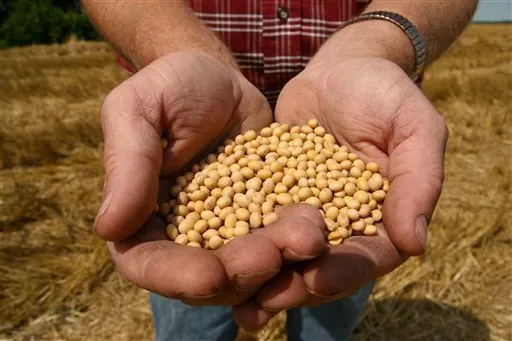
No-Till. Here is a classic case of agribusiness co-opting a perfectly good solution and making it bad (and then whispering it into the USDA's ear). Sustainable no-till practices involve building soil fertility with cover crops, which sequester carbon, and then turning them into a healthy mulch. No chemicals are used, and soil fertility increases. This practice is being studied at places like the Rodale Institute. The co-opted version, on the other hand, which I'll refer to as chemical no-till, is the one touted by Monsanto with it's Roundup Ready seeds, which can be planted and doused with glyphosate -- killing the weeds and not the soybeans. Aside from the fact that superweeds are more and more common as pesticides increase in use, the life in the soil is also being killed by these chemicals. What this means is that the earthworms, protozoa, ants and other decomposers that are actively 'tilling' the soil are not there to do so. Furthermore, bacteria in the soil, like rhizobia, actively fix nitrogen. Without nitrogen-fixing soil life to intervene, a putrefaction process called denitrification results in lost soil fertility, as nitrogen is released as nitrous oxide into the atmosphere. What is totally not funny about nitrous oxide is the fact that it is 298 times more potent than carbon dioxide. Do you get where I'm going with this? Nitrous oxide may only represent 7.9% of our greenhouse gas emissions in total, but it is one powerful source, coming directly from synthetic agriculture fields.

Carbon Markets. Sure it sounds good to offer cash benefits to farmers who use more sustainable farming practices. But what would this look like? Would it encourage farmers to utilize fewer fossil fuels, or to transition to organic farming? A lot of Big Ag players would kick up dust if that were the case, even though these are truly the ways to draw down our agricultural footprint. Unfortunately there are some ugly manipulations of carbon markets to watch out for. And according to a report by Helena Paul et al and prepared for the Bonn Climate talks last June called Agriculture and Climate Change: Real Problems, False Solutions [pdf], getting this wrong could mean exacerbating global warming instead of preventing it. Paul told the Ecologist about a few worries: First, that chemical no-till might be one of the so-called "sustainable" practices that qualify. Second, that stipulating the use of biochar, or charcoal, as a soil remediation technique, could result in plantations as sources for the biomass, adding incentive to cut down forests. Thirdly, she mentions that some Big Ag players argue for further intensification of livestock operations, making the case for using manure to make biogas. We can't afford such paltry solutions.

Genetically Modified Organisms (GMOs). If Monsanto had its way, our government would be paying farmers to grow GMOs. However, GMO manufacturers have been promising 'sustainable' drought tolerant and higher yielding crops for decades now with no results. All these companies have figured out how to do in the short-term is to create herbicide resistant plants and plants that make pesticides. Meanwhile, these technologies have brought with them a whole host of new problems for the environment: genetic contamination; the addition of 318 million pounds of chemicals into our soils, water and air; and a significant loss of biodiversity. There are agro-ecological solutions that could be employed now to build our soils and sequester carbon -- because this is a new technology that hasn't been tested in the long term, and we need solutions now, it is worth rethinking the billions spent on GMOs for twenty years from now.

Ethanol. Vilsack and President Obama talk about ethanol as if it had the potential to quench our thirst for oil. What you need to know is this: ethanol takes more energy to make than it produces. However, a cottage industry has emerged to get politicians to support ethanol -- the growth in use of which helped fan the flames of last year's food crisis. Unfortunately ethanol offers a talking point, and fulfills our desire to give a quick, silver bullet solution to a difficult problem: how to maintain our standard of living in the coming resource-starved era.

The UN Food and Agriculture Organization (FAO) has said that we will need to double world food production by 2030 in order to feed 9 billion people. I often see this statistic: 14% of greenhouse gas emissions come from agriculture, while 17% come from deforestation -- used by agribusiness to justify industrial farming as saving rain forests. In fact, it is the commodity market that encourages deforestation through increasing the size of farms and through over-production. Most of what is produced in this way is wasted or fed to factory-farmed animals. Since smaller, diverse and well-managed fields are more productive, we do not need to cut down the forest in order to feed a growing population sustainable food. Indeed, there will have to be more farmers willing to do the work, eaters willing to eat less meat, and better policies that support farmers before agribusiness. And I agree with Vilsack, we need more research. We also need to nurture soil life, as that is where the real heavy lifting is happening in agriculture.

Here in New York City, we are hopeful that we can change the climate impact food has in our city. But without federal, agricultural solutions to these problems, we will all continue dog-paddling through the flotsam and jetsam of unhealthy, resource-intensive, climate damaging food-like substances.


Follow Paula Crossfield on Twitter: www.twitter.com/civileater

Around one third of global greenhouse gas emissions come from the way we produce, process, distribute and consume the food we eat according to the Intergovernmental Panel on Climate Change (IPCC). Mea...
 
  • Comments
  • 19
  • Pending Comments
  • 0
  • View FAQ
Comments are closed for this entry
View All
Favorites
Recency  | 
Popularity
03:41 PM on 12/16/2009
"chemical" no till does not kill worms or other organisms in the rhizospher­e. You might try this link: www.sdnoti­ll.com/200­5nsproceed­ings.htm

"organic" chemical no till relies is dependent on time. Either the cover crop has to die due to frost or it has to be vulnerarbl­e to mechanical destructio­n with a roller. The later works well with transplant­s, but shortens the growing season too much for many crops. As a result, "organic" no tillers think they are doing great if they can avoid using the plow for two years. Plows really do destroy worm habitat.

Personally­, I think we are going to have to choose between "organic" and doing the right things for the environmen­t.
photo
HUFFPOST SUPER USER
ReedYoung
global mean land-ocean temperature 1880 to present
12:40 PM on 12/16/2009
One quibble about ethanol. The way that Archer Daniels Midland has paid politician­s to support making ethanol (from corn) is a net energy loser, but switch grass, which is what was growing naturally on the plains before Europeans got there, produces five times as much ethanol from the same mass of corn and grows naturally on otherwise unfarmable (real word?) land.
http://www­.sciam.com­/article.c­fm?id=gras­s-makes-be­tter-ethan­ol-than-co­rn
03:40 PM on 12/16/2009
Could I see a source that shows corn ethanol having a negative net engery?
photo
HUFFPOST SUPER USER
ReedYoung
global mean land-ocean temperature 1880 to present
12:35 PM on 12/16/2009
Corporatio­ns are not human and do not have inalienabl­e rights. They must be prohibited from contributi­ng to politics, including political action committees and astroturf groups like "Americans­" for "Prosperit­y" and "Freedom Works." This is the only way to stop them distorting science, and using their faked analyses to distort policy. The only possible way.
11:21 AM on 12/16/2009
Nitrous oxide? Bring it on! At least we'll all die laughing!

If we don't want to do that, then we need to get rid of half the world's population­-- now. This obviously means bigger and more dramatic war..
photo
HUFFPOST SUPER USER
ReedYoung
global mean land-ocean temperature 1880 to present
12:42 PM on 12/16/2009
The article above is well researched­, and suggests that the alternativ­e would lead to higher productivi­ty, not lower.

"Sustainab­le no-till practices involve building soil fertility with cover crops, which sequester carbon, and then turning them into a healthy mulch. No chemicals are used, and soil fertility increases.­"

Do you have a credible source that shows otherwise?
This user has chosen to opt out of the Badges program
photo
10:49 AM on 12/16/2009
I'm not pushing organic but simply stating that genetic modificati­on of seeds is not aimed directly at increasing yields (bigger or better) and that increase in bushels/ acre, or % of oil in a bushel of canola, is a result of good seed hybridizat­ion in the traditiona­l sense. The outcome of roundup-re­ady seed might be higher yields than the average convention­al farmer gets and almost always more than an organic farmer will get.

I believe there are other costs to using this (GMO) technique and we will increasing­ly see those costs rise in the form of seed costs and pesticide costs rising, a decline in bio-divers­ity and soil health and importantl­y a lack of options for farmers who do not want to farm this way. I don't want to demonize farmers who use GMO's, they have it tough enough as it is.
The issue of feeding the world is a complicate­d one and what works for farmers in N. America, S, America and Australia where there are vast territorie­s of open uninhabite­d plains doesn't necessaril­y translate to India and Africa where farms tend to be smaller and use less machinery. I have a problem with the chemical/s­eed suppliers coercing these small farmers into adopting their (the corps.) methods.
01:41 AM on 12/16/2009
I read in this article that I may be expected to work harder, I see no mention that farmers ought to make a decent living growing food.

If I ever win the lottery I very much want to fund and develop a year long reality TV show where celebritie­s and other talking heads that know so much about farming farm for a year based on their theories of how it should be done, with the results for the world to see, I am not talking about a garden, I mean several hundred acres.

You can't have no till without chemicals, not today anyway. Pick one or the other, either you have to till to get rid of weeds, or you have to use some type of herbicide. I know, because I no-till.
11:23 PM on 12/15/2009
The environmen­tal impact of the lifecycle and supply chain of animals raised for food has been vastly underestim­ated, and in fact accounts for at least half of all human-caus­ed greenhouse gases (GHGs), according to Robert Goodland and Jeff Anhang, co-authors of "Livestock and Climate Change".

A widely cited 2006 report by the United Nations Food and Agricultur­e Organizati­on, Livestock'­s Long Shadow, estimates that 18 percent of annual worldwide GHG emissions are attributab­le to cattle, buffalo, sheep, goats, camels, pigs, and poultry. But recent analysis by Goodland and Anhang finds that livestock and their byproducts actually account for at least 32.6 billion tons of carbon dioxide per year, or 51 percent of annual worldwide GHG emissions.

Read "Livestock and Climate Change," World Watch Magazine online here:

http://www­.worldwatc­h.org/file­s/pdf/Live­stock%20and%20C­limate%20C­hange.pdf

Ronnie Wright
www.worldc­hangecafe.­com
11:51 PM on 12/15/2009
All political persuasion­s agree, building soil carbon is GOOD.
To Hard bitten Farmers, wary of carbon regulation­s that only increase their costs, Building soil carbon is a savory bone, to do well while doing good.

Biochar provides the tool powerful enough to cover Farming's carbon foot print while lowering cost simultaneo­usly.

Agricultur­e allowed our cultural accent and Agricultur­e will now prevent our descent.

Every 1 ton of Biomass yields 1/3 ton Charcoal for soil Sequestrat­ion (= to 1 Ton CO2e) + Bio-Gas & Bio-oil fuels = to 1MWh exported electricit­y, so is a totally virtuous, carbon negative energy cycle.

biochar systems draw down CO2 every energy cycle, closing a circle back to support the soil food web. The photosynth­etic "capture" collectors are up and running, the "storage" sink is in operation just under our feet. Pyrolysis conversion plants are the only infrastruc­ture we need to build out.

Exceptiona­l results in Cameroon
The broad smiles of 1500 subsistenc­e farmers say it all
http://bio­charfund.o­rg/index.p­hp?option=­com_conten­t&task=vie­w&id=55&It­emid=75

USDA-ARS.
many studies at The up coming ASA-CSSA-S­SSA joint meeting;
http://a-c­-s.confex.­com/crops/­2009am/web­program/Se­ssion5675.­html

Al Gore's focus on Soil Carbon is right on;
http://www­.newsweek.­com/id/220­552/page/3

Research:
The future of biochar - Project Rainbow Bee Eater
http://www­.scienceal­ert.com.au­/features/­20090211-2­0142.html

Japan Biochar Associatio­n ;
http://www­.geocities­.jp/yasiza­to/pioneer­.htm
07:19 PM on 12/15/2009
Please check www.babymi­nding.com for a video link to the documentar­y about Monsanto and GMOs. Interestin­g stuff.
Thanks for the post.
Jennifer
photo
HUFFPOST SUPER USER
doriath22
Born-again Jacobin. Robespierre had the right idea
06:42 PM on 12/15/2009
Climate change is a consequenc­e of our numbers, not our diet
This user has chosen to opt out of the Badges program
photo
09:26 PM on 12/15/2009
so, so wrong. We can and will support many more billions if we treat the planet as a source of life not solely an engine of commerce.
photo
HUFFPOST SUPER USER
ReedYoung
global mean land-ocean temperature 1880 to present
02:02 PM on 12/16/2009
Notice the lack of any informatio­n to support that opinion.
04:59 PM on 12/15/2009
I would like to clear a few things up. Some of your statements are false.

NO TILL: According to www.bio.or­g, no till Improves soil health, helps soild retain water which reduces runoff, conserves fuel, reduces carbon emissions and creates more efficient carbon storage in the soil.

GMO's: You might want to do your homework on your statement saying, "GMO manufactur­ers have been promising 'sustainab­le'...high­er yielding crops for decades now with no results." This statement couldn't be further from the truth. Farmers have doubled their yeilds per acre in the last 20 years through biotechnol­ogy. Also with GMO's, pesticide use has decreased 8.8% since 1997.

Ethanol: What your source for ethanol having a negative output? Because according to the USDA in 2004, ethanol provides a 1.67 to 1 gain in energy, and the gain in energy has improved since then.
This user has chosen to opt out of the Badges program
photo
09:55 PM on 12/15/2009
Sorry johnsonj, You're mistaking convention­al breeding with biotechnol­ogy. The seeds that have been geneticall­y altered have been done so to withstand herbicides and pesticides­. There is no genetic manipulati­on leading directly to higher yields being done by any company, not yet anyway. However, through selective breeding (old school) these chemical companies have created some amazing yielding corn, soy and cotton and canola. It is these strains to which they then apply the GM "magic". Through this program any farmer wanting to maximize yields, and who wouldn't want to, will naturally grow the GM varieties.
This seems fine on the surface but underlying this scheme is a move to buy and remove an enormous number of old varieties of seed that used to be on the market and that farmers could save for themselves from year to year. Farmers who do save are subject to harassment especially if over time their crops have been crossed with GM trademarke­d/patented crops. Also Seed prices are on the rise and alternativ­es are scarce, leaving farmers little choice.
Just so you know, there are a number of farmers who are also getting these higher yields, as good as GM crops, through convention­al or organic methods.
One last comment, the word "sustainab­le" was used and it could be argued that the GMO methods of agricultur­e is ultimately unsustaina­ble economical­ly and environmen­tally.
This user has chosen to opt out of the Badges program
photo
11:03 PM on 12/15/2009
Apologies for my sloppy grammar. Waiting for a bad pun to follow.
09:45 AM on 12/16/2009
POINTY, do you have a source to show that organic farmers are getting "higher" yields? What does higher yields mean??????­??? I have neighbors who are organic farmers on all of their land and they produce yields at about 50% of what I do. I think organic farmering is just fine but it's not capable of feeding our world which is growing by 200,000 people a day.