
iPhone app iPad app Android phone app Android tablet app More

Featuring fresh takes and real-time analysis from HuffPost's signature lineup of contributors
Peter Diamandis

GET UPDATES FROM Peter Diamandis
 

Abundance -- The Future Is Better Than You Think

Posted: 01/05/12 12:05 AM ET

I was in a coffee shop recently and overheard a young couple discussing whether or not it was morally responsible to bring a child into today's world given all of the global challenges we face.
What's curious about their question and the dark contemporary mood it represents is that in a very measurable way, the world is better off than its ever been.

I'll start with poverty, which has declined more the in the past 50 years than the previous 500. Over the last 50 years, in fact, even while the population on Earth has doubled, the average per capita income globally (adjusted for inflation) has tripled.

We're not just richer than ever before, we're healthier as well. During the past century, maternal mortality has decreased by 90 percent, child mortality has decreased by 99 percent, while the length of the average human lifespan has more than doubled.

As Steven Pinker has lately made clear, since the middle ages, violence on Earth has been in constant decline. Homicide rates are a hundred-fold less than they were when they peaked 500 years ago. So we're not only healthier, we're safer as well.

If your measure of prosperity is tilted towards the availability of goods and services, consider that even the poorest American's today (those below the poverty line) have access to phones, toilets, running water, air conditioning and even a car. Go back 150 years and the wealthiest robber barons couldn't have never hoped for such wealth.

Right now, a Maasai Warrior on mobile phone has better mobile communications than the president did 25 years ago; And, if they're on Google, they have access to more information than the president did just 15 years ago. They are effectively living in a world of communications and information abundance.

Even more impressive are the vast array of tools and services now disguised as free mobile apps that this same Maasai Warrior can access: a GPS locator, video teleconferencing hardware and software, an HD video camera, a regular camera, a stereo system, a vast library of books, films, games and music. Go back 20 years and add the cost of these goods and services together -- you'll get a total well in excess of a million dollars. Today, they come standard with a smart phone.

So this brings us back to the question of our contemporary mood. If this is really the true picture of the world, why are so many of us convinced otherwise?

Turns out there are about a dozen reasons. Alongside my co-author Steven Kotler, I have a new book coming out (Abundance: The Future is Better Than You Think) in which we address all of them. There isn't time for that here, but I do want to mention a few.

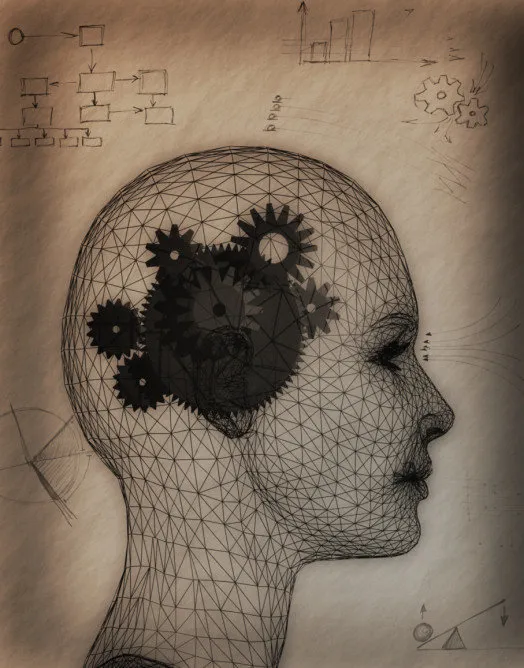
For starters, the amygdala. Every second our brains are bombarded with a deluge of data, working continuously to sift through and sort the information, trying to tease apart the critical from the casual. And since nothing is more critical to the brain than survival, the first filter most of this incoming information encounters is the amygdala.

The amygdala is the part of the temporal lobe responsible for primal emotions like rage, hate, and fear. It's our early warning system, an organ always on high alert, whose job is to find anything in our environment that could threaten survival. So potent is the amygdala's response to potential threats that once turned on, it's almost impossible to shut off, and this is a problem in the modern world.

These days, we are saturated with information. We have millions of news outlets competing for our mind share. And how do they compete? By vying for the amygdala's attention. The old newspaper saw "If it bleeds, it leads" works because the first stop that all incoming information encounters is an organ already primed to look for danger. We're feeding a fiend. Bad news sells because the amygdala is always looking for something to fear.

Compounding this, our early warning system evolved in an era of immediacy, when threats were of the tiger-in-the-bush variety. Things have changed since. Many of today's dangers are probabilistic -- the economy might nose-dive, there could be a terrorist attack -- and the amygdala can't tell the difference. Worse, the system is also designed not to shut off until the potential danger has vanished completely, but probabilistic dangers never vanish completely. Add in an impossible-to-avoid media continuously scaring us in an attempt to capture market share, and you have a brain convinced that it's living in a state of siege and there's not a damn thing we can do about it.

But nothing could be farther from the truth. Today the average citizen is more empowered to change the world than ever before. 

A wide range of very powerful exponentially growing technologies (infinite computing, artificial intelligence, synthetic biology, robotics, digital medicine, etc.) are now allowing small teams of dedicated individuals to take on the kinds of challenges that were once the sole province of governments. A global communications network has arisen where individuals can problem solve together, like never before. Lastly, thanks to the continual spread of the Internet and smart phones into the developing world, over the next decade, our collective meta-intelligence, is set to expand from 2 billion to 5 billion people on line, adding 3 billion news minds into the global conversation.

Nothing like this has ever happened before in the history of the world. So while I can't tell you if brining a child into this world is the morally-responsible to do, I can say that the future, much like the present, is going to be a whole lot better than you think.

For more information, and to learn about the four forces driving us towards an age of abundance, please come visit us at www.AbundanceTheBook.com.


Follow Peter Diamandis on Twitter: www.twitter.com/PeterDiamandis

I was in a coffee shop recently and overheard a young couple discussing whether or not it was morally responsible to bring a child into today's world given all of the global challenges we face. What'...
 
 
  • Comments
  • 19
  • Pending Comments
  • 0
  • View FAQ
Comments are closed for this entry
View All
Favorites
Recency  | 
Popularity
photo
HUFFPOST SUPER USER
Craig Koebelin
Gut feelings are usually gas
01:38 PM on 01/19/2012
Since computers, automation, and robots are taking over more of the work load, what exactly are ordinary working people going to be doing in this bright future?
12:20 PM on 01/09/2012
So yes, bring children into this world! By reading this and thinking about this at all, you prove that you are good enough to raise a responsible, smart little person. And we need more responsible smart persons to make this world a better place...
08:20 PM on 01/08/2012
It seems very likely to get much worse before it gets better (at least for those conditioned toward decadence and careless living), but it's going to get much, much better after that. I could spend all day listing off the amazing, world-changing projects I keep up with and (in some cases) contribute to, and I wouldn't even scratch the surface of what's out there. Rather than spending too much time dwelling on the negative things you can't do anything about, get involved in something that suits your skillset. Become post-political, turn off the fear machines, get something done.
12:38 PM on 01/08/2012
This article seems to say "don't look at the problems we face today because we've kinda fixing them". We have an obesity problem, people without homes, foreclosed homes, a large amount of wealth condensed in a small percent, a slue of economic confusions, middle class varnished, and ecological destruction. People having access to more advanced technology means nothing to me if they aren't responsible and intelligent human beings. I don't get scared by the media, I don't watch the media; I get scared as I study the world and find it to be in a much more dangerous state than we're lead on to believe.
08:23 PM on 01/08/2012
So stop worrying about what other people are doing, and be one of the responsible people using technology for good. The thing about technology is that it's profoundly personally empowering. If you choose to, you can have a million times the impact of a person who choses to do nothing simply by wielding effective technologies to your advantage. Stop complaining, forget about your 'stupid, dangerous people' bogeyman who either doesn't exist, doesn't exist to the extent that you think, or is irrelevant in any case to your ability to make changes. Mind your own business, and get something good done. This bogeyman of yours is designed to make you feel powerless. It is a lie.
05:03 AM on 01/08/2012
This is why Peter D has been a role model of mine since I was in middle school. (25 now and going for a graduate degree).

Peter, you are the man. Thanks for adding some objective reality in the perpetual long now of our world.
04:33 AM on 01/08/2012
Mr. Diamandis is clearly out of touch w any of the recent economic disaster that has befallen the world. This is sloppy thinking. Set up a strawman, qoute lots of stats, ignore any negatives, and plug the book that will make him richer.
05:04 AM on 01/08/2012
Economic disaster? Even at our worst point during the great recession, which it was definitely great and a recession, we still had a much higher quality of life, and much lower unemployment then during the depression.

While we are far from perfect, there is a long arc towards a better world, and the trend is continuing. I suggest doing more research Douglas.
03:51 AM on 01/08/2012
Where a thousand bills on clean energy get rejected in Congress, and the six or seven related to coal are passed. Where's the poetry? Where's the beauty? Where are the buildings that celebrate human ingenuity, charity, art? Look outside your window. All the tallest buildings are either banks or corporations. It's great to have all the technology and solve a lot of the pressing problems of mankind. But the questions are: # 1 - Will there be a world to live in? # 2 - Will it be worth living in it? Maybe for some people, automatons, with no inner life, with none of the emergent properties that dignify the human race. The way things are heading, not for moi.
08:31 PM on 01/08/2012
Forget about congress. Forget about banksters. If you're waiting for them to solve your problems, you're standing in a long line and there's nobody attending service counter. The whole point of technology is that it is *personally* empowering. If you choose to take advantage of it intelligently you can magnify your personal ability to have a positive impact a millionfold. If you're concerned that the world won't be worth living in, try forgetting about the world and worrying about what you can change. You're not helpless. You are not a child, and governments and other social institutions are not your parents. They will not save you from your personal bogeyman. Apply your skills and knowledge toward making direct and immediate change in your life, in the lives of people you care about, and in your personal surroundings and sphere of influence. If you have no applicable skills and knowledge, focus on acquiring them (something all this wonderful technology is particularly good at helping you do). No matter how ineffectual you are at these efforts, it will be infinitely greater than whining and worrying - since the latter will get you nowhere.
01:29 AM on 01/09/2012
Thank you for the post. Right on.
photo
Always For Real
They took my Kodachrome away
03:41 AM on 01/06/2012
You lost me with the Maasai Warrior and his Smart Phone.

Apparently the economy is doing more for him than for many of us here in the U.S. that can't afford to spend a hundred bucks or so a month for a Smart Phone and data plan.

What the heck does a Maasai Warrior do to earn income anyway?
photo
HUFFPOST SUPER USER
Craig Koebelin
Gut feelings are usually gas
01:39 PM on 01/19/2012
Raise cattle.
photo
Always For Real
They took my Kodachrome away
08:23 PM on 01/19/2012
Yea, so I found out. And sheep.

I did a little google surfing since then. I read that getting a cell phone costs about one sheep. The person to person cell phone bank transfer system is way ahead of the US, more in line with Europe. Pretty cool.

I guess the 'warrior' part is just a historical remnant, not to undervalue the skills necessary to survive in hostile lands as a semi-nomadic people.
01:38 AM on 01/06/2012
Thanks for the pushing the X-Prize concept. So easy to whine about the negative, while they have always existed in history. Folks have shown by example - those "impossible" problems - can get solved and we can push forward. It's just shifting your perspective of what's possible - plus being a good engineer
HUFFPOST SUPER USER
methodman
06:21 PM on 01/05/2012
I agree things are fairly priced you just have to develop a vocabulary to investigate so you don't get suckered by the For Profit colleges.
05:56 PM on 01/05/2012
All of what you say is true, but you haven't mentioned climate change -- probably the gravest challenge we're currently facing. I see humanity's future as a road race between a worsening environment and the developing technology we'll need to cope with it. The future will tell us who wins.
photo
HUFFPOST SUPER USER
William1950
everything I say could be wrong.
02:18 PM on 01/05/2012
i like the approach of being optimistic for our chances... and embracing our advances that are not the focus of the media.. bad news sells, we must remember that.

that said... i want an international summit meeting of artists, economists, futurists, inventors, and dreamers... I want to re-imagine our economic matrix completely.. as a race humanity has an imperative to lift each other into the bright future.. were not doing that very well.. or is that my amygdala talking?
photo
HUFFPOST SUPER USER
Overtone
See bio on the Aesop Institute website
01:41 AM on 01/05/2012
A little recognized mortal threat needs to be addressed to insure humans survive long enough to enjoy the abundance outlined here.

A highly probable solar storm can cause meltdowns of dozens if not hundreds of nuclear plants and release sufficient radioactivity to endanger human life on this planet.

See the Aesop Institute website for an outline of this potential nuclear nightmare as well as what might be done to prevent the worst.

Ironically, wise, strong, effective action to mitigate the threat can reboot the economy, generate jobs, and perhaps unify the nation. Survival can reorganize the political landscape..