
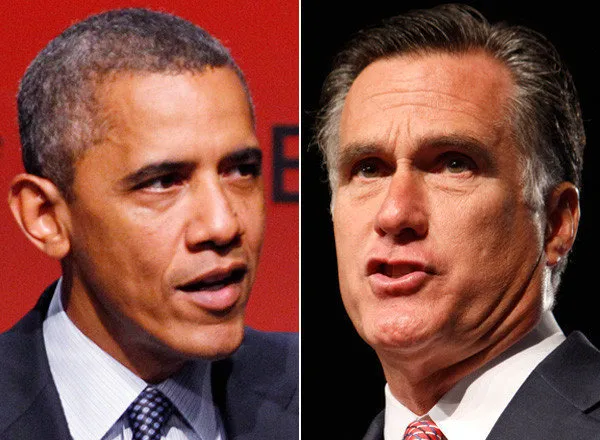
Last week Congress sailed for vacation and in its wake left floundering a bill to reauthorize and reform the national farm program (which includes the food stamp program), a bill to protect the US Postal Service, and a bill on cybersecurity for the US power grid, water supply and financial systems. This week, the Romney campaign announced the selection of Paul D. Ryan as Vice-Presidential candidate, a strict social and fiscal conservative whose policy disparities with the Obama administration highlight the ideological divisions that today define Washington.
Politics in the US are more deadlocked and polarized today than they have been since the end of the US Civil War. We see this in voting patterns in the US Congress as well as in citizen voting patterns across the country.
This is happening at a time when our nation is facing crises on multiple fronts -- joblessness, housing foreclosures, border insecurity, declining education outcomes, soaring healthcare costs, you name it. Yet we are too divided and alienated from one another to do much about it.
But why? Is it simply tribalism? Political parties with sacred ideologies and contrasting narratives over the values and pathologies of government -- exacerbated by partisan media and internet chat rooms? Is it our rising inequality and the effects of opposing economic philosophies in hard times? Is it differences in religiosity and beliefs in moral order and the Protestant Work Ethic? Or is it simply emotional ethnocentrism -- that popular game where we project our worst qualities on out-groups -- hating them and therefore loving ourselves all the more?
The answer is yes and no. If you look back long enough at the trends in the data on polarization in the US, you can see it is the combination of all of this - and something more.
A series of studies by political scientist Nolan McCarty and colleagues shows that the US Government is more polarized today than it has been for 130 years --and this is particularly evident in the increasing divisions in Republican versus Democrat congressional voting patterns since 1979.
But a similar trend is apparent in the pattern of Red-Blue voting nationally over the last three presidential elections. If you look at the geographic breakdown of Democratic and Republican voting within each of the 50 states over the last 12 years, you see a fascinating pattern. The world has changed dramatically since 2000; by 9/11, the global threat of terrorism, a world financial crisis, the worst environmental catastrophe in U.S. history (the BP oil spill), and so much more. Yet despite this, Red versus Blue voting breakdowns within every state have barely budged. The world around us is being buffeted by extraordinary forces from every direction, but U.S. citizens keep voting the same way in the same places -- and the chasm keeps getting deeper.
For example in 2011, President Obama's third year in office, an average of 80 percent of Democrats approved of the job he was doing in Gallup tracking polls, as compared to 12 percent of Republicans who felt the same way. That's a 68-point partisan gap, the highest for any president's third year in office -- ever. The previous high was George W. Bush in 2007, when he had a 59 percent difference in job approval ratings. In fact, out of the ten most partisan years in terms of presidential job approval in Gallup data, seven -- yes, seven -- have come since 2004.
The bad news is this stand-off is happening at a time when our deficit is astronomical and increasing by $4.2 billion a day, millions of Americans are in desperate need of jobs, food and decent housing, our education system is in a free-fall -- we recently ranked 14th out of 34 OECD countries in reading, 17th in science and 26th in math, and our children's health is at risk; today, we rank 42nd worldwide in child mortality rates, behind Cuba, Chile and Serbia.
Why are we so stuck?
The field of complexity science, a branch of applied mathematics, has taught us that such long-term, stable patterns of polarization, hostility and stalemate are both uncommon; happening with only about 5% of our most difficult conflicts, and unusual; operating with a unique set of rules and dynamics. It's like the difference between colds, flus and minor injuries, and chronic longer-term illnesses like diabetes, MS, or many cancers. They are all ailments, but some are more extreme, stable and resistant to treatment.
These patterns in Washington and across the country are what complexity scientists call attractors. They are patterns of behavior that resist change and that people and groups feel drawn to reenact repeatedly, often automatically, even when they prefer not to. Attractors are created by a combination of many things -- party affiliation, ideology, habits, loyalties, the media -- that come together to form powerful constraints on how we think, feel and act. In other words, the stable pattern of hostile divisions within our political landscape is today being dictated by forces largely beyond our control.
What does this mean for understanding our current political quagmire?
The study of long-term conflicts as attractors has taught us that of the approximately 850 enduring international conflicts that occurred throughout the world between 1816 and 2001, 95% of them erupted within 10 years of a major political shock to the world or region (end of the Cold War, coup d'état, assassination, etc.). This means two things. When major ruptures to political systems occur, we often don't see significant repercussions from them for 5-10 years or longer. But if a qualitative change does occur, it is usually dramatic and lasting in nature.
For example, about ten years before the "Arab Spring" uprisings spread across North Africa and the Middle East, 9/11 shocked the world, and on its heels the U.S. invaded Afghanistan and Iraq, deposed their leaders, and triggered an unprecedented level of turmoil and instability in the region. Such events, as horrible and costly as they are, can rupture the status quo and provide ideal conditions for repositioning of socio-political systems, even those well beyond the borders of the countries directly affected. However, the effects of such destabilization are often not immediately apparent, but can result in long-term hostilities like we see in Syria today.
Returning to our own political quagmire in the US which has now lasted about 33 years, pundits often suggest that it began with the Reagan administration. But if we look at the political shocks that occurred in the US within 10 years of this 1979 spike in partisan suspicion and hostility, a more likely cause is the outbreak of the US Culture Wars:
•1968 Summer of Love & Anti-Vietnam movement
•1968 MLK & Bobby Kennedy assassinations
•1968 My Lai Massacre
•1970 Kent State shootings
•1970 EPA, OSHA, PBS founded
•1971 Pentagon papers released
•1972 Watergate scandal
•1973 Roe V. Wade decision
•1974 Nixon Resigns
•1976 Carter elected
•1980 Reagan elected
In other words a series of major political shocks occurred that ruptured our unity and tore this country apart into Blue Liberals and Red Conservatives, which settled into the self-reinforcing pattern of divisions we live with today. Even 9/11 appeared to do little to unite this country for long -- instead simply bolstering our divisions.
So what can we do?
The bad news is we can't force such patterns to change. When these types of conflicts set a course, then the typical fixes (problem-solving, diplomacy, negotiations -- even threats and coercion) don't seem to help and often only make matters worse. However, we can act now to begin to decrease the probabilities that things will remain stuck or get worse over time, and increase the probabilities that our leaders return to more constructive problem-solving.
Here are four tactics informed by complexity science.
Leverage instability. The good news is that not only do 95% of enduring conflicts begin within 10 years of a political shock, but 75% of them also end within 10 years of shocks. Our history is full of examples when crises -- the attack on Pearl Harbor, the Great Depression, natural disasters -- mobilized and united citizens to work together for the greater good.
For instance, in 1924 -- about 10 years after the start of World War I -- Congress came together and enjoyed an uncommonly high level of stable consensus-based problem-solving for 30 years! This means crises -- like the recent world financial and economic crises, or the next unforeseen catastrophe -- can also rupture patterns of political polarization -- and create the conditions for positive radical change to (eventually) emerge. Of course the effects of such destabilization do not ensure positive change; it is only a key facilitating condition.
First moves matter. One thing that mathematics tells us helps determine the direction we take after a political shock are the initial conditions. That is, the earliest actions taken in a new regime largely determine its trajectory. In marriages, it's the first things said by a spouse when a young couple finds themselves in a new conflict. With moral conflicts it's how people start to feel within the first 3 three minutes of conversation that sets the course. Even very slight differences in initial conditions -- minor differences in the framing of social problems or political crises -- can eventually make a big difference.
This means that whoever wins the election in November will have a unique opportunity to reset our course. This is what our greatest leaders such as Lincoln, Roosevelt, and Mandela were able to do in the wake of crisis. The effects of their actions may not be visible at first, but they can trigger other changes that trigger others and so on over time, until they have an amplified impact on our relations and abilities to solve problems.
Work the invisible. Research has also found that in many protracted conflicts the disputing factions often maintain benevolent islands in their relationships -- across the aisle or in their personal or professional life -- where they continue to communicate and cooperate, despite the escalation of tensions. These islands are evidence of what complexity scientists call latent positive attractors between groups. However, their effects are usually tightly constrained by the dynamics of the conflict. Thus, early steps should explore and support these connections carefully and help to free them up. This is similar to bolstering a body's own immune system when under attack from disease. Supporting islands between Reds and Blues -- particularly those focused on working together to address our national crises -- can help to contain further polarization and get us back on track.
Small things matter. Finally, it is critical to recognize that the divisive attractor we are trapped in as a nation was created and is maintained by all of us. Our words and deeds in our homes and communities do much to contribute to the current climate of vitriol, blame and contempt in our country. But research on complex systems shows that even small changes in one basic rule of behavior can have enormous emergent effects on the qualities of a system. If each of us made one slight change in how we act in our own lives, it could trickle up and affect how our leaders lead. In other words, we can change our course from the bottom up by:
- Complicating. Recognizing that the more serious problems we face today are very complicated. Typically, solutions to these problems will be mixed -- with both good and bad outcomes. If someone is selling you on solutions that are problem-free sure things, beware.
- Contradicting. We all have conflicting impulses and do things at times that go against our values and better intentions. Acknowledge these. Research shows that being mindful of such contradictions within ourselves makes us more tolerant and accepting of people who are different.
- Concentrating. Science also tells us that 90-95% of our daily behaviors are automatic -- things we do every day without thinking (driving a car, preparing a meal, reacting to our kids, neighbors, coworkers). Notice these. Many of our automatic behaviors are contributing to our divisions. When was the last time you listened actively to the POV of a member of the other party to learn? Not to sell anything or persuade, but just to try to discover something new?
These actions may seem trivial, but they can add up. If repeated often enough, they can change a person, a home, a community and can help us break out of our attractors; our habits of blame, negativity and denial of responsibility. Remember: Ask not what your country can do for you ... but what you can do with a crisis.
Peter T. Coleman, PhD is Professor of Psychology and Education on faculty at Teachers College and The Earth Institute at Columbia University, and author of the books: The Five Percent: Finding Solutions to Seemingly Impossible Conflicts (2011) and The Psychological Components of Sustainable Peace (2012)