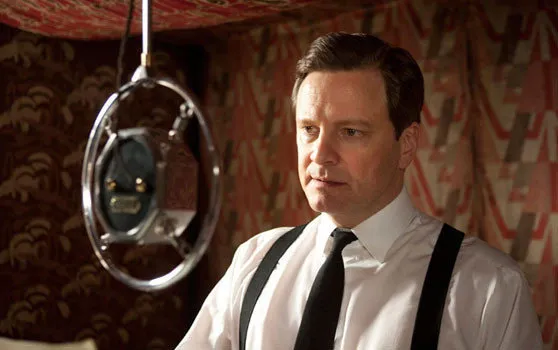
The Stuttering Foundation of America has proclaimed on its website (www.stutteringhelp.org), "There is no reason to believe that emotional trauma causes stuttering." Similarly, the National Stuttering Association (www.nsastutter.org) has stated: "We do know that stuttering is not caused by emotional problems and is not a 'nervous' disorder. We also know that stuttering is not the fault of the family or the person who stutters."
These organizations suggest that stuttering is primarily an inherited disorder unrelated to environmental upbringing. Based on case studies I, a psychoanalyst, am convinced that the exclusive emphasis on biological causes is misguided, insofar as it rules out psychoanalytic psychotherapy for those stutterers whose speech disorder derives from internal conflicts due to family influences, as was strikingly evident in last year's Academy Award-winning film, "The King's Speech." This film was based on historical fact.
From its viewpoint, Bertie, who became King George VI, was portrayed as intimidated and frightened by his oppressive father, the King of England, during childhood. The film implied that this caused him to become fearful of expressing himself verbally, especially his anger. From a psychoanalytic perspective, the expression of his own speech apparently represented transgressing against his father. Bertie's symptom of stuttering served the defensive function of blocking any provocative speech while making him look inadequate, thereby diminishing the fear of his aggression and its anxiety-inducing consequences.
Although his Australian speech therapist, Lionel Logue, treated him with various speech exercises, what appeared to help most was when he provoked Bertie's anger, first by having him say the F word, over and over again, and then by acting like a dominating authority figure while sitting on the king's royal throne. Enraged, Bertie screamed at Logue and was amazed when Logue pointed out that he wasn't stuttering. In effect, the stuttering diminished when he was able to express his anger. The speech therapist's friendship and support of Bertie's right to express his own independent feelings and thoughts, especially his anger, and especially when the therapist represented a dominating father figure, ultimately made Bertie feel safe enough to speak freely. This is what happens in psychoanalysis when the patient might experience the therapist in the transference, for example, as an oppressive parental figure. The therapist then helps the patient work through his fear of aggression toward dominating authority figures in the transference relationship.
In various interviews, the writer-producer of "The King's Speech," David Seidler, a stutterer himself, speculated that in real life, Bertie benefited most from his speech therapist's "talking cure" based on Freudian psychoanalysis, not from the mechanical speech exercises portrayed in the film. In fact, Seidler said that most of the speech therapists he consulted agreed that speech exercises didn't eliminate stuttering. He concluded that Logue must have used Freud's "talking cure" on Bertie based on the fact that Seidler's uncle, who was also a stutterer, had coincidentally been treated by Lionel Logue for years. His uncle said that Logue got him to talk about his parents and childhood, and although his uncle considered all of that rubbish, by the time his treatment ended, he no longer stuttered (www.dailymail.co.uk).
Seidler noted that he wished he had someone like Logue to listen to him attentively and help him understand his life better. Bertie, in "The King's Speech," clearly didn't grow up with a father or brother who were lovingly attuned and supportive of him. But Lionel Logue, his speech therapist, helped him to repair these experiential deficits and to resolve his internal psychological conflict over his aggression.
Similarly, Jack Welch, former CEO of General Electric, on June 11, 2011 confided to TV guest show host Piers Morgan that he was a stutterer. He said that what helped him most was his mother's belief in the value of what he had to say and her encouragement to speak his mind. He felt listened to and understood by her, and she supplied the reassuring explanation that his intelligent mind worked more rapidly than his capacity to speak his ideas. In effect, she validated his right to say what he wanted and to be his authentic self.
There is abundant research evidence for a biological predisposition for stuttering; however, environmental stressors, such as family relations, can produce internal psychological conflicts that cause stuttering, possibly in combination with this predisposition, as in the case history cited above and in the psychodynamics of George VI depicted in the film, "The King's Speech." That is why I urge stutterers and organizations devoted to the treatment of stuttering to consider psychoanalytic therapy as an often essential part of the treatment for this debilitating, humiliating psychological symptom. Proclaiming that stuttering is unrelated to emotional issues and family relationships is a misguided, potentially damaging omission for individuals whose stuttering is largely caused by psychological conflicts in childhood.
Plus, the fact that King George and Welch still continued to stutter; however, they were or became mild stutterers. Not all stutterers are severe. A stutterer or speech pathologist would know that, actually many know this to be fact.
As far as the boy who stuttered because he disliked the step father... Well, he could have been a mild stutterer before hand. Anyway, I would hope the psychoanalyst would focus on why the boy hates the new step father, instead of just calling it anger.
The perception by Wolson is different from a stutterer or speech pathologist (due to lack of training and experience: and ignorance by choice). He says the anger over a bad childhood caused the stutter. However, Welch had a great childhood: What caused his stutter. Also there are many with traumatic childhoods who never developed a speech impediment.
And lastly, there has already been a -scientific- study on whether a traumatic childhood causes a stutter. The theory had proved to be false. stutterhelp.org may have this study on their site.
I think Wolson is the mad scientist, determine to prove what he already knows to be wrong. lol.
I noticed the article never mentions a psychoanalyst who has cured a stutterer: ie no empirical evidence (certainly no scientific evidence). Wolson does not claim he has done so or that any of the psychoanalyst he knows, or reads about has cured a stutterer. Still he has a responsibility to not use his psych skills to even miss-lead. Clearly, its his claim that psychoanalysis will cure stuttering.
The examples given, King George and Welch, were not alleged by Wolson to be cured by a psychoanalyst. Instead, it was King George's speech pathologist, and Welch's mother. So from that one needs the skill of a speech pathologist or mother to be of great help to a stutterer. Anyway, a scientific study with only two subjects is not very scientific, of course. So this would not be evidence of a psychological -cause- of stuttering.
Plus, the fact....
That should be a psychoanalyst who has "no real education" (longer than a paragraph) in speech pathology should not treat or evaluate a speech impediment.
Peter Wolson, Ph.D.
Past President and former Dean of the Los Angeles Institute and Society for Psychoanalytic Studies
Again, I say debating origins of stuttering is not that interesting and ultimately damaging, and that a more effective discussion can be had about the social/economic forces that privilege some ways of communicating at the expense of others, who benefits from that process, and how can we challenge it.
And speaking of how suspect "this form of 'all or none' splitting and denial" is, your post is titled "Is Stuttering Biological or Psychological?" I don't know if you get to choose your own titles, but honestly, the title provokes an "either or" scenario you are suddenly upset that folks chose sides? You then rhetorically pathologize folks who disagree with you by labeling them "psychophobic." Who here can't handle disagreement?
I wonder if your need to absolutely deny the possibility of psychological causation is motivated by psychophobia, a fear of the stigma of having psychological problems, as if this implies one is crazy or blames one’s family, etc. Psychophobia prevents people from getting the psychological help they need. I refer you to, “A World of Psychophobia,” an op-ed piece I wrote for the LA Times, May 28, 2000.
In one case, a five year old boy whose parents divorced when he was one, began to stutter after learning that his mother with whom he lived, had married a man whom he detested. She had promised the boy that she wouldn't marry this man. One day she announced that she had married this man, the boy felt deeply wounded and enraged. He wanted to attack his mother and stepfather. Instead, he began to stutter. He knew they wouldn't want to hear what he had to say, and he feared destroying his vital connection to his mother. Unconsciously, he turned his anger against his words. With his real father, whom he loved, his stuttering would disappear, but when he returned to his mother and stepfather, he would stutter again. The psychological basis of his stuttering was demonstrated by the fact that he didn't stutter when with his real father, but did with his mother and step-father, toward whom he felt enraged. If the cause of his stuttering was purely genetic, he would have stuttered with his real father as well. At the age of 12, he went to live with his father and after a brief period, he stopped stuttering entirely.
With empirical evidence like this, why wouldn't you consider psychological conflict as a possible causative factor.
Peter Wolson, Ph.D.
Additionally, this case was resolved without analysis, so why would psychoanalysis be an indicated part of treatment for this case (or any)? Stress, anxiety, and anger can make stuttering increase, and relaxing and feeling comfortable can reduce stuttering frequency. In this case, moving from a tense situation to a calmer one seemed to make the difference, not an active treatment. Any other treatment that could also help someone who stutters relax and address stressors would be helpful if someone is looking to stutter less.
I dated a stutterer in my youth -- a charming, handsome chap, and I am quite sure there were multiple causes. However, my adoring gentle focus on him -- a tuning in rather than a tuning out or exhibition of nervousness in return -- always seemed to help him ease out of a bout when it occurred. I must admit, it gave me a fantastic opportunity to stare into his beautiful green eyes, and voila, whatever it was that he had to say, was witty when he was then able to get it out! Our own lovely little feedback loop.
R, I remember you fondly, and hope you are happy and well!
http://www.home-speech-home.com/stuttering.html
Stuttering is not caused by parents although parents can make it worse (i.e. time pressure, language demands)
I'm a Speech-Language Pathologist and have had some experience with stuttering.
Dr. Wolson is correct when he says "Proclaiming that stuttering is unrelated to emotional issues and family relationships is a misguided" because like I said a huge component of stuttering therapy (for most older children and adults) is based on negative feelings and attitudes.
I have also had people presume I must be intellectually or emotionally deficient because of my stuttered speech, which is the farthest thing from the truth. Parents don't cause their child to stutter and you should not imply such!
Studies show that there is a genetic predisposition to stuttering, (as evidenced by research done and recently published by Dr. Dennis Drayna of the NIH.)
Neurological research continues. I have participated in two clinical studies, 2006 and 2009, involving brain scans so that researchers can determine if brain activity differs for people who stutter vs. those who don’t. There are differences.
I was raised in a chaotic household - oldest of six, alcoholic mother, abusive father. My five siblings never stuttered. As others have commented here, stuttering is a part of me. It does not define me, nor impede my ability to be an outstanding, expressive communicator.
You should be wary of any movie that touts "historical accuracy." Hollywood takes liberties all the time with history, in order to sell tickets. That's their business.
Thanks for the post - it keeps the dialogue about stuttering going, and the opportunity to bust myths.
I agree that some people who stutter could benefit from psychotherapy, but not because their stuttering is psychological in origin, but in addition to other life issues a person may have who seeks any kind of therapy.
Any psychotherapist who works with someone who stutters better have some experience with stuttering - because it is much more complex than just what comes out (or doesn't) of our mouths.
And by the way - my profession? I have worked as a counselor with youth and young adults for over 25 years, that last four as a career counselor in a public high school. My stuttering has had no ill affects on any of the people I have helped over the years. My background is in social work!
My sister stuttered when she was young and occassionally still does but she has mastered overcoming it in pubilc settings. Her daughter my niece stutters still and worse than my sister. My nieces's home life was considerably better than my sisters and mine so the stress issue was unrealized.