
Featuring fresh takes and real-time analysis from HuffPost's signature lineup of contributors
Philip Glass

GET UPDATES FROM Philip Glass
 

Gandhi Paved The Way For The Social Resistance We See Today

Posted: 10/28/11 10:03 AM ET

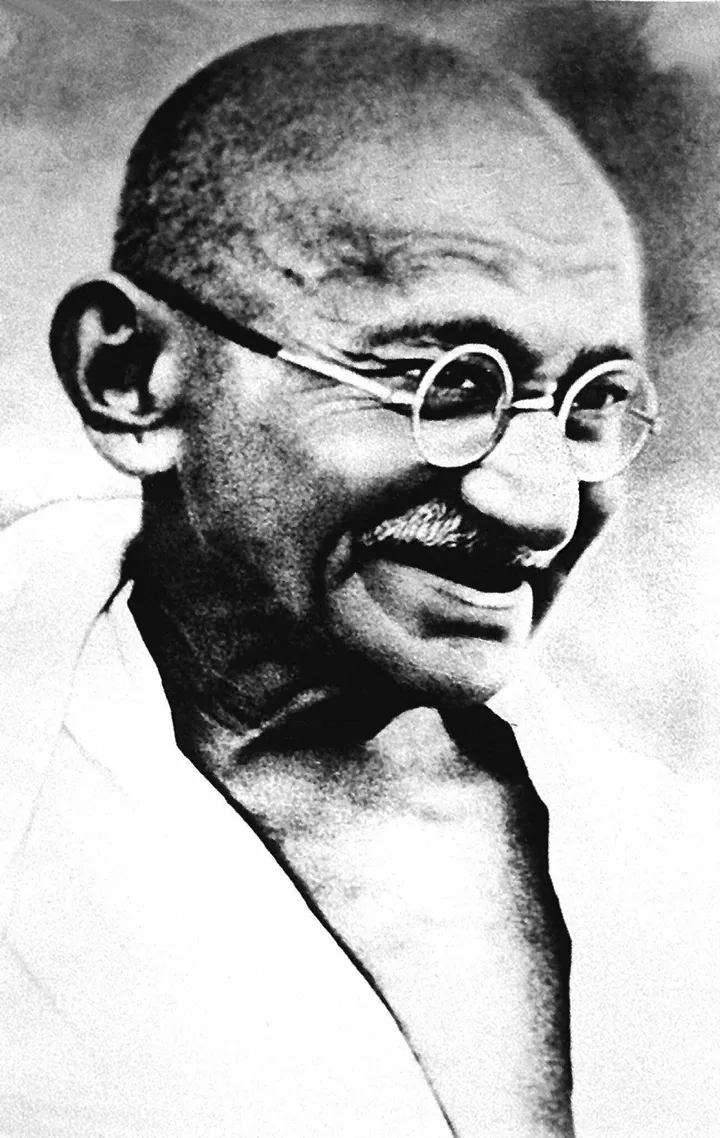
Composer Philip Glass wrote his third opera, the seminal "Satyagraha," in 1979. Inspired by Mahatma Gandhi's formative years in South Africa and the development of his philosophy, the work had its Metropolitan Opera premiere in April 2008. Glass has said, "Almost all the techniques of protest -- now the common currency of contemporary political life -- were invented and perfected by Gandhi during his South Africa years." Here, Glass explains the inspiration for his opera, which returns in November 2011.

More than one hundred years ago Mahatma Gandhi began his movement for social change through non-violence in South Africa. It became known by its Sanskrit name -- Satyagraha, the force of truth. It was an activist movement, a strategy to force the South African government to restore the civil rights of the Indian population who had been invited there as "guest workers." However, on arriving there, mainly from India, there they found that their rights as citizens of India had been withdrawn. It included the right to own property, to vote and even to marry.

When Gandhi arrived in South Africa, his views were firmly grounded in non-violence, and with that as his guide he developed all the strategies used today in efforts geared towards social change through non-violence. Marches, occupying public places, burning registration cards, filling the jails and even starting his own newspaper ('Indian Opinion') -- all these were initiated, developed and applied until new agreements were made with the South African government before his return to India in 1914. His successes in India were a long struggle that finally led to Indian Independence in 1947.

To put it simply, he changed the world of his time and ours as well.

In America we know this as a fact. Our own civil rights movement, led by Martin Luther King, Jr., brought us to the beginnings of a new view of society, the one demanded by our own constitution -- liberty and justice for all regardless of race, religion or gender.

And it didn't stop there. The anti-war movements were empowered by Gandhi's history and our own. Further, these principles of non-violent social change are not confined to the "Left" but have, in recent years, been aptly used by the political "Right" as well.

All good, as far as I'm concerned. Now, for the first time in almost three generations, American citizens have taken to the streets again in the name of "Occupy Wall Street." But it has already gone way past Wall Street. Truthfully it has become "Occupy Main Street." It is national, grassroots and independent. In responding to the general frustration and sadness we feel, these "movements" have taken up once again these basic principles of activism and non-violence.

We should be proud that the basic guarantees of free speech and assembly are at the core of our Constitution and Bill of Rights. Those who would deprive us of these "inalienable rights" are the real radicals.

Let no group or party exploit what many of us see as the growth of ignorance and indifference in society. Policies that lead to short-sighted political and economic gain will be easily seen for what they are.

The best guarantee for our future and that of our children will, and has always been, educated, active citizens. So, when it comes to "Occupy Main Street," let us not forget that these are Americans, ourselves in fact, who are exercising their rights and duties as citizens. And by exercising them, they preserve them for everyone.

 
Composer Philip Glass wrote his third opera, the seminal "Satyagraha," in 1979. Inspired by Mahatma Gandhi's formative years in South Africa and the development of his philosophy, the work had its Met...
 
 
  • Comments
  • 21
  • Pending Comments
  • 0
  • View FAQ
Comments are closed for this entry
View All
Favorites
Recency  | 
Popularity
photo
HUFFPOST SUPER USER
Ljilja
http://graciouslivingdaybyday.com/
04:27 PM on 11/01/2011
Well said.

Gandhi is the man for all times and seasons. His methods will never become obsolete. We hope.

http://graciouslivingdaybyday.com/
photo
HUFFPOST SUPER USER
PollyTics
undefined
09:28 AM on 11/01/2011
Well done Mr. Glass!
photo
HUFFPOST SUPER USER
juna
Golden Rule is my religion
08:47 PM on 10/31/2011
Bravo Philip Glass for this important statement. And bravo as well for your beautiful music.
photo
HUFFPOST SUPER USER
Dr Idris
polymathy is not understanding
10:25 PM on 10/29/2011
Late 1950's Denizens of the Cafe Lorenzaccio on B'way just below 110th, NYC, where Philip Glass tried out some of his early musical ideas approve of this message! It sounds like "the Music of the World"
photo
Capitalism Is King
Obama Has Made Things Worse!
06:23 PM on 10/29/2011
Unlike OWS, Ghandi could actually articlualte what he stood for and what he was doing.
photo
HUFFPOST SUPER USER
walkerhds
07:38 PM on 10/29/2011
Isn't it odd that a large number of the population understand and support the ows movement; and yet you claim it is incomprehensible. Perhaps you should spend less time watching Hannity and listening to Rush; try reading. It might help you.
photo
HUFFPOST SUPER USER
PollyTics
undefined
09:22 AM on 11/01/2011
Curious that after all of the interviews, the press, the many videos released and let's not forget speeches made for and about the movement that you simply cannot grasp the very simple concept of economic inequalities and the running wild of Wall Street & Corporations leaving the middle and poor to clean up their mess.

Sure there are many other aspects to the movement, but the basic tenets are pretty clear (ie: Occupy WALL STREET, should tell you something). It appears to be the detractors and those who are most afraid of any change be it economic viability or a political movement that seems to have 3/4 of the nation behind them.
madisgp
All we-we'd up.
02:19 AM on 10/29/2011
So what does all this tell us? For me it means that you don't have to have the most tanks, planes and guns to become the contrlling power in your country. All you need is the will of the majority and some good orginizational skills. I'm down with that.
photo
HUFFPOST SUPER USER
thoreau101
06:58 PM on 10/28/2011
He affected the world, but I'm not so sure about the "change the world" idea.

Thoreau and Roosevelt changed the world.
11:33 AM on 10/29/2011
Thoreau led by example, but he was not a leader. He inspired others to become activists, but did not lead them.
11:35 AM on 10/29/2011
In other words, I disagree that Thoreau changed the world. He just changed himself and wrote about it. To change the world, he would have actively sought after the transformation of people's hearts and minds. He did this only in a passive way.
photo
HUFFPOST SUPER USER
thoreau101
11:59 AM on 10/29/2011
Ghandi was a local boy who read Thoreau. He affected India but I doubt he would have enjoyed the flea market the country became.
06:13 PM on 10/28/2011
Gandhi was influenced by Henry David Thoreau's essay "Civil Disobedience".
photo
HUFFPOST SUPER USER
theveggiedude
my body is a temple, not a living graveyard
10:28 PM on 10/30/2011
Gandhi's militant vegetarianism came from visiting a London vegetarian restaurant and then mingling with others at the local Vegetarian Society.
photo
HUFFPOST SUPER USER
PollyTics
undefined
09:24 AM on 11/01/2011
...and this has to do with his similarities with OWS because?
tonybfine
fractional reserve lending is counterfeiting
11:49 AM on 10/28/2011
Thank you Mr Glass, for your music and your words.
10:12 AM on 10/28/2011
Well put. Amen.
This comment has been removed due to violations of our [Guidelines]
photo
HUFFPOST SUPER USER
bonncaruso
09:54 AM on 10/28/2011
I can give a personal testimony to this, for I sang the role of Gandhi in the Bonner premiere of "Satyagraha" in 2004 and again in 2006 in a phenomenal staging by Silviu Pucarete. Fine work, quoting texts from the Bhagagadvita, recouping Gandhi's time in South Africa as well. Also texts from Ahimsa are there. Philip, I loved singing your work. Was a moving spiritual moment for me.
photo
HUFFPOST SUPER USER
juna
Golden Rule is my religion
08:48 PM on 10/31/2011
How great that you have done this. I think Glass' music is a gift for the ages.