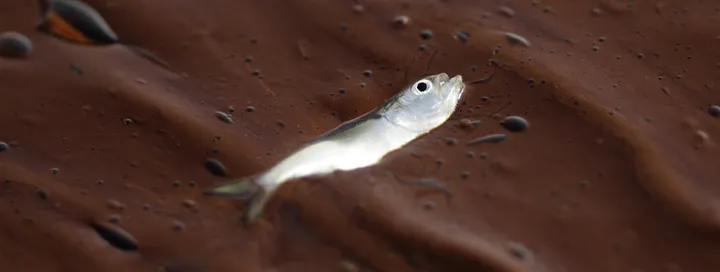
Despite the overwhelming evidence that Big Oil's reckless pursuit of the last remaining oil reserves (and ever-more exorbitant profits) is disastrous for the planet, governments of the world are still greenlighting dangerous deepwater drilling projects.
That's why this morning two Greenpeace activists locked down the anchor chain of Chevron's drill ship the Stena Carron, which was scheduled to depart for a deepwater drilling site north of Scotland's Shetland Islands. While our activists physically prevent one more irresponsible drilling project from getting underway, we're calling on all governments to ban deepwater drilling once and for all.
© Will Rose / Greenpeace
The action was launched from the Greenpeace ship Esperanza, which was also the base of operations for the activists who staged a 40-hour occupation of Cairn Energy's Stena Don oil rig off the coast of Greenland earlier this month. There is real danger that the Stena Don could spark an Arctic oil rush, which would pose a huge threat to the climate and put the fragile Arctic environment at risk. So, for nearly two days, Greenpeace activists prevented this dangerous drilling operation from proceeding to threaten any more marine life and coastal ecosystems with catastrophic oil spills.
© Greenpeace
This is as much a moral issue as an environmental issue. We don't fully understand the long-term effects of oil spills like the BP Deepwater Disaster in the Gulf of Mexico. We need independent science to find out what those will be. All we do know for certain is that the oil and its impacts will persist for decades. Surely we can all agree that we owe our children a healthy planet to live on? And unfortunately, as is now all-too clear, expanding offshore drilling operations is incompatible with keeping our planet healthy enough to support future generations.
That's why we're not only working to stop more dangerous drilling, we're also seeking to get to the truth about the impacts of oil spills. Our ship, the Arctic Sunrise, is now halfway through its three-month expedition in the Gulf and has hosted several teams of independent scientists who are working to understand where all of BP's oil has gone and what it's doing to marine wildlife and ecosystems in the Gulf. You can stay up do date with the crew's findings via our Google Earth map, which is tracking blog posts, pictures, and videos coming from the crew onboard the ship.
If you want to know even more about the long-term effects of oil spills and how we can prevent future oil spills from happening, tune in this Friday to the blogger briefing Greenpeace is hosting as part of UN Week. Greenpeace USA's Kert Davies is onboard the Arctic Sunrise in the Gulf right now and will be participating in the briefing as well as answering your questions live via video Skype.
We're not just against oil, we're for clean, sustainable energy. Sven Teske, the author of our Energy [R]evolution report, will be taking part in the briefing to discuss how expanding our offshore drilling operations is not only dangerous, but unnecessary. We can get to 80 percent renewable energy globally by 2050, and we'd be creating 12 million jobs by 2030 in the process.
A clean energy revolution would not only help stop global warming and get our ailing economy back on track, but it is also the only 100 percent fail-safe method for preventing oil spills. That's because the only way to stop oil spills is to leave the oil in the ground (or hundreds of feet under the sea, as the case may be). We can't do that until we move beyond oil and other fossil fuels as our primary energy sources.
Greenpeace will continue to confront reckless new oil drilling operations and bring attention to the issue, but we need to build a widespread movement that demands we go beyond oil as soon as possible. Join us on the blogger briefing this Friday to find out how you can help get us there.