
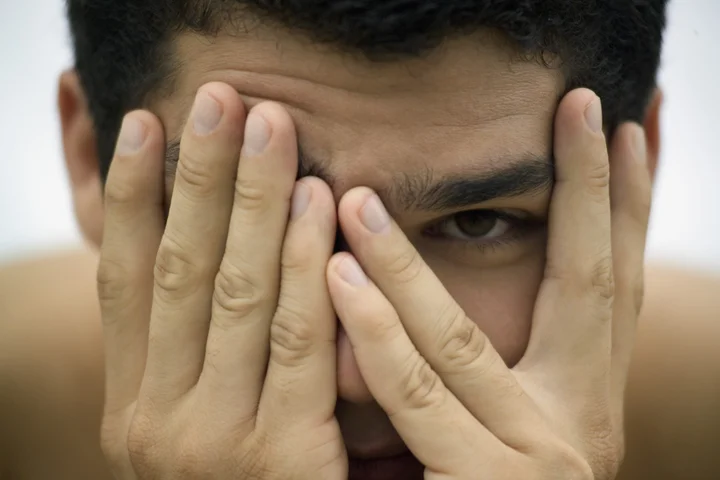
"Pave a road, pave a road, clear a path!"
--Isaiah 57:14
The High Holy Day season is a time to confront the reality of our mortality. It is an occasion to carefully weigh and measure what is most important to us, knowing that we only have a limited time on this earth. This is the season of teshuvah, the time to turn away from attitudes and behaviors that are harmful to us and to others, and to return to our core values and ideals.
This process of heshbon nefesh, of "soul searching," is a daunting task. Can we change? Can we actually take the necessary steps to become the people we want and need to be? Can we "clear a path" and "pave a new road"? The message of the High Holy Days is a resounding yes -- change is possible. One powerful expression of this conviction is the rabbinic teaching that teshuvah was actually created before the world came into being. Life, say our ancient sages, would be impossible without the possibility of change, of growth, and of transformation. It is, therefore, woven into the fabric of existence.
But change is possible only if we are willing to acknowledge that we need to change, that life as we are currently living it is in need of repair. As the theologian Martin Buber writes, "We can be redeemed only to the extent that we can see ourselves." Opening ourselves to the rough edges of our lives is no simple feat. We know the elaborate lengths to which we can go to avoid dealing with what is most challenging, troubling, or destructive. How often do people need to hit "rock bottom" before truly investing in a process of teshuvah?
This is one of the reasons we read the Book of Jonah on the afternoon of Yom Kippur. Jonah is a model of avoidance. He is instructed by God to travel to the city of Nineveh to warn the people that God will punish them if they do not repent. What does Jonah do? He runs in the opposite direction! It is only after he has been thrown off the ship he boarded to try and escape God and is swallowed by a great fish that he confronts his Maker; he does so from deep within the belly of the beast.
"Where are you?" is one of the essential questions in the Hebrew Bible, and continues to echo throughout time. What do Adam and Eve do after they eat the forbidden fruit? They hide from God, who then calls to them, asking "Where are you?" As Buber writes, "Each of us is Adam and finds ourselves in Adam's situation. To escape responsibility for our life, we turn existence into a series of hide-outs." But such hiding, as alluring as it may seem in the moment, can last only so long and usually causes more pain.
While Adam and Eve sin and hide, they do respond to the Divine call and begin to take responsibility for their actions. As Buber rightly notes, "This is the beginning of the human way. The decisive heart-searching is the beginning of the way in our life." It is precisely this heart-searching that is at the heart of the High Holy Days. Rosh Hashanah and Yom Kippur offer us the opportunity to come out of hiding, to honestly assess our current life circumstances, and to begin paving the way for the New Year.
Of course, in undertaking our teshuvah journeys, we must do so humbly knowing that we are limited in our powers of transformation. There are certain realities that are simply beyond our control, including, most basically, our mortality. But this fact need not lead us to inaction; rather it should engender a refined process of discernment in which we think carefully about when, where, and how to act and when to leave things alone. Reinhold Niebuhr gave eloquent voice to this challenge in his now famous Serenity Prayer: "God, give us grace to accept with serenity the things that cannot be changed, courage to change the things that should be changed, and the wisdom to distinguish the one from the other."
I view the High Holy Days as a great gift in this regard. Our ancestors bequeathed to us a compelling ritual framework in which to do the hard work of self- and communal assessment, knowing that this task should be done more regularly, but that it is often ignored or taken up only in fits and starts at other points during the year.
As we enter this New Year, it is my prayer that we will have the courage to come out of hiding and engage in an honest process of teshuvah. May our efforts on Yom Kippur help us to clear the impediments from our paths and pave new roads in the days and months ahead.
When I participate in spirit-canoes, I'm later asked if I'm a whale. In the Am. Indian culture, the whale on the bottom of the sea is the unchanging library (myths?) of man's (psychological) attainments--this is the symbolic purpose of the Star Trek movie wherein they save the last two whales on the planet.
I work as a 'depth' therapist. Regression in service of the ego is the same as the journey to the underworld in the spirit canoe. The therapist regresses to the infantile state with the patient to 'hook' a split-off part and return with it to consciousness. An empty hour is scheduled thereafter so that the therapist can then go walk in the park, due to the dangers of the belly of the whale.
"The idea that the passage of the magical threshold is a transit into a sphere of rebirth is symbolized in the worldwide womb image of the belly of the whale. The hero, instead of conquering or conciliating the power of the threshold, is swallowed into the unknown, and would appear to have died." p. 90 ff, 'Hero..." J. Campbell.
Eskimos...Zulus...FinnMacCool...Red Riding hood...the whole Greek pantheon, with the sole exception of Zeus, was swallowed by its father, Kronos."
"A form of self-annihilation...died to time. When no strong ego is developed during a career and there is a failure of strong relationships to other humans, a regression to the infantile state is followed by insanity, a loss of barrier (schizophrenia). See diagram, p. 245 in 'Hero', the various tests include Whale's Belly, Night-sea journey, Abduction, Crucifixion, Dismemberment, Dragon-battle, Brother-battle (in OT, fights brother/god at ford), Threshold crossing.
"This process of heshbon nefesh, of "soul searching," is a daunting task."
Heshbon does not translate to Searching. Heshbon translates to math.
It is math of the soul so to speak :)
The Talmud
What a relief not to participate in that nonsense any more and have the freedom to fast between breakfast and lunch.
Ollie Ollie Oxen Free!
one cannot hide from isness.
one cannot hide from infinite.
one cannot hide from self. ie self is isness. kind of :-)
one cannot hide one is as expression of that that is.
as long as we make that that is in our image we think we can hide from that that is.
call that that is anything you like.
now the word god has so much baggage no airline in the world would ticket God. the plane would never get off the ground. too heavy with baggage.
a jewish joke below for my jewish friends. :-)
A young boy was intensely concentrating on drawing a picture.
His mother said: “what are you doing.”
The child responded: “I am drawing a picture of God.”
His mother responded: “no one knows what god looks like.”
The young boy answered her proudly: “well they will when I am finished.”
From teaching your children about God. P47 Rabbi David J Wolpe
PEOPLE ARE VERY GOOD AT HIDING FROM THEMSELVES.......THAT'S WHY WHEN THE TRUTH CATCHES UP WITH THEM................THEY NEED PSYCHIATRY.
but that requires critical thinking skills and I don't believe they are in the curriculum at school
i respect for what it is, something written from a time were we died of normal flu
and thought that the earth was flat, at that time, and still today
human beings tend to believe in higher power, a supreme being who have everything
under control, the Egyptian faraos made special pyramids in an attempt to become god in afterlife.
Human beings still love to have this authority figure over them, which is seen
by electing someone to lead them, example presidents, political leaders
then they followed that up with how much people will spend to sit at a table that is in the presence of the president
- Mark Twain in Eruption
Gemar Chatimah Tovah.
Though I'm sorrry (but not surprised) to see Huffpost has this buried in some corner of the newspaper.
I'm sure, on Christmas Day, there will be relevant headline about Christmas wishes blasted front page.
G'mar hatima tova!
How many people don't start exercising until they see a picture of themselves? Almost every reality show about someone changing their body involves seeing themselves objectively--usually it was a photo that they saw that made them realize how their unnoticed gradual changes had shaped their bodies.
Going to the place of "observer" is practiced in many spiritual disciplines, and it is helpful IMO.
the only place you can hide from marty feldman (a british comedian with extreme squint) was to stand in front of him
Father Mapple's Sermon From Moby Dick:
http://www.youtube.com/watch?v=2rWV8sBZ9ho
- Autobiography of Mark Twain
Last time I've been in Yosemite I indeed have seen one. Up there, above the mountains.
"When you first fell in-love?" - yes, I remember. "OMG! OMG!"
Judaism doesn't have a dogma and most Jews believe that the stories in the Torah are (not even divinely) inspired writings of man. That some Jews do believe them to be true just underscores that you're not required to believe anything in Judaism, so there is diversity of belief.