iPhone app iPad app Android phone app Android tablet app More

Featuring fresh takes and real-time analysis from HuffPost's signature lineup of contributors
Rev. James Martin, S.J.

Rev. James Martin, S.J.

Posted: July 26, 2010 06:55 AM

Editor's Note: Huffington Post Religion has launched a scripture commentary series, which will bring together leading voices from different religious traditions to offer their wisdom on selected religious texts. Next month we will have Muslim commentaries for Ramadan, and in September Jewish commentaries for the High Holidays. Each day this week we will have commentaries on the Gospel featuring reflections by Rev. Jim Wallis, Dr. Serene Jones, Dr. Emilie Townes, Sister Joan Chittister, and Rev. James Martin, S.J. They will all be offering their meditations on the same passage from Matthew 7: 24-27, in which Jesus says:

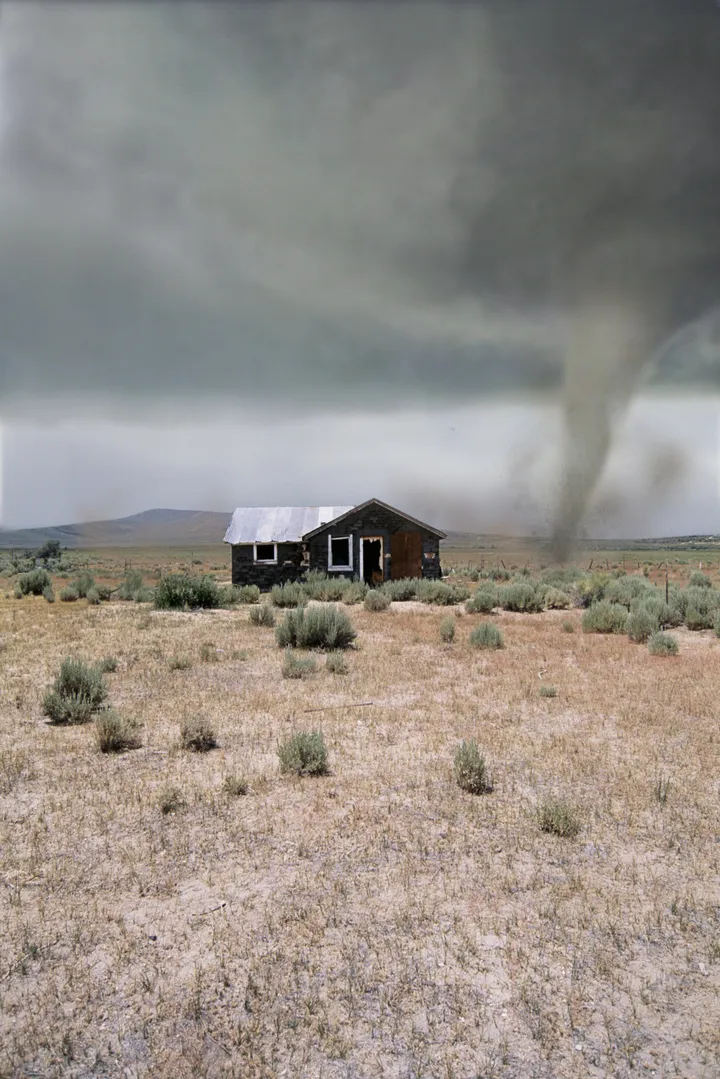
24Everyone then who hears these words of mine and acts on them will be like a wise man who built his house on rock. 25The rain fell, the floods came, and the winds blew and beat on that house, but it did not fall, because it had been founded on rock. 26And everyone who hears these words of mine and does not act on them will be like a foolish man who built his house on sand. 27The rain fell, and the floods came, and the winds blew and beat against that house, and it fell -- and great was its fall!

What's a parable? Hard to say. Like the form itself, the word is notoriously hard to pin down. My favorite explanation comes from the Protestant Scripture scholar C. H. Dodd, who defined a parable as "a metaphor or simile drawn from nature or common life, arresting the hearer by its vividness or strangeness, and leaving the mind in sufficient doubt about its precise application to tease it into active thought."

In other words, a parable is a kind of poetic answer. In his ministry on earth, Jesus of Nazareth favored the parable style, particularly when responding to difficult questions. Whereas a strictly worded definition or precise answer can close down people's minds, a story, a metaphor or a parable opens them up. And that's what we see in the story of the two builders: one who builds his house on rock, the other on sand.

Unlike many other parables which left the disciples scratching their heads, this one, which comes during the Sermon on the Mount in Matthew's Gospel, is straightforward. If you act on Jesus's words (not just listen but act on them) you'll be like the fellow who builds on rock. Your life will be steady, unshaken, permanent. Notice that Jesus does not say that you won't encounter any storms in your life. The one who builds on rock still has to face the rains and the winds. Believing in God, and acting on Jesus's words, does not guarantee that your life will be free of suffering.

That goes against the grain of much of contemporary Christianity, which says that if you believe in Jesus your life will be one of ever-greater success and comfort. In other words, free of suffering. Just looking at the great Christians of our age shows how false that is. Did the Rev. Dr. Martin Luther King, Jr. suffer because he somehow had insufficient faith? Did Mother Teresa suffer because she didn't act on Jesus's words? More to the point, did Jesus suffer because his belief in God was inadequate? No. Suffering is part of everyone's life -- from the devout believer to the doubtful seeker.

But, as Jesus says in this parable, following the word of God means that the suffering will not shake you.

When I worked with refugees in East Africa in the mid-1990s I knew someone who had built his house on rock. By the time I had met him, Kabina, a refugee from Ivory Coast, had already led a difficult life. At one point, fleeing from West Africa into East, seeking a better life, he was pursued by police -- since he had no papers -- into a Kenyan game reserve. Running through the thorn trees that dotted the arid landscape, he told me, his clothes were virtually torn off. In desperation Kabina knelt in the dirt and cried out to the one who was at the center of his life: "Help me God," he said, "I have nothing!"

In time, he made his way to Nairobi, where the Jesuits sponsored him in a micro-financing project, and he was able to start a small business. Though he knew he was in danger, he said, he also knew that God was with him. Kabina would never say that his life was free of suffering. But he knew who his foundation was.

Our culture encourages all of us -- me included -- to build our psychic homes in the wrong kinds of ground. Our foundations are sometimes status, money and power. But Jesus knew the ultimate emptiness that comes when we build on those unstable soils. The same kind of sadness that came to the foolish builder, who watched his house swept away, probably cursing himself as it did so.

Christian teachings are often seen as overly restrictive. Here, however, they are shown in all their beauty. Jesus offers us parables not to browbeat us with rules, but to invite us into a life that is not without suffering, but filled with joy. The only thing we have to do is build in the right place.

James Martin, SJ, is a Jesuit priest, culture editor of America magazine, and the author of The Jesuit Guide to (Almost) Everything.


Editor's Note: Huffington Post Religion has launched a scripture commentary series, which will bring together leading voices from different religious traditions to offer their wisdom on selected relig...
 
 
  • Comments
  • 47
  • Pending Comments
  • 0
  • View FAQ
Comments are closed for this entry
View All
Favorites
Recency  | 
Popularity
Page: 1 2  Next ›  Last »  (2 total)
HUFFPOST SUPER USER
bsmithslo
10:40 AM on 07/28/2010
It is always a good idea to read the verses that surround the text in question before trying to grasp it. The section that includes the wise man building his house upon a rock seems to be quite clearly a command to actually do the work rather than resting on religious laurels. The discourse begins with a command not to judge others however followed by the command to take the log out of ones own eye first rather than focusing on the splinter in another's eye.

The natural tendency of man is to hear the command to do and react by pointing out all the others who don't. It is a defense mechanism to protect the lazy mind and body. The logic goes something like this; "I'll start when others get off their butts and help".

The second defense mechanism is addressed in a true understanding of "hypocrisy". Hypocrisy is judging others in the small things while being unable or unwilling to address the much bigger things in your own life first.

Looking through the posts it seems that the Bible was very wise to place these ideas in the order it did.

The text is written for each of us individually. It is not written for us to quickly try to determine who is doing the work and who isn't. The command is for us to consider our own actions individually. There is no need for attacking others for not doing what we often fail to do ourselves.
02:48 PM on 07/27/2010
Know your higher Self and you have your house built upon a rock. Those who do, no longer suffer from the things , happenings of this world.

Great is the fall and suffering from things of this world for those who do not. Yet, sooner or later, all will find thier higher Self.
This user has chosen to opt out of the Badges program
photo
12:07 AM on 07/28/2010
Yeah, right. Tell it to a "higher Self" who has multiple sclerosis.
12:55 PM on 07/28/2010
Nothing in this world touches the higher Self.
This user has chosen to opt out of the Badges program
photo
01:05 AM on 07/27/2010
Building a life is not the same as building a house. Whatever you choose as a location for your aspirations must be appropriate to what you plan to build. You would not want to build a ship in the middle of a desert any more than you would build a house on a flood plain.

So let your ideas fit the circumstances and be prepared to learn from history. Times change. You cannot step into the same river twice, Heraclitus tells us. Emerson echoes that with his observation that a railroad engine, while on its tracks, is a powerhouse. Take it off those tracks and it is a beached whale. Location, location, location holds true, metaphorically, even for our notions of the divine. Today we live in a universe with no boundary and no center. Philosopher Jacques Derrida tells us that "the notion of a structure lacking any center represents the unthinkable itself." (STRUCTURALIST CONTROVERSY, pg 247). We may be uncomfortable finding ourselves in the midst of "the unthinkable." Get used to it.
photo
HUFFPOST SUPER USER
Ethan Longhenry
Reverse cool on the Westside.
11:26 PM on 07/26/2010
Good secondary application, although I'm not sure that we can go so far as to say that there is never any doubt or uncertainty. A certain level of doubt/uncertainty keeps us humble, which is good. The important thing is that we endure.
photo
Roses
In a gentle way, you can shake the world.
08:39 PM on 07/26/2010
Thank you Father, very good thoughts.....the subject of life's sufferings and why, is probably one of the hardest that anyone faces.
photo
HUFFPOST SUPER USER
Greg Sureck
07:58 PM on 07/26/2010
thanks father
06:48 PM on 07/26/2010
Good article, James!
photo
catsanon
Humans... Such silly creatures.
06:20 PM on 07/26/2010
But if one erects a house of cards upon a rock, the rock won't do much good.........................
photo
HUFFPOST SUPER USER
eileenflemingWAWA
http://www.wearewideawake.org/
05:16 PM on 07/26/2010
"Blessed are the poor in spirit"

In other words: it is those who know their own spiritual poverty, their own limitations and sins honestly and trust God loves them in spite of themselves who already live in the Kingdom of God.

How comforted we will all be, when we see, we haven't got a clue, as to the depth and breadth of pure love and mercy of The Divine Mystery of The Universe.

God's name in ancient Aramaic is Abba which means Daddy as much as Mommy and He/She: The Lord has said, "My ways are not your ways. My thoughts are not yours." -Isaiah 55:8

"Blessed are the merciful, they will be shown mercy."

In other words: how comforted you will all be when you choose to return only kindness to your 'enemy.'

"For with the measure you measure against another, it will be measured back to you" Christ warns his disciples as he explains the law of karma in Luke 6:27-38.

"Blessed are the pure in heart, for they see God."

In other words: how comforted you will be when you WAKE UP and see God is already within you, within every man, every woman and every child. The Supreme Being is everywhere, the Alpha and Omega, beginning and end. Beyond The Universe -and yet so small; within the heart of every atom...

http://wearewideawake.org/index.php?option=com_content&task=blogcategory&id=64&Itemid=195
This user has chosen to opt out of the Badges program
04:33 PM on 07/26/2010
The rain falls, the wind blows, lightning strikes, what else who knows?
The parable in question refers to living in faith in Christ Jesus vs. Living in faith without Christ Jesus . Jesus is often described as the " Rock" in scripture, and sand is the antitisis of rock or is "mans doctrine". With Jesus no matter what comes your way you have the hope of your salvation. Without Jesus your hope is in yourself. Perfection ( in Jesus) vs. Imperfection (in man).

If you don't believe in Jesus or GOD then you also don't believe in
Oxeygen
Electricty

If you say you have no fiath, I say it must take you hours to descend a flight of stairs, you never take an elevator, and you never cross a busy street.
photo
LintLass
"When you can balance a tackhammer on your head...
04:48 PM on 07/26/2010
Err, assuming you were talking about 'Oxygen' and 'Electricity,' then, you're wrong, by whatever logic.

Many believe in neither your Jesus nor your God, but not only know about oxygen and electricity, but can spell them, too.

Also, sand is not the antithesis of rock, ...Sand is just the proverbial 'Very small rocks.'

I'm also fairly sure that atheists have no particular difficulties with multi-level buildings or suffer from any lack of a 'faith-based' substitute for 'Look both ways when crossing the street.'

I, myself, hold to different Gods entirely, and can both spell, descend stairs, operate elevators, and cross the street. Often some of these all at the same time. It's a wonder.

I don't know just how your faith enters into this, but mine *usually* doesn't enter into it, apart from the occasional lurches of ill-tuned elevators. :)

We're OK with gravity, rocks, faith, *and* sand.

Who knew? :)
This user has chosen to opt out of the Badges program
05:00 PM on 07/26/2010
Apparently I didn't , appologies to those who can spell better than I can, and who are more perfect than I claim to be, as you are so willing to point out.
Thank you for you spell checking once again, as you can plainly see you should follow me around and correct me in this and all my imperfections!
"I also don't believe in brains, I can't see yours, or touch yours, hear yours, or taste yours, therefor you have no brain." Einstein to a college professor.
photo
HUFFPOST SUPER USER
gun1934
75 years old fisherman
08:08 AM on 07/27/2010
i have faith in jesus christ--he is the rock that the bible talks about--he told peter that on this rock i will build my church and thats what he did--he built the church on him self jesus christ and the gates of hell shall not prevail against it
This user has chosen to opt out of the Badges program
04:14 PM on 07/26/2010
Members of the RCC I've know very well are not bible readers. But members of my small 'c' church are avid readers and base their faith biblical teachings. We understand parables - Jim, preach to your own audience.
05:30 PM on 07/26/2010
those biblical teachings are mercy, justice, compassion, sharing of possessions, helping the distressed and downtrodden (justice). There are many who base their faith on the "words" written in the Bible but fail to understand fully what those words mean and are therefore unable to live out those words.
This user has chosen to opt out of the Badges program
10:16 AM on 07/27/2010
So true, Gray375, but bible study plus discussion is a worthy tool. I apologize for offending some by stating that it is my experience that members of the Roman church tend to know little of the bible. I'm sure there are many who do. But protesting churches depend on the word. We may disagree in many ways - but we can also love one another.
08:17 PM on 07/26/2010
Since you and your small c's already know everything, why even read the post?
04:10 PM on 07/26/2010
Thank you, FrJames...your posts have become one of (my) daily life's "simple pleasures" (FrPaul Brian Campbell, SJ) for which i am ever thankful to God...to borrow a phrase from one of our teens (Rosary Church, Kowloon, Hongkong), you really truly "Rock"!
03:26 PM on 07/26/2010
Of course, rain will fall upon the strong as well as the weak. Quite often the strong may be more rigorously tested, but will survive.
photo
AdorableHero
Conquer your dark side or become it.
03:18 PM on 07/26/2010
Whenever someone says things or acts like "Accept Christ and you will be full of joy and become happy!" or implies that poverty and bad luck in life are the results of not praying enough or lack of faith, I want to smack them, or take a nice, blunt object to them and teach them a little bit about suffering.

Some of the worst storms of my life have come *after* I became Christian. If anything the old "problem with pain" dilemma is that which has almost made me lose my faith and go atheist (NOT "How can you believe in something you cannot see?" or "How can you believe in something as fantastic as ressurection?" or "How can you be 'in bed' with all those religious people who behave badly?" or even the blunt and to the point "You're stupid!" ) - it's the problem with the fact that suffering happens in the world that's almost "gotten me" --- yet, it hasn't. I always feel like I'm brought out of it and learn something from it or benefit in some way.

I'm manic depressive - which is an illness I cannot help that some other believers (and non-believers, actually) seem to see as a moral failing, but good has come out of it: I seem to get *really creative* when feeling "manic" and I think it gives me a unique perspective. But will I suffer my entire life? Yeah. My faith says "It's okay."
photo
HUFFPOST COMMUNITY MODERATOR
Weirdwriter
05:24 PM on 07/26/2010
I'd fan you again, in a heartbeat...;>)

Some people call all religion a crutch - failing to see that the things they rely on to help them get through life are all "crutches." Crutches can be overused, underused and used to beat other people on the head -- but we all got 'em. But I thank any "crutch" that helps us get through tough times with strength and grace.
photo
HUFFPOST SUPER USER
syntax facit saltum
We do not live in a 2 story universe
06:02 PM on 07/26/2010
i\d fan you again,as well.
HUFFPOST SUPER USER
MrHomerS
Mmmmm...purple
03:12 PM on 07/26/2010
Thanks, Fr Jim, for a great essay. Parables are also wonderful because they are myths, in the anthropological sense: the stimulation of thought helps us to see the meaning of our condition and lives more clearly than real life does.