iPhone app iPad app Android phone app Android tablet app More

Featuring fresh takes and real-time analysis from HuffPost's signature lineup of contributors

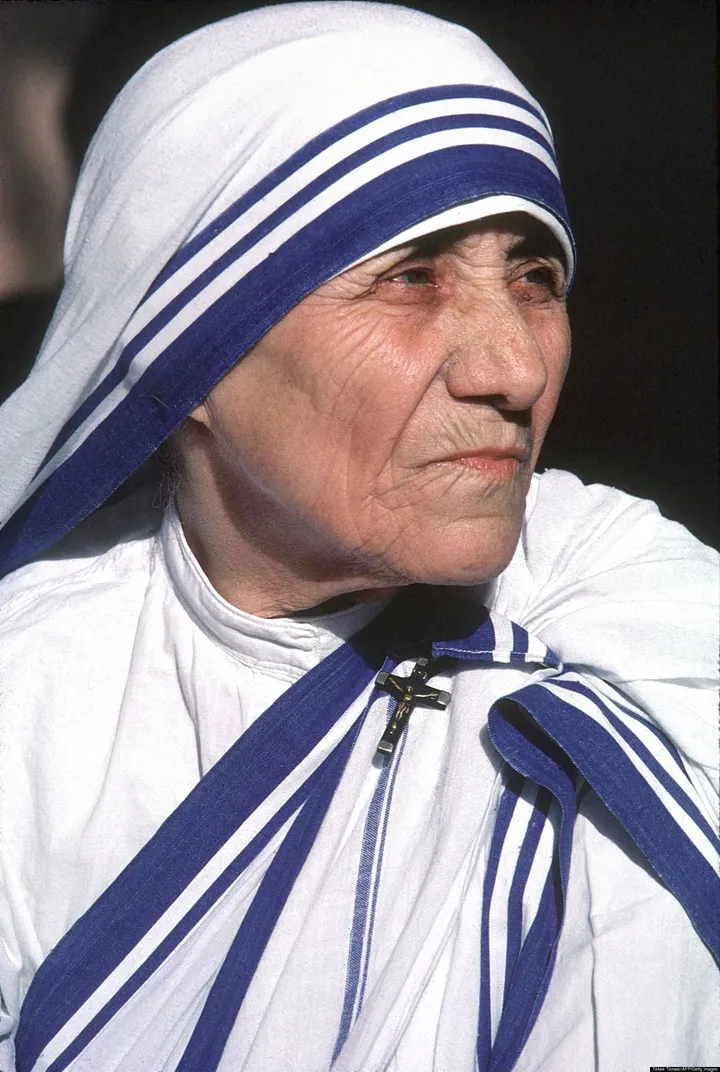
Today is the 100th anniversary of the birth of Blessed Teresa of Calcutta, also known as Mother Teresa. Her ministry to the "poorest of the poor," as she would call them, was well known during her life. Her ministry to the doubtful, the confused, the seeker, the one in darkness, the one who feels distant from God, began after her death, with the publication of Come Be My Light, which detailed her decades-long spiritual darkness, feelings of distance from God, which lasted until her death.

Her having accomplished so much on earth in near-darkness, without the benefit of the fruits of prayer that were enjoyed by almost all the saints, places her, in my opinion, among the very greatest of saints in the church. For many of the saints did what she did -- founded a religious order, served the poor, led a life of heroic virtue. Few, if any -- perhaps none -- did so without any fruit in prayer. Here is a meditation on her life, slightly abridged and adapted and updated from my book My Life with the Saints:

Many of us believe that is only us mortals who struggle with our prayer, who can find prayer dull or dry or boring, who wonder if God hears us, if God cares, if it's all worth the effort. How lovely it must be to be a saint, we think, and to find prayer always easy and sweet and consoling and useful. We're sure that all the saints had to do is close their eyes to be instantly rewarded with warm feelings of God's presence. But the example of Mother Teresa -- who struggled with great interior darkness for the latter half of her life -- shows us that, in the end, the saints really are like the rest of us, struggling in every way that we do, even where we would least suspect it: in the spiritual life. Sometimes they have to struggle even more.

Over time, with the help of her Jesuit spiritual director, Mother Teresa came to view this painful darkness, as detailed in the book Come Be My Light, as the "spiritual side" of her ministry, a way of completely identifying with Christ, even in his feelings of abandonment on the cross. "I have come to love the darkness," she wrote in one letter, "for I believe it is a part, a very, very small part, of Jesus's darkness and pain on earth." Now she, too, would experience what it meant to feel like the old, sick woman whom her mother had cared for years ago in Skopje. She would feel forgotten and unwanted. And in this she would be able to identify more with the poor in their suffering.

Mother Teresa struggled intensely with her spiritual life. And this makes what she accomplished even more extraordinary and her example more meaningful to me. Her ministry, based as it was on a singularly intimate encounter with Jesus that would gradually fade into silence, is a remarkable testimony of fidelity of the greatest kind.

Nothing so binds me to Mother Teresa as this facet of her life, and I have found, when telling this story to others, whether in articles, in homilies or on retreats, that nothing so deepens their appreciation of her holiness.

But I knew none of this when, as a Jesuit novice in 1988, I worked with the Missionaries of Charity in Kingston, Jamaica. All I knew was that Mother Teresa's sisters worked hard, were cheerful with everyone in the hospice, and asked the Jesuit novices only to follow their example.

Our work at Our Lady Queen of Peace, Mother Teresa's center in Kingston, was to wash, dress and care for the men who lived in the hospice. Modesty prevented the sisters from showering and dressing the men (they did so for the women), so the sisters employed one elderly Jamaican man for the task. But since he was unable to wash the dozens of men in the hospice by himself, Bill, my fellow novice, and I were put to work.

Simple tasks, really, but also grim work to which I never grew accustomed. In the early morning Bill and I would be greeted by a phalanx of poor, elderly Jamaican men seated placidly on cheap plastic seats in the courtyard, awaiting their showers.

Leading them into the steamy bathroom, our first task was to help the men out of their clothes. More often than not, their pants were wet with urine or stained from where they had soiled themselves during the night. This made the otherwise straightforward act of undressing them an ordeal, as I struggled to pull the dirty clothes off them, while I knelt on the wet tiled floor in the bathroom. Next I guided them into one of the showers. Also a challenge: many of them were infirm and so needed to be led across the slippery tile floor. One man, named Ezekiel, was blind and so needed practically to be lifted into the shower.

Then I would reach around the men, turn on the water and help them wash themselves. Sometimes during their shower they would ask me to reach places that they couldn't reach, and I would use a rag to wash them. Ezekiel often used this time to blow his nose, using his finger. (I had to be fast on my feet to stay out of firing range.) After drying them off I pulled on their new clothes and guided them back to the men's dormitory.

By the end of the morning I was wiped out, but thankful that showertime was over, and happy to help the M.C.'s distribute bread and tea to the men and women. This was an opportunity to chat with everyone, and since the showers were over I was in a good mood. Bill and I could rest for a few minutes before turning our attention to other duties, the least appealing of which was clipping toenails. "Brother Jim, Brother Jim," some would shout when they saw me doing this for one of the men, "clip my nails, too!"

As much as I wanted to envision myself as a sort of Jesuit-style Mother Teresa, as much as I desired to find Christ in all the people, and as much as I tried to be mindful during my ministry, at the beginning of my time at the hospice, I found the work revolting. Bill seemed to take more easily to the work than I did, which added to my frustration and sense of failure. I felt that, as a Jesuit, these most Christian of tasks should somehow be easier for me. Why wasn't God helping me to feel more comfortable here? I wondered if I was cut out for working with the poor.

But often, just when I was about ready to throw in the towel, one of the sisters would smile and make a joke, or tell me what a great job I was doing, and how Mother would be proud of my work, and how Mother loved the Jesuits, and whether I knew that Mother liked Jesuits best of all for spiritual directors. And I knew that I couldn't let the sisters down. The sisters got me through the first few weeks, and after that I was gradually able to enter more fully into the work. (Though I never, ever liked clipping toenails.) In time, I grew to know the men at Our Lady Queen of Peace as individuals, not simply as bodies to be washed.

This was a great grace, which would deepen over the course of the novitiate: the understanding that "the poor" or "the sick" or "the homeless" were not categories but individuals. Malcolm Muggeridge, the English author, speaks about this same realization in his book, Something Beautiful for God. During the filming of a documentary in Calcutta at Nirmal Hriday, Mother Teresa's center in the city, Muggeridge moves through three stages in response to the sick and the dying. The first is horror at the sights, smells and sounds of the hospice. Second is compassion. And the third, something Muggeridge had never had experienced before, is the awareness that the lepers and the sick before him "were not pitiable, repulsive or forlorn, but rather dear and delightful; as it might be, friends of longstanding, brothers and sisters."

The sisters' cheerfulness, which I had originally assumed was an artful camouflage designed to hide disgust at their tasks, was revealed over time as both utterly genuine and wonderfully helpful to me and to the poor with whom they worked. And, as I would later discover, it found its roots in the spirituality of Mother Teresa. It was not a cheerfulness that masked the difficulties of the work -- for the sisters were serious about their tasks. They struggled daily in a difficult situation: working long hours in a hot climate with the neediest of persons using the simplest of tools. Rather, it was a cheerfulness that communicated the joy of their vocation and the joy of serving Christ.

It had a practical application, too. Their attitude was a gift to those poor who had known mostly misery and rejection in life. "We want to make them feel that they are loved," Mother Teresa told Muggeridge. "If we went to them with a sad face, we would only make them much more depressed."

Plainly, the women of Our Lady Queen of Peace were happy to be Missionaries of Charity. And they were happy to be serving God in this way. "True holiness," Mother Teresa had written, "consists in doing God's will with a smile." That is a difficult statement for many to accept, since it's so close to the banal and empty "offer-it-up-for-God" spirituality. But Mother Teresa, whose interior life was full of darkness, put it into practice what she believed to great effect. So did her sisters.

And their joy was contagious. I had no trouble understanding why they attracted so many vocations. It reminded me of a comment by Peter-Hans Kolvenbach, the Jesuit superior general, who came from Rome to visit our Jesuit province, just a few months after I entered. During his presentation at the New England novitiate, one novice asked Father Kolvenbach the best way to increase and promote Jesuit vocations. His answer came without hesitation: "Live your own joyfully!"

Towards the end of my time in Kingston, I was grateful not just for having survived my ministry at Our Lady Queen of Peace, not just for meeting some wonderful people among the poor with whom we worked, and not only for never once getting sick, as I had feared. I was grateful most of all for the chance to come to know the Missionaries of Charity and encountering first-hand the remarkable spirituality of their order. In the midst of difficult work they were joyful. And this joy was a great example to me, a singular gift to the poor, and truly, in the words of Mother, "something beautiful for God."

James Martin is a Jesuit priest author of The Jesuit Guide to (Almost) Everything. He worked with the Missionaries of Charity in Kingston, Jamaica, in 1988 as a Jesuit novice.


Today is the 100th anniversary of the birth of Blessed Teresa of Calcutta, also known as Mother Teresa. Her ministry to the "poorest of the poor," as she would call them, was well known during her li...
 
 
  • Comments
  • 537
  • Pending Comments
  • 0
  • View FAQ
Comments are closed for this entry
View All
Favorites
Bloggers
Recency  | 
Popularity
Page: 1 2 3 4 5  Next ›  Last »  (9 total)
10:07 PM on 09/02/2010
Christopher Hitchens was right. This person was not much of a good person!
08:56 PM on 09/02/2010
I love Mother Teresa, her acts of good and love are beautiful wether you're an atheist, christian etc. She was a wonderful human being whom we could learn a lot from.
02:26 PM on 08/31/2010
Father James... I sympathize with Mother Teresa's crisis of belief in the god of her indoctrinated faith. She was a woman of immense compassion but greatly diminished faith as a result of her experiences. She concealed her crisis in faith as she was acutely awakened by humanity, that she may freely continue in her work for it. Having seen the most tragic of human existence, it was reasonable to ask: 'If there is a god, why does he entertain such cruelty?' The lack of an honest answer gave her her sense of "darkness." Having been deeply indoctrinated, it was not difficult for Teresa to see human suffering and flash visions of a suffering, crucified Christ appealing for compassion. It's our psychological defense mechanism that kicks in. "I have come to love the darkness," she wrote in one letter, "for I believe it is a part, a very, very small part, of Jesus' darkness and pain on earth." She related to Christ. But she never got the honest answer she sought from the source. In her heart I sense she knew that the spiritual entity of a supreme being was non-existent and there was just herself and humanity. The words of Teresa, "something beautiful for God," should have been "something beautiful for humanity." In reality, that's what it was. When we give joy and love, we get back much more. That too is reality. Let's do good, not fake god.
photo
FTracy3
My micro-bio is as empty as the rest of my life.
11:51 PM on 08/31/2010
People of faith have far more doubt than atheists, which I've never understood. You ask an atheist if it's ever occured to him or her that they might be wrong, the answer is more likely to be no. Which begs the question, who is more open minded?
11:09 AM on 09/01/2010
Hello Father Tracy (FTracy3)... Perhaps you are right and I am a very closed minded individual, my friend. Allow me to be just open minded enough to grant you that. Non-the-less, the question 'If there is a god, why does he entertain such cruelty?' is valid. Assuming this god exists and I come before him, how would he answer to this and all the other horrors attributed to him in the bible. Just for example, in Numbers 31, this god is said to command his tribe to engage in genocide, the theft of land and chattels, and the enjoyment of kidnapped virgins. Such evil permeates the books of this god. And why would god want to be worshiped? Isn't that a satanic virtue? You have read Revelation. It's another horror story. I cannot be frightened into submission. And pray tell, what great evil is attributed to Satan, other than refusing to submit and worship such a deity. Sir, I fear not this god. I am compelled to reject him as the greater evil. Buddha, Plato, Christ, Mohammad and Teresa were flawed in their own ways but great people, not gods. Nor did they claim to be. Nor is there any substantiation of the existence of gods. It's just a primitive idea. Therefore I say, belief in gods is our tragedy. Show me a god and I shall judge it. Heal and make good the suffering of humanity, and I shall praise it.
11:21 AM on 09/01/2010
Post Script:
"People of faith have far more doubt than atheists, which I've never understood" you say.
Perhaps intelligent people question what doesn't seem right. It's fear that oppresses them.
This user has chosen to opt out of the Badges program
photo
oldfuzz
...within my mind
12:40 PM on 08/30/2010
For me, the first essential in Mother Teresa's life was that she lived the life she saw as right for herself. Would the world be a better place if each of us took this example to heart?
photo
HUFFPOST SUPER USER
MaryBethC3
05:27 PM on 08/29/2010
Rev. James Martin: I enjoyed reading your unfeigned, real stuff experience working alongside the Missionaries of Charity and the glimpse into the life of Mother Theresa. I admire these women because it is easy to sit back observing and criticizing the ills of society and the wrongdoings of humankind, but it is virtuous and authentic to get out there, roll up one's sleeves, and actually work to make this world a better place. I am grateful for these women, for you and others like you because without you, this world would be a much darker place.

I applaud HuffPo for being authentically "progressive" by publishing this article and others like it. I think most would agree that currently the status quo in Progressive/liberal circles is rather anti-religion, or perhaps, only anti-Christian. Thank you for not lumping us all in the same box with politically powerful people who call themselves "Christian" but whose words and actions barely resemble anything of the person or teachings of Jesus Christ. We're not all the same like that, and thank you for your respect through differences.
03:37 PM on 08/29/2010
Didn't think that one would EVER see daylight!
01:35 PM on 08/29/2010
While you may not agree with all of the politics of Mother Teresa, she lived her life faithful to those who suffered. She did not canonize suffering for suffering's sake - that is an incorrect logic from those less smitten by love than she - but she went out to those who suffered for love of them and for her God whose mandate is towards the least.

Why do we expect perfection when we ourselves desire mercy for our own shortcomings? Yes, we need to stop sanitizing the lives of others posthumously, like Dorothy Day said: "Don't canonize me; I don't want to be dismissed that easily". And inherent is this too: that we cannot dismiss our responsibility to do what is ours to do in this life by relegating it to the work of super saints.

And Mother Teresa is a good reminder that ultimately we may never see the fruits of our own work; many great people in history never see the results of what they sacrificially lived for, but we must remain faithful to the task, otherwise it is all about our own ego in the end.
06:01 AM on 08/29/2010
Further meditations on the state of the hierarchy of contemporary Catholicism are apparently to be suppressed by a perhaps over zealous monitor.
05:58 AM on 08/29/2010
She's certainly good PR for the RCC.

And they can certainly use it.
photo
HUFFPOST SUPER USER
UnaBohemia
Ask a Latina
12:46 AM on 08/29/2010
Mother Teresa visited Tijuana, Baja California MEXICO numerous times. The San Diego wealthy would flock to her every need as if this would make the lives of the sick and poor children from Tijuana any better. It was hypocritical then as it is obviously showing now. Mother Teresa's visits were in vain. Tijuana continues to be just as poor as ever- perhaps with a few more orphanages that have a harder time feeding their children. I know, I work hard at helping one of them. And I am hardly Mother Teresa to remind the wealthy from San Diego of the work that still needs to be done in the very poor neighborhoods of Tijuana.
09:04 PM on 08/28/2010
The first time I saw her speak, she was defending the Church's position on birth control / abortion while next to a very ill child whose father had raped and impregnated her and kicked her out of the house. That Church dogma mattered more to this nun than people is her choice. I scorn it for other reasons, but it's hardly in imitation of Christ. She was neither good nor great, in my opinion.
photo
HUFFPOST SUPER USER
Rhonnybay
Be well. Love well. Do well.
05:10 PM on 08/28/2010
Humanity should never expect perfection from humanity. We can strive for perfection but we fail at times.

I believe she was flawed because she was human. I also respect her work because so many do nothing at all. She TRIED it.
09:32 PM on 08/28/2010
Mother Theresa was the first to lift lepers and untouchables from the gutters of Calcutta. She cleaned and bathed them, fed and clothed them, provided them with shelter and safety when everyone else just walked on by.

The responses here are beyond a puzzlement.
photo
HUFFPOST SUPER USER
eileenflemingWAWA
http://www.wearewideawake.org/
09:50 PM on 08/27/2010
Most theologians agree that the opposite of faith is not doubt; but fear.

Mother Teresa had her doubts, but she was a fearless advocate and compassionate tireless caregiver who did unto the the least among us, what she would do unto God.

When Jesus said, "You must be born again."[John 3:7] he was talking about a transformation of heart, soul and mind that would lead to one seeing the Divine within all beings and all of creation.

Mother Teresa said her work with the poor and outcasts was possible because she saw the face of Jesus in everyone. Her 're-birth' happened, so perhaps her dryness, doubt and darkness were to keep her humble and maybe to deliver a message to 21st century Christians?

In the Christian tradition, the "dark night" can occur in anyone who has developed a strong prayer life and consistent devotion to God. The trauma they experience when their traditional form of prayer become difficult and unrewarding, are akin to the abandonment Jesus expressed as he was dying on the cross when he quoted Psalm 22:1, "My God, my God, why have you forsaken me?" Matthew 27: 46

An individual experiencing the dark night of the soul will feel as though God has suddenly abandoned them, but in the spiritual realm, the dark night is believed by mystics to be a blessing in disguise; a refining and the ultimate testing of one's faith...

http://wearewideawake.org/index.php?option=com_content&task=view&id=623&Itemid=173
photo
HUFFPOST BLOGGER
messy
artist, writer, adventurer
06:11 PM on 08/27/2010
She raised tens of millions for her hospital, and none of it got there. Why?
11:14 PM on 08/27/2010
Ask her Swiss bankers.
photo
younggringos
my awesomeness cannot be described in a micro-bio
12:22 AM on 08/30/2010
She did enjoy the finer things in life. Her 3 gold plated Escalades. Her platinum chains. Refrigerator full of Cristal. And the entourage: a few thousand homeless, disease riddled Calcuttans.
It doesn't come cheap.
photo
HUFFPOST COMMUNITY MODERATOR
Weirdwriter
11:30 PM on 08/31/2010
You post a vague claim with no credible evidence for us to verify -- why?
photo
HUFFPOST BLOGGER
messy
artist, writer, adventurer
05:22 PM on 09/01/2010
She was one of the most famous people in the world. She travelled the world begging for help from the rulers of the world and got it.

I met a volunteer at her Calcutta clinic and she told me about the horrible conditions there. They had no sheets, they had almost no drugs or food or anything. Why was that so?

Why did this "saint" who travelled the world and was lauded by everyone refuse to give her charges all but the barest neccessities? WHY?
05:33 PM on 08/27/2010
SInce when does the newspaper of record for the left acknowledge, not to mention glorify "Saints", anyway.

Does anybody on here really believe the whole sainthood thing...not just for bloody therry, but for anyone at all?

three miracles? really?