
Maybe it's because we made such a big deal of Y2K ten years ago that the advent of the second decade of the 21st century hasn't gotten as much discussion. As the OO's left us, the near collapse of the global financial system shook the world economy to its core.
With those events as its bookends, the decade just past was a pretty rough start. So as the "tweener" years begin, might it be time for world leaders - construed broadly -- to take stock, arrive at some consensus about the future, set some priorities and take steps to spark revitalization and renewal?
The current economic downturn has destroyed enormous amounts of capital and wealth, idled millions or workers, created a crisis of confidence in our financial markets and institutions and literally put entire nations on the brink of bankruptcy. As we begin the second decade of the 21st century, global business will never be the same.
What I'm proposing and organizing in the wake of the worst economic crisis since the Great Depression is an attempt to jump-start a new paradigm for growth and progress around the globe. This new event -- the New York Forum will bring together 500 business leaders, entrepreneurs, sovereign investment managers, regulatory officials and academics. Their mission? To discuss, dialogue and debate the direction that business ought to take at Y2K Plus 10.
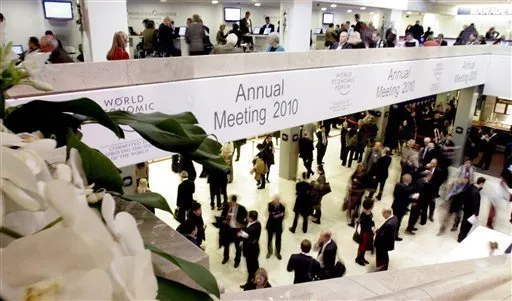
Could such a meeting really work? In my experience, yes (by way of disclosure I have produced the World Economic Forum for the last 13 years and launched the Clinton Global Initiative in 2005). Those recent efforts - and others like the work of the Gates Foundation - underscore the power that convocations and commitment by world leaders can have. Global agendas can be established, universally accepted approaches can be adopted and huge problems can be eradicated.
The New York Forum would amplify the power of the concept in three ways:
- Focus -- The New York Forum would seek to emulate the methodology of other successful initiatives while focusing its power on a single area of activity - business.
The good news is that out of the current crisis, opportunity will inevitably emerge. Every sphere of the global economy -- manufacturing, energy, financial services, health care, media , technology, retail , real estate, travel and tourism -- needs to be reinvented for the young century. The pace of change in the 2000s will be exponentially more rapid than last century. Now, at what may be the nadir for the next 30 years, is the moment to gather the right players and determine how to revive the global economy, create new jobs, attack the scourge of unemployment and gain access to the necessary financing.
I am committed to mounting the New York Forum June 22-24, three-and-a-half months from now. There is no time to waste. All the relevant stakeholders face the same challenges, yearn to grow and prosper and prime the engine of commerce to improve people's lives. Ten years in to the new century, we know business will never be the same; if we act now we will have a good chance, at the end of this decade, to say business is not only different than it was but also better.