Featuring fresh takes and real-time analysis from HuffPost's signature lineup of contributors
Richard Dare

GET UPDATES FROM Richard Dare
 

The Awfulness of Classical Music Explained

Posted: 05/29/2012 8:13 am

Visiting a popular concert hall for the first time some years ago, I was lucky to have a fairly genial host whom I'll call Luddy. He guided me patiently through the obtuse and unfriendly ticketing procedure at the "Will Call" window where I felt rather like I was visiting a sort of bland theatrical version of the Department of Motor Vehicles. When I commented that it hardly seemed the promoters wanted to make buying tickets desirable, my guide explained the situation away by means of a sort of denial mechanism, never seeming to lose interest in pointing out the gargantuan monument to culture the concert hall itself represented.

Although I loved the music I heard that evening, I was struck at the time by how matter-of-factly my guide dismissed my observation that concerts might not be easy to figure out for a first-timer. And he took it for granted that I would find the impressive edifice and music itself a satisfactory recompense for my troubles. And he might have been right, I suppose, had I at least been allowed to authentically enjoy the performance going on inside that hall as I might spontaneously appreciate any other cultural pursuit like a movie or a dance or a hip-hop concert -- if I could clap when clapping felt needed, laugh when it was funny, shout when I couldn't contain the joy building up inside myself. What would that have been like?

But this was classical music. And there are a great many "clap here, not there" cloak-and-dagger protocols to abide by. I found myself a bit preoccupied -- as I believe are many classical concert goers -- by the imposing restrictions of ritual behavior on offer: all the shushing and silence and stony faced non-expression of the audience around me, presumably enraptured, certainly deferential, possibly catatonic; a thousand dead looking eyes, flickering silently in the darkness, as if a star field were about to be swallowed by a black hole.

I don't think classical music was intended to be listened to in this way. And I don't think it honors the art form for us to maintain such a cadaverous body of rules.

The Way We Were

Joseph Horowitz in his wonderful new book, Moral Fire, describes audiences "screaming" and "standing on chairs" during classical concerts in the 1890s. The New York Times records an audience that "wept and shouted, strung banners across the orchestra pit over the heads of the audience and flapped unrestrainedly" when listening to their favorite opera singer at the Met in the 1920s. And Greg Sandow provides a brilliant analysis of classical music's average audience age over time, showing the form to have remained most popular amongst energetic thirty-somethings rather than subdued grey-hairs all the way until the late 1960s era of Mad Men.
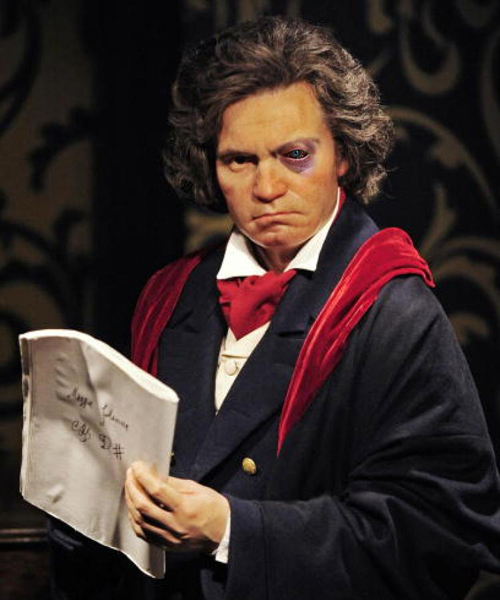
2012-05-17-beethovenblackeye1.jpg


Indeed, even the venerable Beethoven, I am quite certain, would be dismayed to find his music performed the way it is today. Not to applaud between his movements? Unthinkable! Not to call out during the performance and react to the music he'd written? Preposterous!

To begin with, like many living composers, Beethoven was not universally understood or even particularly well liked -- nor did he care to be. Of his Third Symphony, the Eroica, critics who attended the 1805 premier wrote, "If Beethoven continues on this path, both he and the public will come off badly. Music could quickly come to such a point that everyone will leave the concert hall with only unpleasant feelings of exhaustion."

To his contemporaries, the sheer primal suspense in the Third was deliberately jacked up to such an unbearable degree that by measure 394 the first horn famously goes berserk, acting out the listener's agony of expectation by breaking in on the violins prematurely. So unprecedented and unruly was this bold psychological stroke that it was at first mistaken, even by the composer's close friends, for a sort of prank. His pupil Ferdinand Ries, thinking a blunder had been made, cried out, "Can't the damned horn player count?!" for which he came pretty close to receiving a sharp box on the ear.

Beethoven, it turns out, was not a follower of tradition. And no one was expected to keep quiet during his performances either. The music was much too wild, too complex, too dramatic and demanding. If it was gauche, the audience complained or praised at will just as they do today in non-classical concert experiences.

Nowadays, however, Beethoven it seems in spite of all his revolutionary fervor has along with the whole kit-and-caboodle of classical music become something of a rather dull commodity -- so perfect in every way that his music displays not really greatness or excitement anymore, but (I am sad to report) only "packaged greatness." Smugness, dullness, an over abundance of ritualism ... everything, in fact, that Beethoven hated.

What Can We Do Now?

One step therefore we might take to make classical music less boring again is simply for audiences to quit being so blasted reverential.

The most common practices in classical musical venues today represent a contrite response to a totalitarian belief system no one in America buys into anymore. To participate obediently is to act as a slave. It is counter to our culture. And it is not, I am certain, what composers would have wanted: A musical North Korea. Who but a bondservant would desire such a ghastly fate? Quickly now: Rise to your feet and applaud. The Dear Leader is coming on stage to conduct. He will guide us, ever so worshipfully through the necrocracy of composers we are obliged to forever adore.

The living composers I know though are real people. They bleed just like the rest of us -- or more accurately stated, because they are artists willing to put their thoughts into action for our review and criticism, they bleed publicly for us. They drink beers and feel tired and ride subways and dream about a better life. They are human and they want us to share a deeper, richer human experience together with them. They want, in effect, the same things Beethoven wanted.

Here are the two most shattering facts about classical music today: First, Americans are writing, playing, recording and listening to more orchestra music today than they ever have before in history -- mostly in the form of film music and video game soundtracks. So we know they like the general sound.

They just don't like listening to it with us, at concert halls. And that is the second fact.

Perhaps it's because of trying to keep classical music audiences living in the dark, in perpetual fear that they might not understand the secret and elite codes of long-term insiders, brainwashing core subscribers into an irrational hatred of anyone who dares to disrupt their peace-and-quiet even if accidentally, regimenting the experience with a coerced and inculcated rigidity that would be abhorrent to any composer worth his or her salt: This is how we have made classical music so awful.

Perhaps it's time to tell our own darling leaders to bug off and in place of their formalities simply allow ourselves to react to classical music with our hearts just as we do when we meet other forms of art. Classical music belongs to the audience -- to its listeners, not the critics, to the citizens, not the snobs.

Why not reclaim your music today?

What do you think, readers? Do you think classical music could be presented in a better way than it is today? Let us know your thoughts in the comments.

 
FOLLOW CULTURE
Visiting a popular concert hall for the first time some years ago, I was lucky to have a fairly genial host whom I'll call Luddy. He guided me patiently through the obtuse and unfriendly ticketing pr...
 
 
  • Comments
  • 424
  • Pending Comments
  • 0
  • View FAQ
Comments are closed for this entry
View All
Favorites
Bloggers
Recency  | 
Popularity
Page: 1 2 3 4 5  Next ›  Last »  (17 total)
09:45 PM on 07/22/2012
Happily (in this instance) I live in Detroit where the amazing Maestro Leonard Slatkin leads our beloved DSO. The concerts actually at Orchestra Hall draw a wonderful mix of people from everywhere. Energetic students in ripped jeans, well dressed suburban families, and folks who just got off work. And then there are the neighborhood concert series. Even the painful DSO strike made them seem that much more a part of all Detroiters, for we have all had to deal with pay cuts and tough times. Every event I have been a part of involves people standing, applauding, whooping and whistling. Concerts should be a joy to attend, not a duty to perform.

http://blog.dso.org/2012/06/%E2%80%98live-from-orchestra-hall%E2%80%99-webcasts-make-detroit-symphony-orchestra-among-the-most-attended-orchestras-in-america/
08:28 AM on 07/19/2012
If you want to enjoy a much more informal classical music experience, I recommend looking up a local community band or orchestra. These groups tend to have dedicated non professional musicians. It is fun to meet people who are accountants, doctors, secretaries, engineers, teachers, etc who have kept performing music a part of their lives. These groups may not be as virtuosic as professional groups, but their concerts tend to be fun, casual, and a relaxed way to enjoy classical music. Additionally they usually introduce the pieces they play and give a little history behind what they are performing and what to listen for. This is great for people who want to learn a little more about classical music without someone judging them.

Also, they could definitely use the support! It can be frustrating to work hard on a concert only to have there be more people on stage than in the audience. These performers are members of your communities, and love to have an audience and to talk with people about their music. Nobody will judge you for showing up in shorts and a T-Shirt, or bringing snacks to an outdoor event, etc. And if you want to cheer and enjoy yourself, these groups will probably beg you to come back to see them again, not kick you out. If the professional concert halls want to keep their strict rules, that is fine! There are many fun local groups which would LOVE for you to attend their concerts.
06:35 AM on 07/11/2012
By calling it "classical music" you only show your ignorance. While I agree that SOME of the pomp associated with concert music could be modified, I do find the whole article to basically be "why can't they do what I want them to do?!?" Perhaps taking, oh, I dunno, 5 minutes to search protocol for a concert on the internet could elucidate and remove some of your fears.

Personally, I find it refreshing if an orchestra offers different kinds of concerts. Some more formal, others down right informal. I am well aware that at different times throughout history that audiences would applaud and even ask for a movement be repeated before moving on. But you do have to understand that that is not the custom now. Musicians are accustomed to moving from one movement to the next in a specific way. Could that be changed? Perhaps, and again, in some concerts perhaps encouraged. Bottom line, different kinds of concerts require different types of behavior. People act differently at a Barbra Stresiand show than they do at a Van Halen show.

In addition, you must remember WHO PAYS for these concerts. And I am not referring to just the ticket prices. I mean donations to the orchestra. For better or worse, it is mostly people who have a lot of money and appreciate the tradition. I doubt many 30 somethings are donating tens of thousands. And in the end, money talks..... just not between movements.
01:33 PM on 07/06/2012
I'm going to quibble with one of your points. When you stated that at measure 394, "the first horn famously goes berserk, acting out the listener's agony of expectation by breaking in on the violins prematurely," you are mistaken. Horn players, of which I am one, will recognize this as a famous second horn solo. Also I think "berserk" is a bit strong to describe a pianissimo solo.
photo
HUFFPOST SUPER USER
mburgh
Come Back Samuel Gompers
05:10 PM on 06/26/2012
A lot of the elitism surrounding the music itself (not the music) could be removed. Outreach programs to younger people. Let musicians play in less formal clothes, use less formal venues. One of the finest performances I ever saw was "Madame Butterfly" performed in an opera workshop in Arkansas, the singer accompanied by only a piano. The great, great music of Western culture must and should be heard, must and should be allowed to be alive, like great art is, not a chained means of showing how rich (and bored) its current patrons are.
04:21 PM on 06/25/2012
Excellent article!

As an orchestral musician, I find it gratifying to hear an audience's appreciation. When finishing a dramatic first movement of a symphony or concerto, I like that showy ending to invite applause, rather than having all that energy evaporate into dead air. Similarly, at the end of dreamy, ethereal pieces, I love hearing awed silence, while the audience soaks in what they've heard, before they make their way back to earth and slowly start to applaud. I find an audience's reaction not distracting, but invigorating.

Why label Classical music anyway? There's this divide between classical, jazz, and popular music which really isn't terribly meaningful. As mentioned, we're listening to a lot of orchestral music (in the form of film/video game scores etc.) which is brilliantly crafted, but is excluded from the category of "classical music". On the other hand, many current musicians are indefinable, easily straddling genres; for example, John Zorn, Brian Eno, Terry Riley, Philip Glass, APHX twin, David Amram, Tristan Perich. Contemporary "classical" music is being performed in a variety of venues, like pubs and outdoor spaces, which invite greater audience interaction and reaction.

In my opinion, there's no reason for music to be treated any differently just because it was written by someone who's now dead, or because it's performed on a particular set of instruments. Music is meant to speak to the soul directly. It shouldn't have to cross over a vast gulf of protocol and ceremony in order to do so.
09:57 AM on 06/22/2012
This is the one thing I agree with in your piece Richard: "Nowadays, however, Beethoven it seems in spite of all his revolutionary fervor has along with the whole kit-and-caboodle of classical music become something of a rather dull commodity -- so perfect in every way that his music displays not really greatness or excitement anymore, but (I am sad to report) only "packaged greatness."

The art form has tragically neglected the expansion of the repertoire to include the greatest musical creations of the more recent past. Orchestras should have been addressing this challenge for the past few decades. Oops, forgot to get that done. Yes, there was a lot of complex ultra-dissonant music that emerged in the experimental 60's and 70's, and that body of work alienated many listeners from ALL new music, convinced them that nothing noteworthy came out of the last half of the 20th Century. But if one traces a different thread of composition, one uncovers a treasure trove of great music, more clearly linked to the past. Our musical leaders have failed the art form here. They have not helped audiences to distinguish a great new piece from a mediocre one. Had each conductor embraced a few works from this period and unapologetically programmed them, repeatedly, a la Koussevitsky, we could have a revitalized repertoire by now that may be enticing younger ears seeking newer music of substance. Too late. We're stuck now with routine Beethoven and more Pops concerts. Tragedy.
07:45 AM on 06/21/2012
How self-serving and empty-headed this article is. It's a troubling trend among younger Hipster artists or art-consumers, this notion of relevance, that something has to speak to ME, edify ME in the fullness of who I AM. What about a little selflessness, fidelity and devotion to the "otherness" of the encountered work, in this case music. I agree, the stuffiness of the classical music establishment is off-putting, but this same stuffiness is shared by the intellectual establishment at large - from academia to the art gallery. I mean, I am what might be considered a "young" lover of classical music - I'm 23. The problem is not music nor how it is performed, but rather our mentality as we approach both. I for one, in turn, am deeply suspicious of the current regime of deconstructionist suspicion directed toward something like the "sanctity" or "sacredness" of the work; that, to the extent that Beethoven's 7th or a poem by Walt Whitman are "cultural texts," we should feel no remorse, as consumers, in demanding they edify us with relevance or, as artists, in expropriating or cutting them up and recombining them, because after all they belong to us, and we can do with our possessions as we please. Not to mention that everything is to be reduced to a purely social cache/content, no matter how forced, or casually and perhaps ironically flaunted as cultural capital. "Hey guys, I just signed into Four Square from Carnegie Hall!"
05:59 PM on 07/04/2012
as a performer, listener and music teacher, I totally agree with you. Depending what the type of
classical' music is which is being performed, the need for a silent backdrop is important. My school has a chamber music excellence programme and when these youngsters perform for the school, it is disturbing to watch the audience squirm in their seats waiting for something to satisfy their need for BIG noise, BiG emotions, BIG effects. The emotionally moving stuff is certainly in the music being performed, but it is on a much smaller, more intimate scale than say at a Pop concert. Nothing about classical music is "in your face" . It is often not loud enough to drown out the lolly wrapper the whispering. Chords change more often than every four bars and detail is lost if the audience does not listen intently. This does not mean it has to be in any way joyless or boring, quite on the contrary: it WILL be boring if attention is not paid to the detailed intricate web of harmony, melody and rhythm. Classical music does not use a sledge hammer to get your emotions moving - it requires you to come as an active and ready participant, fully conscious and awake, so you can share in this particular expression of human genius.
07:43 AM on 06/21/2012
In my opinion, if anything, classical music (and the arts in general) needs to be rescued from the inheritance of people my age, who feel so entitled and who demand art come to them, and not vice-versa, in sheerest service of the self, entirely at the expense of the encountered work, in its fragile and mercurial existence, its otherness. Not to mention the thoughtless privileging of the living over the dead ("The living composers I know though are real people," etc.). God, there's just so much wrong with this piece, but it's so very typical as well.
10:58 PM on 06/18/2012
Interesting, provoking but still, to be a rasika or to appreciate; to appreciate is to listen and allow the raga or the notes and melody to sink in and NOT be ever ready to clap and whistle. After all, a mood is being established! Richard Dare can stay at Woodstock, no issues with that. And for all that I care.
For listener, it is equally a journey by itself like a conductor to the music and to the musicians in the orchestra. I am not in the hall ever eager to clap, hoot and whistle as much as listen and appreciate the nuances! Mr.Dare, first cultivate this, grow into being a rasilka one who appreciates, listens and allows the music to enter one's being else get thee to your nunnery! Rock concerts and let loose.
03:24 PM on 06/13/2012
Last year I attended a Neil Young concert at Avery Fisher Hall, Lincoln Center. It was interesting that the promoters (or Mr Young himself) had placed signs on the entrance doors asking the audience not to indulge in whoops and whistles during the songs. Needless to say, some audience members insisted on indulging themselves in producing these weird sounds, which I would understand on the sports field but which had no connection to the music being played. A whoop in the middle of a song about a dead friend could in no way express the listener's enthusiasm for the song. More likely the whooper wanted people to know how pleased he was to be there, not that he was actually going to listen. So this isn't just a classical music issue, it's one of an audience's real connection and reaction to the music being played. It's just as bad to ritually keep silent than to ritually clap after every aria, or jazz solo. I've been at classical concerts where the performance of a symphony or concerto movement was so beautifully played that it made a real connection with most of the audience, who broke out into spontaneous (i.e. NOT ritual) applause. Similarly an exquisitely played Chopin Nocturne played as an encore for which the audence was as silent as any audience I have known. I'd hesitate to support interjections during a piece, whether whoops, applause or even boos. People pay to hear the music, not the audience!
01:15 AM on 06/13/2012
Mr. Dare's assertion that any composer worth his salt would want listeners hooting their approval from the aisles as his music is being played, is absurd on its face. I would wager heavily that there are dozens of composers (all considered worth their salt) who would abhore such noisome intrusions on their delicate, quiet, and exquisitely orchestrated scores. Arvo Part, for one, comes to mind. Clap between movements, if you feel so moved, but please keep respectfully quiet while the music is sounding. As Mr. Dare says, "classical music belongs to the audience -- to its listeners"; yes, to all of them, not just the ones who feel the need to react "with their hearts". Hey, Mr. usher man, you're not lettin' me be myself. Isn't there enough of that attitude in the rest of the world? Leave it out of the concert hall, for goodness sake.
08:19 AM on 06/12/2012
Perhaps more audience interaction applies when the actual composer is present at the performance. When an orchestra is working hard to finely interpret complex music involving a huge number of musicians in coordination, it is more respectful to be quiet and allow them to do their work. If you were a musician up there on that stage, you would understand a little better.
05:48 PM on 06/11/2012
this is exciting stuff: http://www.youtube.com/watch?v=CSyOfJRmbLY
01:19 PM on 06/11/2012
This infuriated me to the point that I could not post a short comment; I had to respond in a lengthy blog post of my own. As an aspiring classical musician who loves the symphony hall, I could not remain silent in the face of this article. My full post can be found at the link below, for anyone who is interested in reading it.

http://abledperspective.blogspot.com/2012/06/truth-behind-concert-hall.html#more
02:53 PM on 06/11/2012
I do, however, respect that he wrote a follow-up article to this initial one. While I disagree with his statement that this original article did not imply opinions that it clearly states, I highly respect and agree with most of the conclusions he reaches in his second article.