
I've spent a lot of time lately thinking about climate change liars. Those people who make a living deliberately deceiving the public about the scientific consensus on climate disruption. These people are awful, they know who they are. They have to live with their lies.
But what's worse is the other lie I've discovered in the process. It's the lie that I'm telling. It's the lie that we all tell to our children and each other when we don't talk about climate disruption. It's the lie of us all pretending that everything will be OK.
People have lots of opinions about what it takes to be a great parent. But I'm pretty sure that this isn't on anyone's list: Lying to your children about the unraveling of nature and the catastrophes that will certainly follow.
It's not on my list. But that's pretty much what most of us do everyday, at least those of us who know anything at all about the reality of ongoing climate disruption.
If someone told all the parents of the world that there was a 98 percent chance that radical environmental changes in the next 10 - 50 years will wipe out half of all known life forms on earth, and that famine, plagues, floods and droughts on a scale not seen in thousands of years would become routine for billions of people, you would think they would tell their kids.
Well most climate scientists in the world have been telling us that, but we don't do anything about it.
Sure, there is a 2 percent chance, probably less, that we can continue to pump 1,000 tons per second of CO2 into the atmosphere every minute of every hour of every day of every week of every month of the year, and that it will have no effect. But there is at least a 98 percent chance that it will.
Given those odds, what are parents to do?
What most of us do is lie. Well, not exactly lie. We just don't talk about it. We don't bring it up. We hide from the truth and hope somehow that it will go away. But it isn't going away.
Why do we behave this way? Three reasons: Most of us feel powerless, in the face of industry lobbyists and lying politicians, to force the huge changes needed to fix the problem. This is not something that is pleasant to admit, and we don't know how to tell our children just how powerless we have become. Parents aren't supposed to be powerless. And even if we could face up to that, for most of us a climate-disrupted future is too overwhelming and painful to talk about.
And even if we decided to talk about it, what would we tell the kids? "Gee, I'm sorry, but our completely irresponsible unwillingness to make any of the changes necessary to avoid massive and unprecedented disruption of the earths climate means that we have sent the planet careening toward a catastrophic convergence of events that almost certainly will destroy life on earth as we know it."
"Sure we built some windmills and threw up a few solar panels, but in the end it was just too hard to clamp down on greenhouse gas emissions. And rather than upset you, we just decided not to tell you any of what we know about the perilous future we are leaving you."
I'm not real happy with that strategy.
Maybe as a first step in fighting climate disruption we need to figure out how to talk about it with each other and with our children. Maybe we should man-up, or woman-up for that matter, and actually do something about the problem. Why not? The fortunes to be made on the solutions will make the internet revolution look like chump change.
And maybe we should give our children a fighting chance to beat the problem, because after all, they'll have to live with it, not us.
It's way past time to start talking about climate disruption. If we don't have the courage and common sense to begin this conversation, it's pretty unlikely we will ever find the resolve to fix the problem.
Yet, are we seeing credible evidence of accelerating warming? No. Are we seeing credible evidence of accelerating sea level rise? No. Are we seeing credible evidence of accelerating sea level temperatures? No.
It is possible that the degree of climate sensitivity to CO2 change has been exaggerated, either by accident or by design. Climate sensitivity is difficult to study. It is difficult to prove. However, we can observe the physical world, including credible temperature data, tide station sea level data, and ARGO ocean temperature data, to check for a 'man-made climate change signal." Right now, it doesn't seem to be there. Instead, there seems to be a signal that the warming of the late 20th century has slowed down, and perhaps is starting to reverse.
The awkward conversation should be that we really can not predict the future right now, and that we don't know if our children will be facing a warmer, an unchanged, or a cooler climate than the one they live in right now.
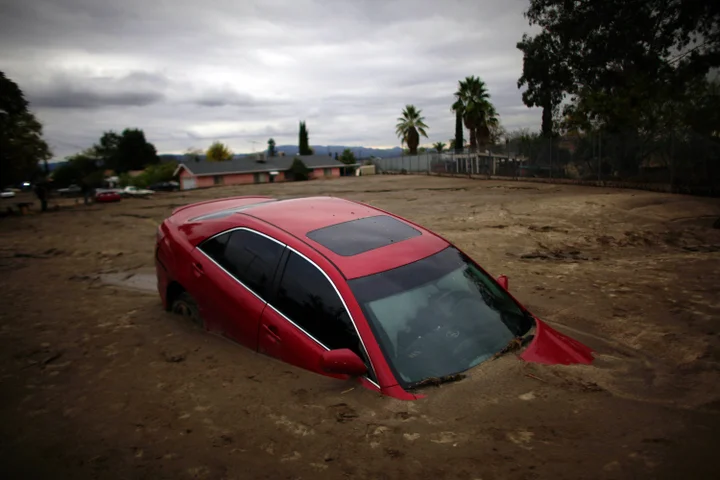
For example, the failure of the Russian and Chinese wheat crops due to drought, and devastation of multiple Australian crops due to drought in some regions and deluge in others have pushed world food prices to record highs -- this with less than a full degree C of warming to date but with more warming committed.
Polyannas prattling on that a warmer climate will have mainly beneficial effects for human populations are in full-blown denial of physical reality and of natural and human history. No direct evidence of negative climatic effects from previous warming episodes? Tell that to the Akkadians, the Moche, the Khmer, the Maya, the Anasazi.
Grain prices in Europe during the Medieval Warm Period and the Little Ice Age bear out that a warmer climate made food more plentiful and affordable, the cooler climate of the LIA made it more scarce and expensive.
The Maya? From Wikipedia: "There is evidence that the Maya population exceeded carrying capacity of the environment including exhaustion of agricultural potential and overhunting of megafauna." Some climate change.
I am also aware that there is a theory of a 200-year drought. As the Mayan civilization collapsed in the 8th and 9th centuries, this would have been before the MWP.
As for the Akkadians, it was a local drought that happened right around the time the Egyptians built the pyramids at Gizeh.
The Moche? Wikipedia again: "Studies of ice cores drilled from glaciers in the Andes reveal climatic events between 536 to 594 AD, possibly a super El Niño, that resulted in 30 years of intense rain and flooding followed by 30 years of drought, part of the aftermath of the climate changes of 535–536."
The Anasazi? More drought—in Arizona and New Mexico. They found a wetter place to live nearby, and were absorbed into neighboring peoples.
Sorry, the Khmer will have to fend for themselves.
Being mischaracterized as alarmist doesn't bother me much. I think it is far preferable to be aware and concerned about a phenomenon that can destroy humanity, then to act like a child, mock scientists, and add nothing mature, rational, scholarly, scientific, mathematical or creative to the conversation.
What do you think?
Have a nice day.
We should still be able to discuss the matter without jumping to conclusions one way or the other. The article above is sensationalist, and blatantly disregards the facts on the ground to indulge in unsubstantiated doomsday predictions.
There is no evidence that any of these things will happen.
There is historical evidence to suggest that a slightly warmer climate will have beneficial effects in many places, and possibly some negative effects in others. We know about the beneficial effects from the Minoan, Roman, and Medieval Warm Periods. We have no direct evidence of negative climatic effects from these periods, hence the differentiation made.
There is no sign whatsoever that there is an increase in species extinctions. It is a myth that this is going on. There have been some speculations that there may be local extinctions going on in some places, but nothing more.
98% chance that catastrophic climate change will wipe out one half of the known life forms on Earth in the next 10 to 50 years? The comment is hysterical, no more, no less.
We live on a resilient planet, and we are a resilient species. Predictions of our demise are so much hyperbole.
So "we" pretend that there's not a whole lot "we" can do and continue burning carbon at every opportunity - 24/7
Despite the level of CO2 going up, the steady, long term modest rise in sea level remains the same, or possibly has marginally slowed down. Again, the CO2 doesn't appear to be forcing any change in the normal sea level rise that has occurred the past few centuries.
So what is the serious scientific support for the climate being sensitive to the level of CO2 in the atmosphere? This is one of the critical questions. Yet few are working on designing repeatable experiments that could settle this issue.
"Treat the earth well: it was not given to you by your parents, it was loaned to you by your children. We do not inherit the Earth from our Ancestors, we borrow it from our Children."
Ancient Native American Proverb
During the 20th Century, the earth is thought to have warmed slightly. Was this Climate Change a positive or a negative influence on human civilization? It may have been a positive. Did anyone die from it?
We know from European literature that there was a Little Ice Age some time ago. We have been lucky that we aren't still in it. If it is returning soon, then perhaps we aren't so lucky.
However, with the many advances in technology that humans have achieved, we may be able to adapt to whatever type of climate change the future may bring. Certainly if it is only a modest increase or decrease in temperature, there are prospects that humanity will survive and even prosper.
Alex Cull - I wish I was surprised that this post would inspire such willful ignorance, yet I'm not. Before you compare Mr. Wiles and "the ravings of a millenialist cult," you might take a few moments and review the scientific literature on climate change. For example, according to Dr. James Hansen, director of the NASA Goddard Institute for Space Studies and perhaps the top climate scientists on the planet: "the world in which civilization developed, the world with climate patterns that we know and stable shorelines, is in imminent peril. The urgency of the situation crystallized only in the past few years. We now have clear evidence of the crisis, provided by increasingly detailed information ... The startling conclusion is that continued exploitation of all fossil fuels on Earth threatens not only the other millions of species on the planet but also the survival of humanity itself— and the timetable is shorter than we thought."
Most rational people would agree with you that it is unlikely that extra CO2 in the atmosphere would have "no effect". The question has always been how much, beyond the mild warming that radiative physics would lead us to expect.
This talk of "famine, plagues, floods and droughts on a scale not seen in thousands of years" being a near certainty sounds little different to the ravings of a millenialist cult, and is contributing to the rise in public scepticism on both sides of the Atlantic.
Why should people not mention the more extreme scenarios that are possible outcomes of AGW, just because some people are unable to accept that the world can change, and is not necessarily habitable by humans? That is a simple fact. The scenarios presented are very real possibilities, maybe even probabilities.
The fact that these statements turn people off, is directly related to the denial of death that people engage in. If people become aware of the catastrophic possibilities - without retreating into denial - then we may have a small chance of giving the AGW problem the attention it deserves.
In every case we hear about extinctions the causes are encroachment on habitat, overhunting, and conflicts with imported, alien species.
To predict that species will go extinct due to a warming of the climate is speculation.
The first "effect" noticed by the public will probably be sharply increasing food prices. The "mild warming that radiative physics would lead us to expect" has the very rude tendency to put things like moisture and insects were they are not expected. No millennialist cult predictions here. Just the observation that it takes a relatively minor nudge to climate to cause crop damaging floods in one place and drought in another and, since we are still a primitive species incapable of serious long range agricultural planning, we are apt to stumble when this happens. Hopefully we won't fall.
What do you think? Did that sound like a millennialist raving?
Have a nice day.
or climate forcasting!! climate models can not recreate past events , how can they predict the future
I have asked my two children to please, please not have children and they seem to understand what I'm saying. Of course, I can't prevent it, and if a child was born, I'd be a happy grandparent, but why bring a child into this world? The future is very dim.