Americans live in the now. We are still a young country. China can debate whether to bulldoze a 400-year old section of Beijing, while LA finds a 1960's motel "historic." Yet reflection can be triggered by anniversaries, and we'd be well advised to slow down over this week and consider what we've learned about the struggle for human rights in light of a few earth-shattering events from 20 years ago, as well as other intersections of news headlines with epic struggles past and present.
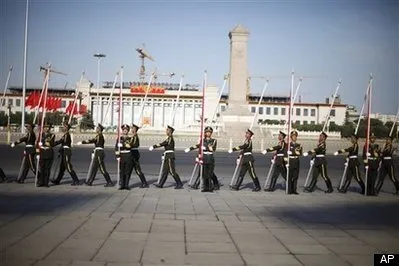
June 4 marks the 20th anniversary of the massacre in Beijing's Tiananmen Square and the crushing of the public manifestations of the pro-democracy movement. The Spring of 1989 had seen students and intellectuals mobilize for greater freedom and opportunity, acutely conscious that their focus on human rights was putting communist regimes on the defensive around the world. The images from Tiananmen Square are burned into our collective memory, particularly the footage of the lone protester trying to bar with his body a long line of tanks. He succeeded in slowing, but not stopping, the inexorable grinding of the tank's gears, and even as freedom grew elsewhere, the Chinese government's grip was tightened.
But all was not lost, that Spring of '89. The shipyards of Gdansk, which had earlier given birth to Solidarity, produced by that summer a coalition government, and by Autumn, the Berlin Wall did fall.
These events were considered together in a PBS primetime special of the 1989 Robert F. Kennedy Human Rights Awards ceremony (you can watch it here):
So many things seem so fresh and poignantly promising: Ted Kennedy's opening speech is eloquent and compelling and the man's physical power is a reminder of how vital a force he is and has been, even as he fights to recover from brain cancer. The RFK Human Rights Award for 1989 was presented in absentia, as its honoree Fang Lizhi was with his family -- hiding in the US Embassy in Beijing, avoiding imprisonment by the Chinese government as a dissident. It would be more than a year before he and his family could leave, a hero having to flee his own country.
Fang's acceptance speech (read by Orville Schell) speaks of being moved by an award that shows he is "not alone... but filled with sorrow that in the land of [his] birth, human dignity has again been trampled upon". Fang reminds us that the struggle for human rights is global and ceaseless. We should ponder that on June 4th.
As it turns out, the 20th anniversary of the extinguishing of freedom's torch in Tiananmen Square occurs on the same day President Obama will reach out to the Muslim world at what used to be its intellectual center, Cairo University. Two decades ago, Fang noted "how far we are from accomplishing what we must in the cause of advancing respect for all human beings." On Thursday, an American president with African roots will take what is expected to be a message of hope and freedom to one of the most troubled and turbulent regions on Earth.
How far have we come far in the 20 years since Tiananmen? How much more freedom is there in the world, two decades on from the collapse of the Soviet Empire? To ponder this, listen to the eloquence of the Kennedys (both Ted, and via audio from his 1966 Capetown speech, Robert), Fang Lizhi and the others at the '89 RFK Awards; then on Thursday listen to President Obama trying to give voice to the common love of freedom and the necessity of human respect, in front of a host whose regime, like oligarchs in China and governments elsewhere, has lost few opportunities to roll over its opposition.
Moreover, as the dates align, contemplate too that on Saturday, we will mark the 65th anniversary of D-Day, the critical turning point in the largest and most encompassing struggle for universal human rights. And then sadly recognize that this weekend is also the 41st anniversary of Robert Kennedy's death. Quite a lot of history to remember in a week ... and quite a few ideals to try to reclaim.
Rick Allen is the CEO of SnagFilms, which offers free viewing of documentaries, including those about the human rights milestones described above.