Sam Coleman
U.S. EPA, Region 6
1445 Ross Ave.
Dallas, TX 75202-2733Via email: coleman.sam@epa.gov
August 27, 2010
Re: Documentation of continued dispersant spraying in near shore and inland waters from Florida to Louisiana (despite contrary claims by USCG and BP) and documentation that dispersants made oil sink
Dear Mr. Coleman,
During the August 25 Dockside Chat in Jean Lafitte, LA, it came to our attention that the federal agencies were unaware -- or lacking proof -- of the continued spraying of dispersants from Louisiana to Florida. Further, the federal agencies were woefully ignorant of the presence of subsurface oil-dispersant plumes and sunken oil on ocean and estuary water bottoms. We offer evidence to support our statements, including a recently declassified subsurface assessment plan from the Incident Command Post.
But first, you mentioned that such activities (continued spraying of dispersants and sinking oil) -- if proven -- would be "illegal." As you stated, sinking agents are not allowed in oil spill response under the National Contingency Plan Subpart J §300.910 (e): "Sinking agents shall not be authorized for application to oil discharges."
We would like to know under what laws (not regulations) such activities are illegal and what federal agency or entity has the authority to hold BP accountable, if indeed, such activity is illegal. It is not clear that the EPA has this authority.
For example, on May 19, the EPA told BP that it had 24 hours to choose a less toxic form of chemical dispersants and must apply the new form of dispersants within 72 hours of submitting the list of alternatives. Spraying of the Corexit dispersants continued unabated. On May 26, the EPA and Coast Guard told BP to eliminate the use of surface dispersants except in rare cases where there may have to be an exemption and to reduce use of dispersants by 75 percent. Yet in a letter dated July 30, the congressional Subcommittee on Energy and the Environment reported the USCG on-scene commander (OSC) had approved 74 exemption requests to spray dispersants between May 28 and July 14.
Under the National Contingency Plan Subpart J, the authorization of use §300.910 (d) gives the OSC the final authority on dispersant use: "The OSC may authorize the use of any dispersant... without obtaining the concurrence of he EPA representative... when, in the judgment of the OSC, the use of the product is necessary to prevent or substantially reduce a hazard to human life."
Given this history of events and the NCP regulation, we would like to know what federal entity actually has the final authority to: order BP to stop spraying of dispersant; declare that spraying of dispersant after issuance of a cease and desist order is illegal; and prosecute BP for using product to sink oil.
The documentation of dispersant spraying in nearshore and inland waters includes:
√claims by USCG and BP
√eyewitness accounts
√fish kills in areas of eyewitness accounts
√photos of white foam bubbles and dispersant on boat docks in areas of eyewitness accounts
√sick people in areas of eyewitness accounts
Claims by USCG and BP - and Counter Evidence
- When reached for comment, Lt. Cmdr. Dale Vogelsang, liaison officer with the United State Coast Guard, told The (Destin) Log he had contacted Unified Command and they had "confirmed" that dispersants were not being used in Florida waters.
- "Dispersants are only being used over the wellhead in Louisiana," Vogelsang said. "We are working with Eglin and Hurlburt to confirm what the flight pattern may be. But right now, it appears to be a normal flight."
- Vogelsang also said Unified Command confirmed to him that C-130s have never been used to distribute dispersants, as they "typically use smaller aircraft."
- But according to an article by the 910th Airlift Wing Public Affairs Office, based in Youngstown, OH., C-130H Hercules aircraft started aerial spray operations Saturday, May 1, under the direction of the president of the United States and Secretary of Defense. "The objective of the aerial spray operation is to neutralize the oil spill with oil dispersing agents," the article states.
- Aerial dispersant operations - Houma Status Report, Dispersant Application Guidance, p. 4, point 8: "Use discreet IFF codes as provided on separate correspondence. This removes need to file DVFR flight plans."
Destin - Fort Walton, FL
July 30-31: Destin Mayor Sam Seevers investigating claims of dispersant spraying:
- Resident and former VOO worker Joe Yerkes testified that he witnessed a military C-130 "flying from the north to the south, dropping to low levels of elevation then obviously spraying or releasing an unknown substance from the rear of the plane."
Austin Norwood, whose boat is contracted by Florida Fish and Wildlife, also provided a written account of a "strange incident."
- While Norwood was observing wildlife offshore, he had received a call from his site supervisor at Joe's Bayou. After telling the supervisor that he and his crewmember were not feeling well, the supervisor had the two men come in "to get checked out because a plane had been reported in our area spraying a substance on the water about 10- 20 minutes before."
Aug. 2: Joe Yerkes reported sludgy brown oil and foamy white dispersant bubbles in Destin and 40 miles east in St. Joe Bay, just days before a fish kill of croaker, flounder, trout, and baitfish on August 5.
Perdido Pass, AL
Aug. 24: Received report of oil debris from anchor chain while weighing anchor at position 30*15.6 N 87*32.7 W, 0.6 nm east of Perdido Pass sea buoy. Samples taken.
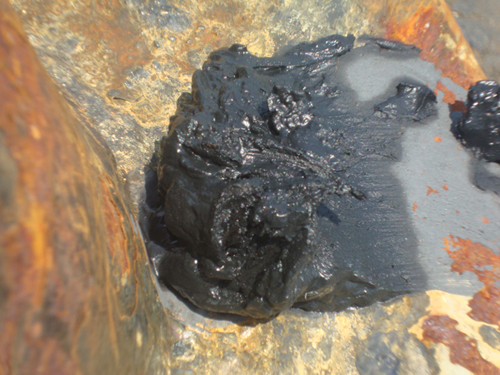
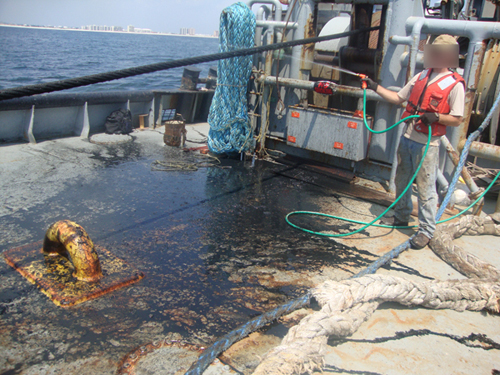
Dauphin Island, AL
Aug. 21: Fisherman Chris Bryant documents Corexit 9500 use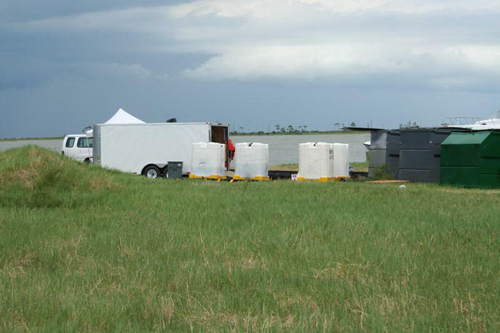
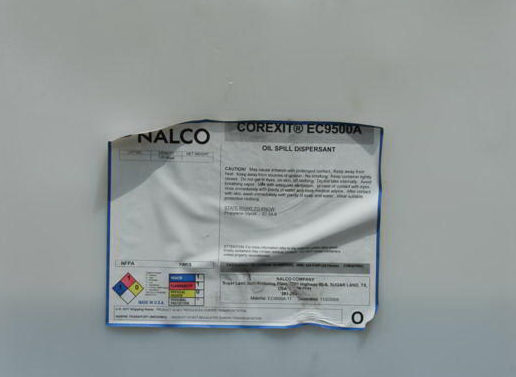
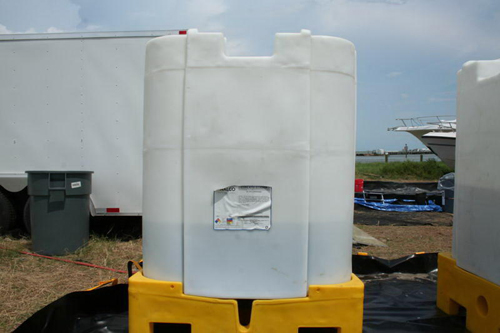
- Bob Naman is the analytical chemist who performed the tests featured in WKRG's broadcast. He was interviewed by or an August 24 report. Highlights include:
- Naman found 2-butoxyethanol in the Cotton Bayou sample. [Ingredient in 'discontinued' Corexit 9527.]
- Naman said found no propylene glycol, the main ingredient of Corexit 9500.
- Naman said he went to Dauphin Island, Alabama last night and while there observed many 250-500 gallon barrels which were labeled Corexit 9527. Naman took pictures that he will soon be sharing.
- Naman said he saw men applying the Corexit 9527 while he was in Dauphin Island and also in Bayou La Batre, Alabama.
- Naman said the Corexit 9527 is being haphazardly sprayed at night and is impacting beach sands in a highly concentrated form.
Bayou La Batre, AL
Aug. 4: Fisherman Chris Byrant documents oil-dispersant in Mississippi Sound, northwest of Katrina Cut, in an area open to fishing in state waters between Dauphin Island and Bayou La Batre
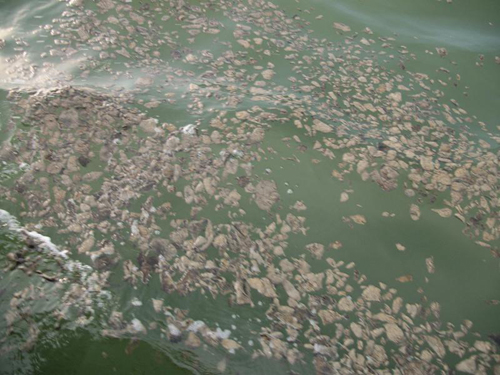
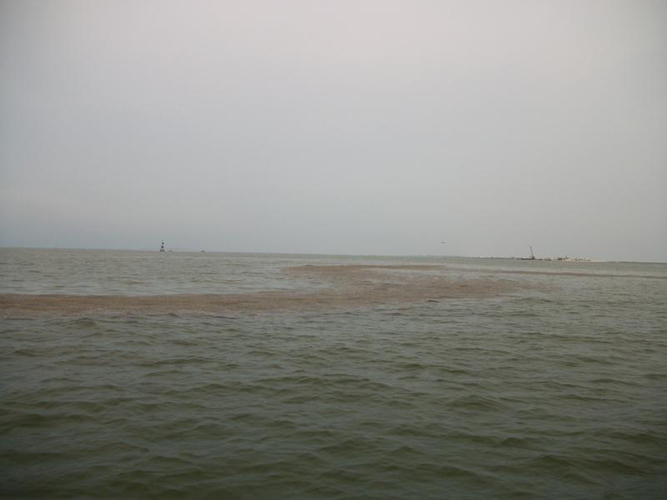
Aug. 19, Aug. 21: Rocky Kistner with NRDC documents use of Corexit 9527a and Corexit 9500 and oil-dispersant visible sheen in area open to fishing in state waters
Aug. 23: Natural Resources Defense Council Switchboard posting
We spotted huge plastic containers marked with Corexit warning labels on the dock public docks near Bayou La Batre. ...
The next day at a town hall meeting in Buras, LA, BP Mobile Incident Commander Keith Seilhan was asked about the use of chemical dispersants. "We are not using dispersants and haven't been for some time," he said.
But when asked whether contractors who operate in state waters could be, he said he could not be certain. "We have lots of contractors, but no one should be using them. If they are, we need to know about it and stop it."
Long Beach, MS
Aug. 8: Fisherman James "Catfish" Miller sampled the subsurface oil plume (VIDEO)
Miller tied an oil absorbent pad onto a pole and lowered it 8-12 feet down into deceptively clear ocean water. When he pulled it up, the pad was soaked in oil, much to the startled amazement of his guests, including Dr. Timothy Davis with the Department of Health and Human Services National Disaster Medical System. Repeated samples produced the same result. Three weeks earlier, there had been a massive fish kill along the same shoreline from Gulfport to Pass Christian.
Aug. 23: The methods for sampling subsurface oil used by Mr. Miller are also being used by Incident Command for the Deepwater Horizon as evidenced in a declassified document (p. 3).
Hancock County, MS
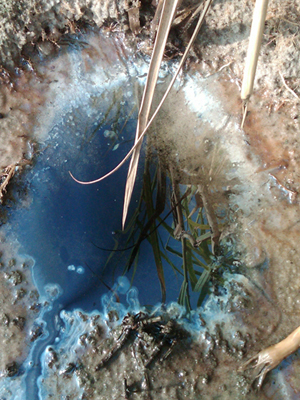
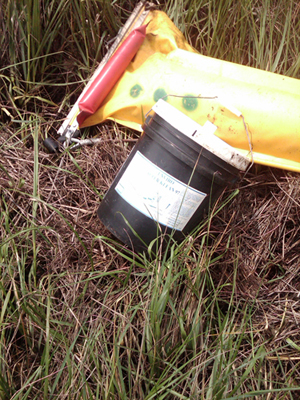
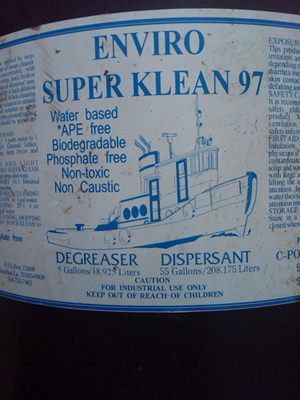
Aug. 23: Dispersant container found in Bayou Caddy Hancock County marsh. White foam indicative of dispersant use in marsh. Samples taken and being analyzed.
Barataria, LA
July 31: Documentation of oil in Barataria Bay.
Venice, LA
Aug. 11 (reported): Contractor sick from dispersant spraying
Summary: Based on these documents, and more, we believe that dispersant spraying in inland and near shore waters across the Gulf of Mexico from Louisiana to the western Florida panhandle is occurring now and has continued unabated (before) and since July 19, the date that the seafood safety panel proclaimed was the last day dispersants were sprayed. Based on these documents, and more, we believe that the dispersant spraying in inland and near shore waters is being conducted for the sole purpose of sinking the visible oil, an activity that is supposedly illegal. According to the University of South Florida, dispersed oil micro-droplets have been documented throughout the Gulf water column and are likely to affect the entire ecosystem.
The inability of the federal and state agents who attended the Dockside Chat in Jean Lafitte, LA, on Aug. 25 to find recent subsurface oil and ocean bottom oil or dispersant spraying activity in inland or near shore waters gives us zero confidence in these same agencies' declaration that they can find no oil or dispersant in Gulf seafood product.
Sincerely,
Riki Ott, PhD
Ultimate Civics Project
Earth Island Institute
POB 1460
Cordova, AK 99574
970-903-6818
www.RikiOtt.com