iPhone app iPad app Android phone app Android tablet app More

Featuring fresh takes and real-time analysis from HuffPost's signature lineup of contributors
Riki Ott

Riki Ott

Posted: January 21, 2011 04:02 PM

Santa Rosa Beach, Florida. When Louisiana fisherman Michelle Chauncy called the BP claim office (Kenneth Fineberg's Gulf Coast Claims Facility) last Friday to check on the status of her claim for Michelle's Crab Shack, the office couldn't find her claim. It had vanished.

Michelle had filed her claim in October along with bank statements and records to support the loss of her wholesale/retail crab business of eighteen years. BP/Fineberg denied her claim in November and, because it was under $250,000, she couldn't appeal.

According to BP/Fineberg's rules, the little claims that support thousands of little businesses across the Gulf are too bothersome to deal with; many are simply being dropped. The Fineberg claims process manifests BP's disregard of the "small people living in the Gulf," so-called by BP Chairman Carl-Henric Svanberg.

Michelle had appealed her claim anyway, because she had no other choice. After a night of stewing on her dilemma, she called the BP claim office again on Saturday as our car caravan prepared to move to Fort Walton to meet with the next group of community liaisons. Our small group was sharing information and coordinating efforts to deal BP's "Making It Right," or as it's known in the Gulf, "Making It Disappear" campaign.

Florida fisherman Kathy Birren's daughter, eight-year-old Mandy Birren, had tried to cheer the normally vivacious Michelle as we loaded the cars. Michelle apologized to the child, explaining that she was aggravated. "Everyone who talks to them gets aggravated," said Mandy, who had already seen and heard too much for being only eight.

Mandy's parents, Kathy and Ron, filed damage claims for their Hernando Beach Seafood business in November. BP/Fineberg denied their business claim and Ron's personal claim, but paid Kathy's claim, even though their personal claims were exactly identical. BP/Fineberg also denied the personal and business claims of Louisiana shrimp fishermen Tracy Kuhns, who was part of our caravan, and her husband. The blatant unfairness of the process, the helplessness of the situation, and the growing family debt, were sledgehammers of stress, pounding on both Tracy's and Kathy's marriages.

As a plaintiff in the Exxon Valdez case, I experienced first-hand this same treatment by Exxon and the U.S. "justice" system. For twenty years, Exxon, then ExxonMobil, used its billions to manipulate the legal system to ultimately deny justice for 22,000 claimants -- and thousands of others whose legitimate spill losses had been discarded on legal technicalities before trial. Instead of making us "whole," ExxonMobil had made us "hole," leaving a trail of broken marriages, suicides, lost livelihoods, foreclosures, bankruptcies, and insurmountable debt. In the process, ExxonMobil had saved its shareholders billions of dollars. Since the process had worked so well for ExxonMobil, BP was now repeating it -- including using a U.S. government-sanctioned process as cover for legitimacy.

During the drive to Fort Walton, I rode with Michelle to spare the children. Southern gentility has its limits. "You don't understand," Michelle firmly told the claims person. "I have been on my own since I was sixteen. I would gladly have worked for this money. You are forcing me to beg for a handout. I can't pay my bills. I am losing my home; I am losing my business; and I am about to lost my mind!"

An hour later, as we pulled into Fort Walton, a Fineberg supervisor informed Michelle that her claim had suddenly been found. When Michelle hung up, she looked at me. "I need a good drink," she said.

Instead, we joined the next gathering. There, as in other communities along our coastal route, people's concerns about their Fineberg claims, personal and family health issues, and seafood safety all tossed together in an unlikely mix. But the concerns all hinged on BP's massive release of oil and dispersants into the Gulf: People couldn't pay for medical expenses (many weren't even seeking treatment) because they had no money -- their BP claims had been denied or stalled; people couldn't afford to move out of harms way, even though they believed their families were suffering and ill from the dispersant use in coastal areas; and if dispersants were making people sick, what was it doing to seafood and why were fisheries opened?

It turns out that dispersants are not -- and never were -- explicitly banned within three miles of the coast or in less than ten meters of water (the "nearshore environment") as federal officials with the USCG, EPA, NOAA, and others staunchly maintained. The Coast Guard and states can approve dispersant use in the nearshore environment on a case-by-case basis across the Gulf if the incident commander decides the toxic chemicals were "expected to prevent or minimize substantial threat to the public health or welfare, or to mitigate or prevent environmental damage" -- a statement that appears in both of the official Regional Response Team dispersant policies. In fact, neither of the policies for Region IV (Alabama, Mississippi, and Florida) or Region VI (Louisiana) have any areas where dispersant use is expressly banned. Louisiana even has an expedited process for requests to spray dispersants in the nearshore environment.

Planes fly at night over beach-front homes, spraying chemicals that made Lorrie Williams and her child sick. Lorrie Williams, Davis Bayou, MS October 2010.

When it comes to oil, the Coast Guard's priority is to "remove it" -- not assess impacts on the ecosystem or human health. And they have tried to remove it -- from the open Gulf all the way to the coasts and bayous.

The Louisiana Bayoukeeper has requested that the State of Louisiana provide documentation of dispersant spraying and experimental release of bio-engineered bacteria in nearshore areas under the Freedom of Information Act. Organizations in Mississippi, Alabama, and Florida would be wise to do the same. This information is critical for understanding health and ecological impacts as well as economic harm.
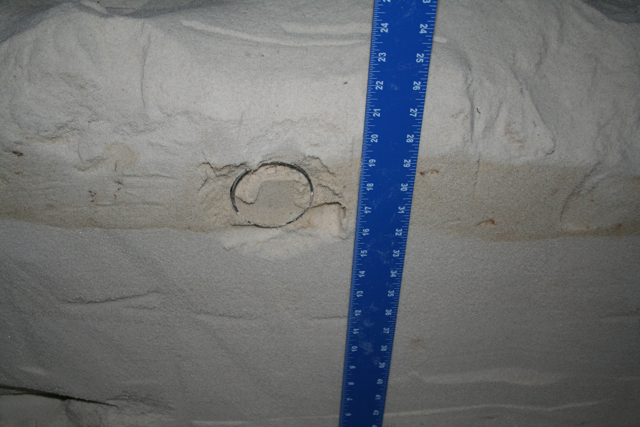
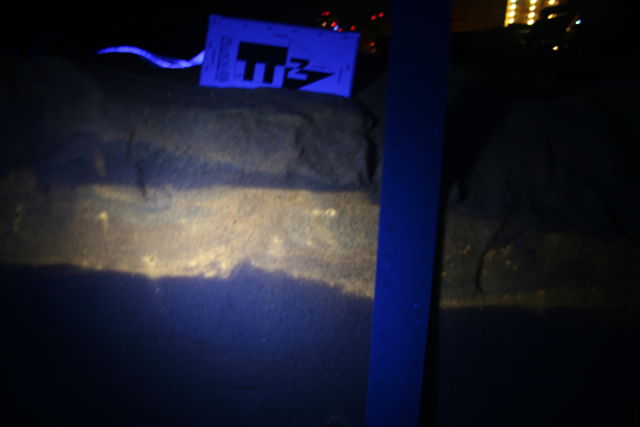
2011-01-21-IMG_4136.jpg

2011-01-21-IMG_4131.jpg
BP's oil mixed with Corexit fluoresces bright orange at night under high-powered ultra-violet lights, revealing areas where beach sand is coated with the mixture that is invisible under daylight conditions. Photo by Rip Kirby.


Santa Rosa Beach, Florida. When Louisiana fisherman Michelle Chauncy called the BP claim office (Kenneth Fineberg's Gulf Coast Claims Facility) last Friday to check on the status of her claim for Mic...
 
 
  • Comments
  • 17
  • Pending Comments
  • 0
  • View FAQ
Comments are closed for this entry
View All
Favorites
Recency  | 
Popularity
photo
HUFFPOST COMMUNITY MODERATOR
Sock De Jour
Democracy is an illusion
03:36 PM on 01/24/2011
Thank you for speaking out.

The 2-butoxyethanol in Corexit is highly miscible and bio-accumulates. It also makes the toxic compounds in the oil, more bio-available. Corexit is now in the food chain, and is traveling around the world, through ocean currents and into rivers, streams. It's in fish emulsion that agriculture uses, which is manufactured from fish byproducts in the Gulf region. It could easily be in fish oil products, like Omega 3 capsules.

2-butoxyethanol is also used in gas fracking across America.
02:26 PM on 01/28/2011
When should we expect BP to be indicted on manslaughter charges. Due to neglect and the use of known toxic chemicals in world water supplies?
maxfax
Taa - dah!
01:45 PM on 01/23/2011
Who will break it to the President and his new Chief of Staff about the complete failure, on behalf of victims, of the Gulf Coast Claims operation? 
HUFFPOST SUPER USER
Marchmont
06:36 AM on 01/23/2011
An intriguing aspect of the new deal between BP and the Russian oil company Rosneft is that the joint venture will be greatly helped if the Global Warming hypothesis is true. Their strategic alliance is designed to exploit the underwater petroleum reserves that are located in the Kara Sea, north of the Arctic Circle. If the sea ice does in fact retreat, the continental shelf will become much more accessible because the Northeast Passage running along Russia's northern coasts will widen. In the past the Arctic was far warmer than it is today and much of it was navigable as we know from the both Viking sagas and the charts of the Chinese merchant fleets. Global Warming is usually presented as a catastrophe yet for many countries such as Canada, Russia, Scandinavia and Scotland it has simply fabulous opportunities.
02:24 AM on 01/23/2011
In the interest of full disclosure, I work for the offshore oil services industry. I have worked in the GOM, pre-spill, on vessels chartered by BP doing post Katrina clean up. I have also worked with other companies, and with BP in other parts of the world.
From my perspective (which has a strong environmentalist angle), the root problem is not just BP, nor the government. Rather a societal miscalculation, severely lowballing the risks involved in offshore oil exploration. At the end of the day, no one really cares so long as gas doesn't cost too much at the pump.
If conservation were taken seriously, the needs for fuel would be reduced, and the economic incentive to drill in a mile of water would be lost. For the near term.
However, if you drive a gas guzzler, live in a 2000 square foot + mcmansion, and otherwise burn your share. Well, then you are, as I am, by extension, complicit in these accidents.
I use the analogy of conflict diamonds. If you wouldn't buy them, then maybe think about where your energy comes from.
03:48 AM on 01/23/2011
There are millions of people that skimp on their gas use coz they can't afford it and I am one of them.
The US Gov't is the largest consumer of oil and they pay for it with tax payer dollars, so they don't care how much it cost , they just want a never ending supply of it, and they have plenty of contracts with BP oil to furnish their supplies.

The people in the Gulf area are being treated with great disrespect by the Feinberg/BP paying supplier and they need to just open that purse and pay those claims to make these people whole, as it was not their fault BP decided to ruin the Gulf of Mexico beyond repair, and destroy these people,s livelyhood
02:49 PM on 01/28/2011
You take my money to tell me "It's ok, I'm an environmentalist too, and be glad that gas isn't expensive." Who are you trying to fool? Gas prices have been on the rise for years now. Why? Because we need it and can't get it no where else. Oil companies have us hooked like a junkies, and as far as conservation. The oil companies have bought and/or forced innovations into the shadows. It is well known that a carburetor was developed decades ago that achieved 60+ MPG. Yet automobile companies boast 30+ MPG! Who is taking conservation seriously again?
HUFFPOST COMMUNITY MODERATOR
demdame1
10:35 PM on 01/22/2011
How can people close their eyes to this? Too many are too intimidated to talk so I truly thank you, Dr Ott, for your continued search for the truth and your continued refusal to be silenced. This is a really hard winter for the Gulf residence and I pray for their safety
This user has chosen to opt out of the Badges program
08:25 PM on 01/22/2011
More reason why British Petroleum should've been put through bankruptcy then nationalized and sold back to only the victims of Gulf Oil Spill.

That way, when it's in 'public hands', human lives are not assesed a 'cost factor' so as to figure out the 'cheapest way' to clean up the spill.

But hey, that would've been 'socialist', too Chavista.
02:26 PM on 01/24/2011
Damn you commies!

It's okay if a conglomeration of companies do this very thing, but if the pyramid is tipped upside down--Armageddon will be upon us.

(Right?)
Genders
Love, Tolerance, Enlightenment
07:58 PM on 01/22/2011
Ain't the multinational Corporations Great?!?!?!? Let's let them run the world, forget about this stupid idea called Democracy.
04:04 PM on 01/22/2011
I don't think the Coast Guard's priority is to remove the oil. Instead, the Coast Guard, the government, and BP have all conspired to try and hide the oil by using toxic dispersants (Corexit) that break up the oil and cause it to sink. Out of sight out of mind is the government's motto. Never mind that the dispersants are 10x more toxic than the oil itself. The government doesn't care who dies so long as BP keeps the campaign donations rolling in.

One Nation, ruled by BP and other corrupt corporations, with justice for the top 2% and death for the rest of us.
08:49 PM on 01/22/2011
The author's point was to quote the CG's "claimed" priority - see the link in the text.
photo
HUFFPOST COMMUNITY MODERATOR
judibluiz
There is no planet B
03:38 PM on 01/22/2011
Thank you Dr. Ott.

This should be on the front page! There are a lot of environmentalists on this site.
09:49 AM on 01/22/2011
We MUST Keep this News OUT-THERE !
09:03 AM on 01/22/2011
A group of African Business and Enviromental leaders has agreed to use the BPCares domains. The leaders will use the BPCares websites to highlight the poor and unfair working conditions by the Oil Giant in Africa and Trinidad.
The domains that will be used to document their concerns will be BPCares.com, BPCares.org and BPCares.info.
11:13 PM on 01/21/2011
I get Riki Ott on Google Alerts. Haven't missed a thing. You should too.