iPhone app iPad app Android phone app Android tablet app More

Featuring fresh takes and real-time analysis from HuffPost's signature lineup of contributors
Riki Ott

Riki Ott

Posted: August 11, 2010 05:55 PM

Eight days after returning home from his Gulf oil-spill response job, Jason Brashears has flashbacks of a scene that he witnessed one day in Lake Ponchartrain, Louisiana: Thousands of fish gasping at the surface in a sea of foamy oil and dispersant.

Brashears spent 65 days spotting oil in Lake Ponchartrain; Mobile Bay; and along the coast off Destin, Florida; Ocean Springs, Alabama; and Cat Island, Mississippi. His team reported oil sightings during the day. At night, planes sprayed dispersant to break up the oil.

The fish are not the only thing that haunts him from his Gulf work. His lungs feel "leaden," he has trouble concentrating on his graphic designs that used to give him so much pleasure, his moods swing unpredictably, he is dizzy, and the fragrance in ordinary household products makes his eyes water and sinuses stuffy.

"You would think," Brashears said over the phone, "that they [his subcontractor] would not send us out the next day if they knew the dispersants would make us sick. You would think they would warn us or give us a day off."

But Brashears received no such warning. Nor did other people across the Gulf as BP applied at least 1.8 million gallons of dispersants to the oil it spilled there. Even though the number of gallons reported by BP is widely questioned as conservative, this is still by far the longest and heaviest application of dispersant in world history. Yet neither workers nor the public were, or are, being adequately informed of the risk of exposure to oil and dispersants.

I have been in the Gulf since May 3 and have witnessed the outbreak of a public-health epidemic as the oil and dispersant came ashore. Every day now, former workers, Gulf coast residents, and visitors share similar stories with me of respiratory problems, central nervous system problems, chemical sensitivities, or bad skin rashes after exposure to air or water in the Gulf -- predictable illnesses from chemical exposure, all of which were avoidable given adequate warning and protection.

Stories of illnesses persist despite assurances from four federal agencies -- the Environmental Protection Agency, the Occupational Safety and Health Administration, the National Institute for Occupational Safety and Health, and the U.S. Coast Guard -- that no levels of oil or dispersant measured in Gulf water or air were found to be unsafe.

But government officials have no credibility in communities across the Gulf because the official story does not match the reality of what people are seeing and smelling. The community stories that string together across the Gulf coast paint a picture quite different from what BP, its contractors, and our government report.

A week ago, a team dispatched by local officials with Plaquemines Parish, Louisiana, discovered a beach on a barrier island oozed oil from tiny holes drilled by Hermit crabs. Oil trapped in fragile marshes degrades slowly. It's been more than 40 years since the Florida barge ran aground in Buzzards Bay, Massachusetts, and spilled 200,000 gallons of fuel oil. Yet the oil is still there -- and still has measurable effects on marsh life.

Off Long Beach, Mississippi, on August 8, fisherman James "Catfish" Miller tied an oil absorbent pad onto a pole and lowered it 8-12 feet down into deceptively clear ocean water. When he pulled it up, the pad was soaked in oil, much to the startled amazement of his guests, including Dr. Timothy Davis with the Department of Health and Human Services National Disaster Medical System. Repeated samples produced the same result. Three weeks earlier, there had been a massive fish kill along the same shoreline from Gulfport to Pass Christian.

Also this past weekend on a beach near Dauphin Island, Alabama, a family was alarmed to find themselves covered in thick gooey oil after swimming in what looked to be clear water.

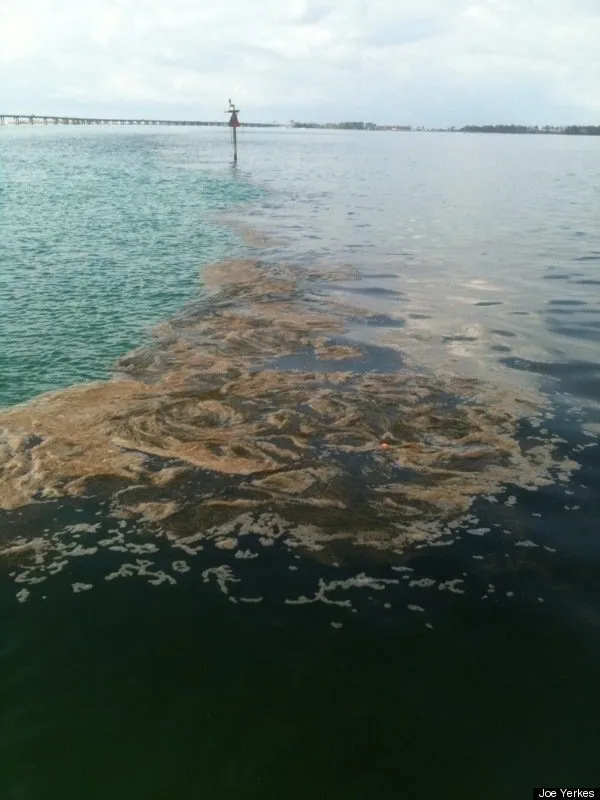
In Florida, Joe Yerkes reported sludgy brown oil and foamy white dispersant bubbles in Destin and 40 miles east in St. Joe Bay, just days before a fish kill of croaker, flounder, trout, and baitfish on August 5.
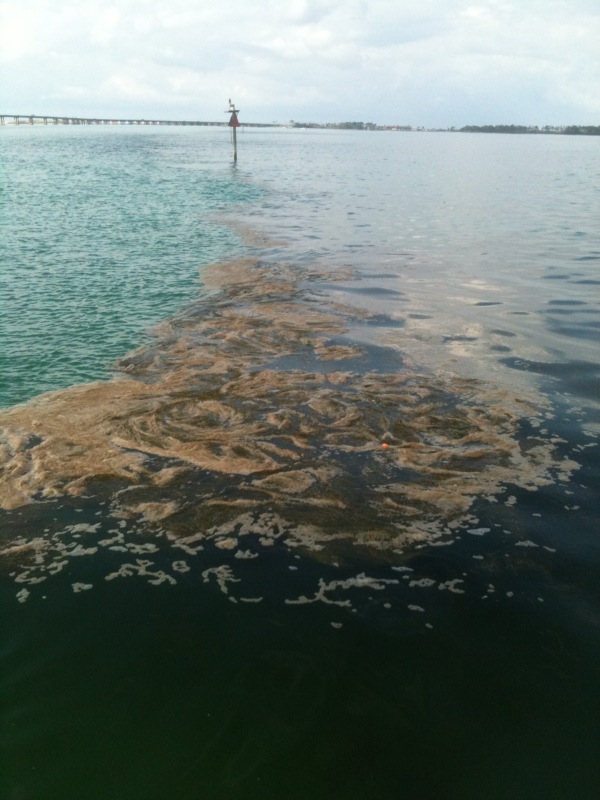
2010-08-11-VOOYerkes805Destin.jpg
Sludgy brown oil-dispersant concentrated by rip current in Destin Bay, Florida. August 5, 2010. Permission: Joe Yerkes.
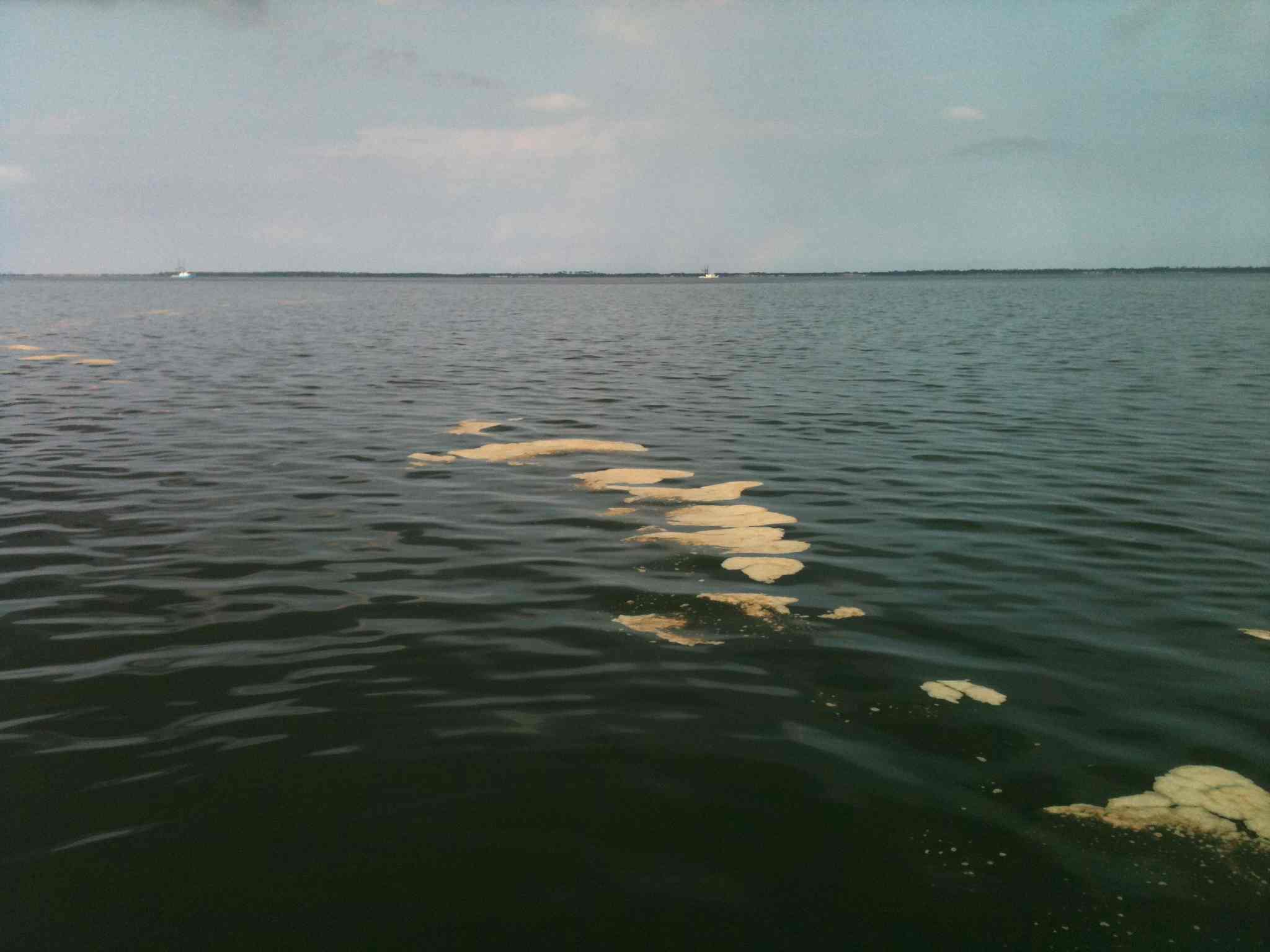
2010-08-11-Yerkes805StJoedispersantLR.jpg
Oil plume and telltale dispersant bubbles in St. Joe Bay, Florida, offer one explanation for fish kill on August 5, 2010. Permission: Joe Yerkes.


Let's think about this. There's been an unprecedented release of oil and dispersants -- industrial grade solvents -- into the Gulf. Unprecedented means we have no past history to fall back on and really no science to guide us because it's an ongoing experiment, right now.

The old science, the old standards, and the old protocols may be dangerously unreliable -- as was the case in the Exxon Valdez oil spill. Scientists relied on old science in 1989 and predicted that spill impacts would be short-term and the ecosystem would recover rapidly. Ten years later, the new science proved there were long-term impacts; 21 years later, the oiled ecosystem still has not fully recovered.

To borrow Brashears' phrase, you would think the federal government would warn us if it thought there was -- or even might be -- a problem. But the framework of risk management is very narrow and limits itself to educated best guesses among the experts -- until proven otherwise.

And therein lies the current danger of this evolving Gulf experiment. The federal government is re-opening vast areas of the Gulf that were closed to fishing because it has "not observed any oil" in these areas and because the "rigorous safety standards" will supposedly "ensure the seafood is safe."

The problem is the 'rigorous safety standards' are outdated. The protocol relies on visual oil. What of the underwater plumes? The chart produced by NOAA last week shows, in effect, that over 50 percent of the oil (not to mention dispersant) is still in the water column as dispersed or dissolved oil. Scientists have found that the oil-dispersant mixture is getting into the foodweb.

The Food and Drug Administration only tests for oil in "edible" tissue of seafood. So if oil has contaminated a fish's organs or other body parts, it would still be deemed safe for consumption if the flesh tested fine. If a steer had cancer in its kidney and blood, would you eat its "edible" tissue? To make matters worse, though, there is no test for dispersants -- yet.

The new Coalition of Commercial Fishing Families across the Gulf is urging the federal government to use precaution rather than 30-year old standards. The coalition has asked NOAA to close all Gulf fisheries until updated protocol and standards are available to test seafood product. Fishermen are also concerned about losing consumer confidence. Kathy Birren, a commercial fisherman from Hernando Beach, Florida, stated at a Gulf of Mexico Alliance conference last week in Gulfport, "We believe that Gulf and Inland waters have been prematurely re-opened to fishing. Fishermen do not want to lose our credibility or deliver contaminated seafood to market. We have lost enough already."

BP has already stated that it is "not responsible" for any long-term effects from its dispersant experiment. Unless American seafood consumers want to be part of the Gulf experiment, I suggest we all support our fishermen -- and not trust the federal government to warn us about seafood safety.


Eight days after returning home from his Gulf oil-spill response job, Jason Brashears has flashbacks of a scene that he witnessed one day in Lake Ponchartrain, Louisiana: Thousands of fish gasping at ...
 
 
  • Comments
  • 62
  • Pending Comments
  • 0
  • View FAQ
Comments are closed for this entry
View All
Favorites
Recency  | 
Popularity
Page: 1 2 3  Next ›  Last »  (3 total)
04:16 AM on 08/22/2010
I hold our government accountable as well as BP for any and all health issues, short and long term, caused by the use of Corexit on the gulf spill. Considering the ill effects of Corexit dispersant usage for the Valdez spill....there is ABSOLUTELY no reason there is STILL no test available to test for its presence in our seafood! Unbelievable and irresponsible!!!!!!
04:07 AM on 08/22/2010
It really frustrates me that when the spill occurred fishermen were forced to "dance with the devil" in order to make enough money to keep their heads above water. They risked their health to clean BP's mess and now that BP doesn't need them anymore they are being cast aside and forgotten. Our government opened the shrimping season before they had a clue if the seafood was safe. They claim it's safe and they are testing it...but....even if they were to do testing at the shrimp docks and such.. that does not solve the problem. All shrimpers don't sell their shrimp at the docks. Much of the shrimp they catch are sold outright to their family, friends and local resturants. All it is going to take to bring the whole Gulf shrimping industry down is one bad batch of shrimp.Rather than erring on the side of caution our government reckelessly opened the shrimping season with no regard for the health of the people. I am outraged!People...we MUST seek the truth....our children and grandchildren depend on it!

This ain't over until the last oiled bird flies....even the dead ones!!!
04:06 AM on 08/22/2010
That's me speaking with Feinberg at a claims meeting in Houma, Louisiana. Although it may look like we are having a pleasant conversation...we are not. I was angry and heartbroken for our fishermen. My question to him was..."What happens to the claims of those fishermen who refuse to go back shrimping because they fear that shrimp they sell will cause harm to the health of others. They know that there is STILL no test available to test for the presence of Corexit dispersant in the Gulf and inland waters seafood, yet the waters were recklessly opened for fishing. What happens to them? Are their claims still considered 'legitimate" and paid or will they be forced to fish in what they consider unsafe waters in order to pay their bills and feed their children." His response," We're going to have to check each claim on an individual basis"...blah blah blahhhh.
photo
HUFFPOST SUPER USER
follygirl
10:16 AM on 08/16/2010
It's curious that BP felt it had to release the dispersants under the cover of darkness. Any thinking person knows BP released the dispersants to hide the oil so they can claim it has evaporated. To think they will take no responsibility for the poison they spread over the ocean is outrageous. I wouldn't trust the US government, including Obama personally, any more than I would trust the crooks at BP. That water, or anything that comes out of it, it not safe, nor will it be safe for years to come. Shame on President Obama; he broke my heart on this one.
06:42 AM on 08/16/2010
Seafood Safety in the Gulf
Many fishermen don?t want to risk their reputations on possibly tainted catches.

http://abcnews.go.com/WNT/video/seafood-safety-gulf-11362023
photo
HUFFPOST SUPER USER
Helixtwice
Progressive retired electrician
06:46 PM on 08/15/2010
This rush to reopen fisheries and declare seafood safe may well lead to massive toxic illness which will cause havoc with our health care system.
I just cannot believe how quickly this is being rushed - it boggles the mind!
I hope that people use their own judgment with seafood - but this will be difficult if they do not know where it came from.
This is a terrible lapse of judgment and responsibility!
03:49 PM on 08/15/2010
There should be updated tests required by law. Independent sources from BP should do environmental studies on the damage both short and long term. That no doubt would all take time. For now I think there should be a law passed where it must be stated to consumers where all seafood comes from. I like seafood but would just as soon pass on anything from the gulf no matter who says its safe.
photo
HUFFPOST SUPER USER
Netflyer
Tree Hugger in firm support of President Obama!
12:32 PM on 08/15/2010
Oh geeze, the unhealthy madness continues. Without the proper tests there is no way the laws can keep up with the threats. Thanks for keeping us informed and why isn't THIS front page news!
11:34 AM on 08/15/2010
http://www.opednews.com/articles/GOVERNMENT-ASSISTED-BP-IN-by-Chyrisse-Tabone-P-100809-430.html#startcomments

Government assisted BP in covering up effects of spill
09:41 PM on 08/14/2010
The Government is instituting new safety procedures now...The government has instituted new testing programs. The government is doing more right now to ensure the safety of Gulf seafood. This article doesn't mention it and may have been written before the news broke of stepped up safety inspection of
Gulf coast seafood.
06:52 PM on 08/14/2010
TO TEACHERS, EDUCATORS, EDUCATIONAL ADMINISTRATORS, CAMP DIRECTORS and others:

Let’s teach our children and young people the truth and educate them about the dangers of oil drilling and corporate corruption! If you’re in the Gulf States, ask your students to document what they see on the beaches, in the ocean, and the effects of the disaster on people and their communities. For those who don’t live in the Gulf States, ask your students to create art projects, photography, and films about the tragedy of the oil spill.

GIVEN BP’s and THE MEDIA’S BLACKOUT AND SPIN, IT IS ESPECIALLY IMPORTANT TO DOCUMENT THE DAMAGE FROM BP’S OIL SPILL.

1. Submit photos, pictures, and art work to BetterGulf.org here: http://www.bettergulf.org

2. Please take pictures and videos of the damage from BP’s oil spill. Note time and place. Some smart phone cameras' GPS chip will record location even when there is no cell signal.

Here are FREE SMART PHONE APPS to help document the damage of the oil spill.
iPhone App - http://foo.am/dH4
Android App - http://foo.am/dH3
Blackberry App - Point your Blackberry web browser to: http://swooshsoftware.com/SpillReporter.jad

If you have a digital video or still camera, up load your images to: http://gulfcoastspill.com
(from Yobie Benjamin http://www.sfgate.com/cgi-bin/blogs/ybenjamin/detail??blogid=150&entry_id=64912 )

Together we can show and document the truth.

IMAGINE IF STUDENTS OF ALL AGES FROM ALL OVER THE COUNTRY PARTICIPATED!
05:46 PM on 08/14/2010
This is really just the beginning.

The mess is huge and far-reaching, and BP – Transocean and their collaborators should be prosecuted so something like this is less likely to happen again.

Evidence of long term damage from the oil spill:

Scientists Deeply Concerned About BP Disaster's Long-Term Impact: http://www.truth-out.org/scientists-deeply-concerned-about-bp-disasters-long-term-impact61946

The article starts out: “Contrary to recent media reports of a quick recovery in the Gulf of Mexico, scientists and biologists are "deeply concerned" about impacts that will likely span "several decades".

Environmental and Health Impacts of the BP Gulf Oil Spill By Dr. Tom Termotto: http://oilspillsolutionsnow.org/?page_id=176

Scientists Find Evidence That Oil And Dispersant Mix Is Making Its Way Into The Food chain: http://www.huffingtonpost.com/2010/07/29/scientists-find-evidence_n_664298.html

Prof: Gulf chemicals very concerning: http://www.wpri.com/dpp/news/us_news/professor-says-gulf-chemicals-will-have-long-term-effects

This informative report, "Gulf Oil Spill Health Hazards", describes the toxicity of chemicals in crude oil and in the dispersants currently being used in the Gulf area. http://www.sciencecorps.org/crudeoilhazards.htm

BP Accused of 'Buying Academic Silence': http://www.bbc.co.uk/news/world-us-canada-10731408
This user has chosen to opt out of the Badges program
photo
04:54 PM on 08/14/2010
Some good news:
More than a dozen scientists interviewed by The Associated Press say the marsh here and across the Louisiana coast is healing itself, giving them hope delicate wetlands might weather the worst offshore spill in U.S. history better than they had feared. Some marshland could be lost, but the amount appears to be small compared with what the coast loses every year through human development.

On Tuesday, a cruise through the Barataria Bay marsh revealed thin shoots growing up out of the oiled mass of grass. Elsewhere, there were still gray, dead mangrove shrubs, likely killed by the oil, but even there new green growth was coming up.

"These are areas that were black with oil," said Matt Boasso, a temporary worker with the Louisiana Department of Wildlife and Fisheries.

As crude from a blown-out BP well oozed toward the marshes after an April oil-rig explosion, experts had feared it would kill roots in marsh grass, smother the mangroves and ultimately dissolve wetlands that plant life was holding together.
http://www.nola.com/news/gulf-oil-spill/index.ssf/2010/08/marshes_fouled_by_gulf_of_mexi.html
05:58 PM on 08/14/2010
BP, the corrupt, evil corporation has brought us the following (to name a few):

1) BP has made deals with academic institutions to control alternative energy. Read the following for the details of BP's deal with UC - Berkeley: http://www.i-sis.org.uk/The_BP-Berkeley_Deal.php
BP will effectively be able to choose which technologies are developed for large-scale adoption. And there is no indication of when, if ever, new technologies would pass into the public domain. And shame on UC Berkeley and others for colluding!

2) BP is in the business of buying up scientists. Here’s an example of how BP works with scientists: Blacklash Grows Against BP Efforts to "Buy Up" Gulf scientists -- http://www.huffingtonpost.com/chris-kromm/blacklash-grows-against-b_b_665621.html

3) BP will do anything to protect its interests:
BP ADMITS ROLE IN LOCKERBIE BOMBER'S RELEASE:
http://articles.sfgate.com/2010-07-16/news/21985586_1_bp-megrahi-transfer-pact

ACTION PLAN:
1. Write and call your Senators and Representatives. HOLD THEM ACCOUNTABLE FOR PROSECUTING BP AND OTHERS INVOLVED. You can find your legislators’ contact information here: http://www.usa.gov/Contact/Elected.shtml
HUFFPOST SUPER USER
Marchmont
08:03 AM on 08/14/2010
It is now clear that most things will be back to normal in the Gulf within a year - the beaches before Christmas, fishing in two months, and the shellfish industry in two years. The oil is rapidly biodegrading and being eaten by microbes and half of the 80,000 square miles of federal waters previously closed to fishermen have already been re-opened. Scientists such as marine expert Dr Simon Boxall say, ‘Tony Hayward was correct when he said the spill was the equivalent of a drop in an Olympic-sized swimming pool.” Another marine scientist Ivor van Heerden told Time magazine: “There never was an “environmental disaster”. There was a lot of media hype, but no evidence to justify it.” The New York Times, Time Magazine, and Vanity Fair all admit the President’s xenophobic ranting was ludicrous - but Hayward should not expect an apology!
HUFFPOST SUPER USER
Art Jaquez
"The wise speak only of what they know.”
12:36 PM on 08/14/2010
Wow, what planet do you live on? It is clear that the marshes will not be back to normal for decades, the oil is not gone, it has been dispersed through the water column and much of it shunted into the Atlantic by the loop current, where its effects are not even being looked at, and the contaminated seafood is not being tested except by people off the street who had a couple of hours "training" in SMELL TESTING!
You can buy into the nonsense coming from BP and the government if you like, but if so, I would like to interest you in some beachfront property in New Mexico :)
This user has chosen to opt out of the Badges program
photo
04:31 PM on 08/14/2010
I don't like finding myself siding with BP I want them to get what they deserve but if misinformation destroys the livelihood of the people who live there that will be a disaster in it's self. The marshes are already starting to come back check out NOLA there has been no oil found in the Atlantic, the most sensitive device ever created to detect poison is the human nose most of the fishing grounds were not touched by oil. BP sucks.
05:46 PM on 08/14/2010
Not true!
07:56 AM on 08/14/2010
Behind the Scenes Video: When the Saints Go Cooking Shrimp

Spending time in the White House kitchen and meeting Sam was really cool for all of us. I've met some famous chefs in New Orleans; they are treasures of our city. To us, food is art. Emeril and John Besh, our artists. So meeting Sam Kass was kind of like meeting Picasso. The best part was that we were cooking something that’s already so good, it's hard to mess up. Our shrimp, from near Houma, Louisiana, speak for themselves. So when Sam took his first bite and said, "Those are the best shrimp I've ever had," it didn't come as much of a surprise to me. I said the exact same thing the first time I had Gulf shrimp.

http://www.whitehouse.gov/blog/2010/08/13/behind-scenes-video-when-saints-go-cooking-shrimp