
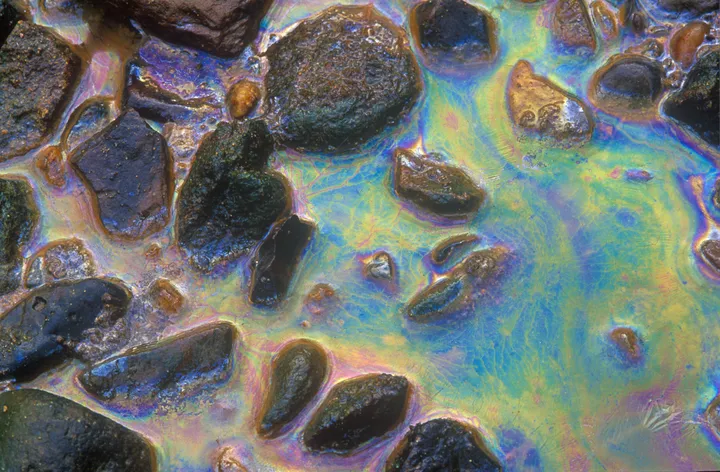
The second memorial of the nation’s worst oil catastrophe has come and gone, forever linked to Earth Day and seared into the psyches of millions of Gulf residents and fishermen. In recent weeks, the media has unleashed a torrent of stories about the devastating impacts of the nation’s worst oil spill disaster; deaths, disease and deformities in the fisheries; a two-year record-setting die off in dolphin populations; medical emergencies and family health crises in coastal communities; and ongoing Congressional wrangling over tens of millions of dollars in fines needed to save and rebuild the rapidly disappearing Gulf coast.
But it won’t be long before these stories fade from the consciousness of a nation once riveted by the volcanic well spewing out Louisiana crude a mile below the sea. Instead we will see more stories like this one BP published in the Alabama Press-Register last week: "After Two Years, The Grandeur of the Gulf Is Returning."
These days, we don’t see oily sheens and miles of orange containment boom; we see sparkling water and clean sand, dotted with deck chairs and beach towels. On the horizon, we don’t see an armada of ships skimming oil; we see fishing vessels at work gathering the day’s catch. And, in the skies and on the ground, we don’t see planes and large cleanup crews; we see birds and other wildlife at play.
But one thing is clear: Many of the dire predictions for the Gulf, made in the days and weeks after the accident, have not turned out to be true. Indeed, after two years of hard work alongside local, state and federal officials, the scientific community and the people of the region, substantial progress has been made. And the grandeur of the Gulf is steadily returning.
You can expect the media and the airwaves to be clogged with happy talk about the Gulf in the months ahead. We all wish it were true, but the facts -- and perceptions of those toiling in the fisheries -- just don't support it. After reading BP’s latest polemic, veteran Alaska marine toxicologist and author Riki Ott remembered Exxon's tactics after the Valdez disaster in an email this week;
Reminds me of when the state of Alaska officials under gag order NOT to speak about impacts complained about Exxon's conclusion that just b/c wildlife are "cavorting" on beaches, everything is "hunky-dory" in Prince William Sound. Exxon flew in 3 or 4 British "scientists" (biostitutes) to fly-over Prince William Sound and visit beaches in spring 1990. Exxon sponsored them to go to our state capital and tell all 60 legislators about the "remarkable recovery of Prince William Sound."
BP is sponsoring a $500 million scientific initiative to investigate the impacts of the
Gulf oil catastrophe, but it's way too early to be waving the victory flag. Fishermen in the Gulf of Mexico still are reeling after the Deepwater Horizon blew up, and "grandeur" isn't exactly the term they're using down there. Here's how Louisiana's Plaquemines Parish charter fisherman Ryan Lambert described it in the Times Picayunne this week:
"The oil may have stopped flowing, but the spill still goes on down here every day," said Lambert, owner and operator of Cajun Fishing Adventures, a sprawling lodge and charter business in Buras. "My fishing business is still down 50 to 60 percent, we're still finding oil and tar balls on the beach and in the marsh, people still think the fish are polluted, and now we can't find speckled trout in nearly the numbers we had before the spill. So don't tell me the disaster is over. Maybe for BP it is. Maybe for the oil business people it is. But for me and other charter businesses, it's never stopped."
Shrimp with no eyes and tumors caught in Barataria Bay, April, 2012.Photo by Xuan Chen
So which is it, gasping for air or returning to grandeur? My bet is most people outside the Gulf will believe the latter as BP continues its PR assault on the national airwaves. Although thousands of fishermen are struggling, their stories are easily overpowered by the massive economic and political forces aligned against them. This Sen. David Vitter (R-LA) missive to his constituents pretty much sums up where the Powers That Be stand in the Gulf:
The good news is that I don’t think anyone would have predicted that the Gulf would have rebounded to where it is today. That goes for our tourism industry, which is thriving, and of course our Gulf seafood, which is as safe and delicious as ever…
Yes, that's the same seafood that NRDC's Miriam Rotkin-Ellman and Gina Solomon reported on in Environmental Health Perspectives last year; the very same seafood that can expose vulnerable populations like children and pregnant women to up to 10,000 times the allowable levels of cancer-causing polycyclic aromatic hydrocarbons (PAHs). You can read Miriam's excellent Gulf health update here.
Of course, it's no surprise that Sen. Vitter ignores this. The oil and gas industry ranks numero uno on his list of top campaign contributors. Most of his colleagues down there float in the same boat. But that's not the boat Gulf fishermen are working in, the ones pulling up tumor and oil-encrusted shrimp. It's not the reality of residents who still witness record numbers of dolphins washing ashore on beaches littered with tar balls after every storm.
As the carnage continues, BP and other oil industry behemoths are busier than ever drilling in the Gulf, dragging their mammoth platforms into deeper water where they can jam cement-reinforced pipelines into even more remote high-pressure subsea oil and gas deposits. Oil slicks are routinely reported in drilling areas offshore. Can the disaster happen again?
You bet. Lured by the high prices and increased global demand, more and more rigs are at work, while Congress still has passed no new drilling safety laws. NRDC's David Pettit reports that while some new federal drilling regulations are in place, we may be setting ourselves up for a "repeat performance." For instance, in an Orlando Sentinel article, Pettit questioned why the industry doesn't redesign the critical blowout preventers that failed in the first place.
"You can have 10 of them, and if they are all subject to being jammed by a pipe doing something that we know actually happened [once before], then you're not much safer."
Requiring twice as many safety mechanisms that failed once before doesn’t exactly inspire confidence. But that’s life in our oil-addicted, rush-to-drill world. Our country’s energy policy is stuck on dig, extricate and burn. The petrochemical industry will become more dangerous as we rush to extract harder to find deposits of crude in places like the harsh environs of the Arctic, where Shell Oil plans to start drilling this summer. Have we learned nothing from the historic BP blowout?
But there is some good news; disasters can change attitudes, even in the oil-dominated Gulf of Mexico. The BP debacle blew a hole through Gulf residents' confidence in the oil industry and changed perspectives on the importance of environmental protections, according to a recent University of New Hampshire study reported in Science Daily:
"If disasters teach any lessons, then experience with the Gulf oil spill might be expected to alter opinions about the need for environmental protection. About one-fourth of our respondents said that as a result of the spill, their views on other environmental issues such as global warming or protecting wildlife had changed," said Lawrence Hamilton, professor of sociology at the University of New Hampshire. This proportion rose to 35 percent among those most affected economically by the spill. People reporting changed views also expressed greater concern about sea level rise due to climate change, more support for a moratorium on deepwater drilling, and were more likely to favor alternative energy rather than increased oil exploration."
Shrimp with tumors bought in New Orleans grocery store. Photo by Mac MacKenzie.
Changes in attitudes can lead to positive change in the oil patch. But there's also another way to get Big Oil to change its behavior: jail time. Oil industry experts say fines and penalties do little to reduce reckless decisions and risky policies that threaten the lives and livelihoods of fishermen and workers. Pro Publica reporter Abrahm Lustgarten laid it all out succinctly in this New York Times op-ed:
What the gulf spill has taught us is that no matter how bad the disaster (and the environmental impact), the potential consequences have never been large enough to dissuade BP from placing profits ahead of prudence. That might change if a real person was forced to take responsibility -- or if the government brought down one of the biggest hammers in its arsenal and banned the company from future federal oil leases and permits altogether. Fines just don't matter.
Although low-level prosecutions have just been announced, nobody expects many BP execs to get rolled up by the Department of Justice anytime soon. But this catastrophe also wasn’t an ordinary industrial accident. It coated the coasts of four states with oil and has damaged the lives of countless residents. Some fishermen in the Gulf say they still relish the thought of former BP CEO Tony Hayward caught in the wheels of American justice, a fanciful dream as they struggle to rebuild their lives.
While BP fights a long war in the courts, the battle over public opinion remains hot and intense. Despite the million dollar ad campaigns and the political rhetoric about the Gulf returning to normal, many -- especially in the fishing community -- are facing a new reality. Their lives on the water have changed in ways no one comprehends, in ways many fear will never be the same.
The grandeur of the Gulf will return. But it’s up to people along its shores -- and to all of us -- to decide what kind of future lies in store; a marine environment stressed by an oil-soaked sea or a healthy ocean preserved for distant generations. The critical decisions are still to come.