
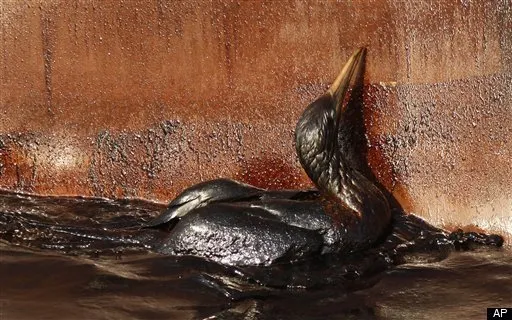
With a new year upon us, it’s time to take stock of the historic BP oil disaster and look towards the future. The Deepwater Horizon blow out shined a national spotlight on the oil and gas drilling in the Gulf, an environmental time bomb that blew 50 miles offshore. The disaster created more than oily waves in the region. It provided dramatic insight into an industry that fought and ignored safety regulations, spewed record amounts of oil and toxic chemicals into the waterways, fouled the air with health threatening refinery and petrochemical plant pollution, and cut thousands of marsh killing pipeline canals across the bayous.
Today, the oil industry continues to push drilling pipe into the seabed, sucking up hydrocarbons to power our oil addicted economy and leading us further down the destructive path of global climate change. But Gulf residents are not the only ones to blame. It’s all of us. We have permitted the oil and gas industry to maintain a strangle-hold on our politicians and block clean energy solutions that will not only create new jobs but make the planet healthier for us all. It's time to change that.
Photo by Rocky Kistner/NRDC
I spent most of my time in the Gulf last year and was a personal witness to this tragedy. On April 20, people in the Gulf received a shocking wake-up call -- a reality check about the oil industry's destructive habits. I’ve talked to many fishermen and residents who once accepted the massive oil pipelines and leaking drilling rigs as a way of doing business in the Gulf. But now many are having second thoughts. People there are still hurting economically, physically and mentally from the aftermath of 200 million gallons of BP oil spewed into the sea. And many will likely be hurting for years to come. This year will be a crucial one for Gulf fishermen hoping, praying and counting on the seafood industry to return to normal. If it doesn’t, there will be hell to pay. And hundreds of millions of dollars of oil industry PR won’t stem their wrath.
But it's important to note that over the past year the winds of change have swept through the region. Life is not the same and may never be after this oil catastrophe. Here are some of the things that are out from last year and what’s in for the year to come in the Gulf. Please feel free to add your own.
OUT: Minerals Management Service, a toothless oil industry safety and oversight agency.
IN: The Bureau of Ocean Energy Management, Regulation and Enforcement, a revamped regulatory agency designed to improve independent oil industry oversight.
OUT: Restaurants featuring fresh Gulf coast oysters, shrimp and crab.
IN: Menus featuring crawfish and imported frozen shrimp.
OUT: BP CEO Tony Hayward and his foot-in-mouth statements.
IN: Sec. Navy Roy Mabus, former Gov. of Mississippi, head of Gulf restoration efforts.
OUT: Complaints about Katrina FEMA trailers.
IN: Complaints about Ken Feinberg and BP’s $20 billion claims fund.
OUT: BP’s Vessel of Opportunity cleanup program for local fishermen.
IN: Boat rides for eco tours and scientific investigations.
OUT: Subsistence fishermen who depend on local markets and seafood prices to survive.
IN: Beefed-up food bank and charity programs that provide basic social services.
OUT: BP and oil industry logos worn on clothes in public.
IN: T-shirts promoting Tar Ball Rodeos.
OUT: Marital bliss.
IN: Family counseling and mental health services.
OUT: World class charter fishing.
IN: Swamp tours.
OUT: Vacations in Gulf Shores, AL.
IN: Vacations in Branson, MO.
OUT: Comprehensive oil spill legislation that failed to pass Congress last year.
IN: New 112th Congress efforts to roll back environmental regulations.
OUT: Failed oil pipeline blow out preventers.
IN: New deep sea oil containment devices.
OUT: Zero research into impacts of chemical oil dispersants at sea.
IN: Increased federal marine science studies including a $500 million BP science research fund.
OUT: Proposed oil drilling off the Atlantic and Florida coasts.
IN: Increased pressure to drill for oil in the Arctic.
OUT: Pristine Gulf barrier island beaches and wildlife refuges.
IN: Oil buried under sand and marsh grass and tar balls that roll in with the tides.
OUT: Confidence in the fishing industry that the next shrimp season will return to normal.
IN: Prayer that it will.