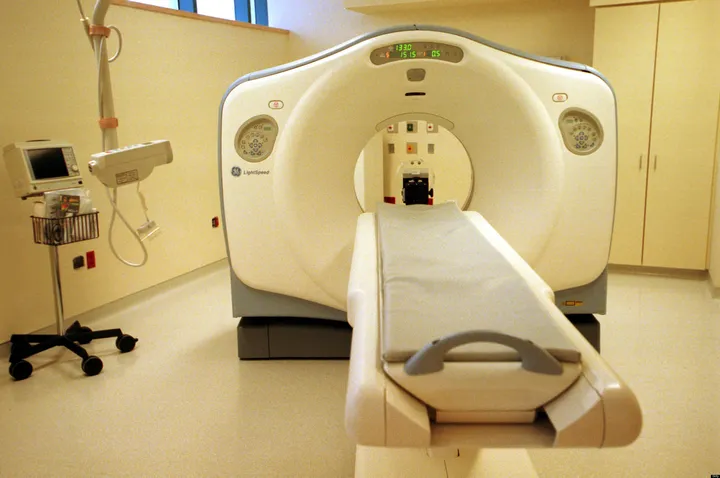
The battle over medical device regulation is heating up with the reauthorization of the Medical Device User Fee Act.
At stake is whether medical devices that are put in your body -- cardiac stents, heart valves, knee and hip implants, among others -- will be subject to safety tests in humans before they are approved by the FDA.
Katherine Korgaokar was shocked when she found out that she was one of tens of thousands of people who had an artificial hip implanted that had never been tested in humans.
In testimony on Capitol Hill, she described how the implant was recalled because of design defects. Excessive wear and tear caused bits of debris from the metal implant to break off. A blood test found excessive levels of toxic cobalt and chromium, which were used to manufacture the joint. She needed a second surgery that was more painful than the first, and recovery was a lot longer, too.
"It is amazing to me that something that doesn't work properly gets approved," Katherine said when she was interviewed on ABC Nightly News.
A flurry of bills have been introduced in Congress by medical device industry supporters to speed up FDA approval of medical devices rather than ensure they are tested before they are sold. Enthusiastic members of Congress say that this will create jobs.
Congressman Erik Paulsen, a Republican from Minnesota, supports the legislation and says it will "ensure we keep and expand jobs here in our communities."
Congressman Adam Kinzinger, a Republican from Illinois, claims that industry-favored legislation will ensure that the FDA review process will "eliminate the threat of sending these good paying jobs overseas."
In a country starved for employment, playing the jobs card in the medical device battle makes for a catchy sound bite. Here are the jobs they will create:
Assume 10,000 Americans have to have a second hip surgery to remove a defective hip implant and replace it with a safer, more reliable model.
This creates employment for doctors. If an orthopedic surgeon performs two hip replacements a day for 20 days each month, 20 surgeons will be fully employed for about a year. Nurses in the operating rooms, recovery rooms and surgery floors will be employed.
Drug companies will employ people to keep producing the pain drugs that people will need to manage their physical suffering.
Johnson & Johnson will sell more bandages, sutures, and other materials used during the surgery.
The American Hospital Association will be pleased that its member hospitals will have an additional 10,000 patients that year admitted to their facilities. A certain percentage of them will surely be readmitted because they will get an infection while in the hospital.
Meanwhile, device companies will churn out another 10,000 replacement joints. Maybe they will be made in the good old USA. Or maybe not. Big device companies are following the money. Medtronic, based in Paulsen's home state of Minnesota, announced it is hiring a thousand people in China.
Lawyers for patients and the device makers will be employed for years handling rightful demands from people for compensation.
The unemployed will take the jobs of those who needed repeat surgery and can't go back to work right away, if ever.
Sound familiar? This type of job creation mimics the job creation in the sub-prime mortgage meltdown. Banks gave mortgages to people that were sure to blow up in their faces. Yet those sub-prime mortgages created jobs in construction, real estate and banking. Then the whole scheme came crashing down. Innocent bystanders were merely collateral damage.
This was no way to run a banking system. Neither is it a way to run a health care system.
The Consumer Union Safe Patient Project says that on average 700 different medical devices are recalled each year, and in 2009, the FDA received reports of nearly 5000 deaths associated with medical devices.
What should be done? Implantable and life-sustaining devices should be tested in real people before they are approved.
Rosemary Gibson is author of The Treatment Trap: How the Overuse of Medical Care is Wrecking Your Health .
Our 2024 Coverage Needs You
It's Another Trump-Biden Showdown — And We Need Your Help
The Future Of Democracy Is At Stake
Our 2024 Coverage Needs You
Your Loyalty Means The World To Us
As Americans head to the polls in 2024, the very future of our country is at stake. At HuffPost, we believe that a free press is critical to creating well-informed voters. That's why our journalism is free for everyone, even though other newsrooms retreat behind expensive paywalls.
Our journalists will continue to cover the twists and turns during this historic presidential election. With your help, we'll bring you hard-hitting investigations, well-researched analysis and timely takes you can't find elsewhere. Reporting in this current political climate is a responsibility we do not take lightly, and we thank you for your support.
Contribute as little as $2 to keep our news free for all.
Can't afford to donate? Support HuffPost by creating a free account and log in while you read.
The 2024 election is heating up, and women's rights, health care, voting rights, and the very future of democracy are all at stake. Donald Trump will face Joe Biden in the most consequential vote of our time. And HuffPost will be there, covering every twist and turn. America's future hangs in the balance. Would you consider contributing to support our journalism and keep it free for all during this critical season?
HuffPost believes news should be accessible to everyone, regardless of their ability to pay for it. We rely on readers like you to help fund our work. Any contribution you can make — even as little as $2 — goes directly toward supporting the impactful journalism that we will continue to produce this year. Thank you for being part of our story.
Can't afford to donate? Support HuffPost by creating a free account and log in while you read.
It's official: Donald Trump will face Joe Biden this fall in the presidential election. As we face the most consequential presidential election of our time, HuffPost is committed to bringing you up-to-date, accurate news about the 2024 race. While other outlets have retreated behind paywalls, you can trust our news will stay free.
But we can't do it without your help. Reader funding is one of the key ways we support our newsroom. Would you consider making a donation to help fund our news during this critical time? Your contributions are vital to supporting a free press.
Contribute as little as $2 to keep our journalism free and accessible to all.
Can't afford to donate? Support HuffPost by creating a free account and log in while you read.
As Americans head to the polls in 2024, the very future of our country is at stake. At HuffPost, we believe that a free press is critical to creating well-informed voters. That's why our journalism is free for everyone, even though other newsrooms retreat behind expensive paywalls.
Our journalists will continue to cover the twists and turns during this historic presidential election. With your help, we'll bring you hard-hitting investigations, well-researched analysis and timely takes you can't find elsewhere. Reporting in this current political climate is a responsibility we do not take lightly, and we thank you for your support.
Contribute as little as $2 to keep our news free for all.
Can't afford to donate? Support HuffPost by creating a free account and log in while you read.
Dear HuffPost Reader
Thank you for your past contribution to HuffPost. We are sincerely grateful for readers like you who help us ensure that we can keep our journalism free for everyone.
The stakes are high this year, and our 2024 coverage could use continued support. Would you consider becoming a regular HuffPost contributor?
Dear HuffPost Reader
Thank you for your past contribution to HuffPost. We are sincerely grateful for readers like you who help us ensure that we can keep our journalism free for everyone.
The stakes are high this year, and our 2024 coverage could use continued support. If circumstances have changed since you last contributed, we hope you'll consider contributing to HuffPost once more.
Already contributed? Log in to hide these messages.