As billions of dollars are budgeted to reform health care, legislators in Washington are frantically looking for ways in which the money can truly change the broken health care system without too much of an upset to its key constituents: payers, providers, employers and patients. As in most industries, modernization by the (government-sponsored) introduction of technology sounds like the safe choice. Surprisingly, forcing physicians to implement electronic medical records and to share these records via statewide exchanges is facing a daunting practice to practice "docfight." With the unpleasant possibility of an unrealized promise for change, some suggest we turn the light on the other sleeping elephant in the room -- telemedicine. Brush the dust off this misunderstood (and often misused) technology and health care reform may just live up to its promise, in our lifetimes.
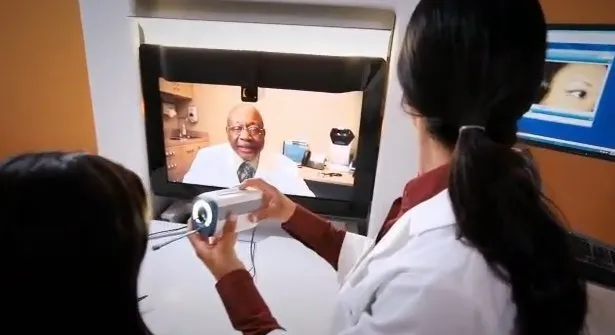
Simply defined, telemedicine refers to the delivery of medical care using telecommunications including: phone, email, Internet and other channels. Over the years, the application of telemedicine was interpreted narrowly to mean the use of technology to overcome physical distance. Specifically, it became synonymous with the use of video conferencing to bring the expertise of specialized physicians (who typically reside in urban America and work in large medical centers) into rural areas where such specialties were scarce or absent. While the supporting technologies have evolved, from ISDN lines to dedicated fiber optics, the principal promise (prejudice) of telemedicine remained frozen in time.
Then came the Internet, introducing the liberating notion that any two places, any two devices, indeed any two people, can connect, reliably and instantly. Armed with the Internet, telemedicine has quickly dropped the expensive dedicated conferencing lines, and swapped them with inexpensive cable modems. Telemedicine could now accomplish the same result for fewer dollars -- an excellent incentive for growth. But, (author is now pointing to an elephant in the room H.P.) looking at the Internet as a cheaper way to do the same thing is perhaps as naïve as thinking of email as a mere replacement to paper mail and a good way to save on stamps. Yes, the Internet can save some cash in connecting two points (e.g. our two physicians), but its promise lies in that it can connect any two points.
So what can we expect if we wake our dormant telemedicine by allowing it to take advantage of the true networked capability of the Internet? By reaching patient's homes, access to medical care will start equalizing across geographies. The variations in its quality will diminish. Primary care physicians could summon specialists to help care for the patients sitting in front of them in their exam room. Physician offices can expand services by tapping allied providers they could otherwise not afford to keep on staff (e.g. nutritional services, sleeping disorders, etc.). The stigma of entering the office of a mental health provider will not keep patients away, as they can engage the therapist routinely, from the intimacy of their homes. Patients can be discharged home earlier after surgery and still be followed during their surgeon morning rounds from the hospital. Live health care can be available in pharmacies, workplaces, airports and handhelds. It can bring additional physicians into crowded emergency rooms to help with triage; it can allow the military to project broader health care to where the troops go. It can allow us physicians to care for patients in Haiti during our lunch break in the office. Fundamentally, we can expect the paradigm to change. Health care goes to where the patient is.
This vision is far from pie in the sky. In fact, it's starting to become a reality in communities across the country. For example, the U.S. Department of Veterans Affairs (the VA) has been enlisting a growing number of telemedicine technologies to help Americans discharged from the armed forces to manage diabetes, high blood pressure and other physical and mental health issues from their homes. Health companies, too, are making networks of providers available to their consumers online, extending care into homes and workplaces. These span from Hawaii (HMSA) to Minnesota (Blue Cross and Blue Shield of Minnesota and OptumHealth), Pennsylvania (Rite Aid) and New York (HealthNow New York), among others.
As with any change, there are real risks involved. Even with its increasingly high-definition audiovisual capabilities, telemedicine does not allow for a hands-on exam. It thus requires physicians to exercise different clinical judgment on the care they render. Patients may abuse telemedicine to scout for physicians who more readily issue prescriptions (for regular or even controlled medications). Indeed, patients may abuse telemedicine as a whole by simply overusing it. After all, it is available at home right after dinner when there are no good shows on cable. Medical boards are rightfully concerned that state lines (which define physician licensure), or even national borders will perforate as patients look far and wide for their doctors. Lastly, since the Internet is open for all, it can become a goldmine for imposters, swindlers and downright poor-quality providers, to disseminate their wares.
But the challenges, real as they are, have been seen and conquered before. Amazon was blasted for taking the joy out of in-store book buying. Expedia eliminated the friendly agent from the travel agency down the street. Online banking and retail were feared to be leaky and insecure. Online grocery shopping did not allow the buyer to physically examine the produce and e-books turned the page on turning pages altogether. And yet they all prevailed somehow, and reached a point where they became an accepted part of our lives. This was done not by the persistence of the entrepreneurs, but by their adaptation. Not every product is sold on Amazon. Not every gourmet dinner is available to order in. Complex travel plans still end up with an agent and few people buy real estate entirely over the Internet.
Telemedicine is no different. It is right for a defined scope of medical care, but is not a replacement for the relationship between a patient and her doctor. Telemedicine needs to be portrayed clearly as such to remove ambiguity and unrealistic expectations. It needs the capability to validate that the people who use it are who they claim to be and that the providers in it are licensed, audited and held accountable to the quality of care they deliver by their state medical boards, as they are in their practices today. Prescriptions could be limited to known safe lists and, as with any other modern computer-based system, measures should be in place to constantly look for abusers, intruders and other forms of mayhem. All of the above is doable. We have done it before.
Telecommunication has changed almost every dimension of our lives within one generation. Telemedicine is its application in health care. It's big, it's powerful and it's mostly asleep. With the current state of health care, isn't it time we wake this elephant up?