Released in U.S. theaters last week, Circumstance, by Iranian-American writer and director Maryam Keshavarz, tells a fictional story about a liberal, upper-class family whose love and affection are gradually drowned under the weight of repressive forces that swell their home with sorrow. As the apotheosis of the Iranian diasporic imagination,the film is more likely to reveal the desires and personal truths of its creator, cast, and crew than to expose dark secrets of the Orient for the pleasure of Western viewers. But Circumstance's poetic possibilities are barely legible to audiences and critics who either praise the film for its daring exposé of illicit activities or fault the film for lacking authenticity.
 Tracking the film's reception since its world premiere at the 2011 Sundance Film Festival, where it garnered the Audience Award, I've been struck by how both positive and negative reactions from audiences and critics hinge upon whether the film, for them, successfully passes as an authentic testimony of modern struggles in Iran and a true document of underground youth culture in Iran. This frame for reading the film - indulged by reviewers from publications like The Advocate, Screen International, Variety, and The Hollywood Reporter among others - is dangerously misguided and effectively shackles an emerging Iranian-American writer-director with the weight of representation, trapped by the expectation that her film must:
- Make an explicit critique of the Islamic Republic of Iran. While it is tempting to read the film as a pointed criticism of the current political and social landscape in Iran, Keshavarz has emphasized that she is an artist, not an activist. While all art is indeed political, the distinction the director makes is important - particularly in the context of ongoing U.S. military intervention in the Middle East under the guise of delivering democracy and protecting human rights. Rather than a condemnation of Iran specifically, Circumstance can be seen as a carefully crafted visualization of suffocation, and the strategies people conjure to protect the spaces they need in order to breathe, even as those spaces get collapsed by state systems of oppression and make us "outsiders" within our own homes, nations, or communities. Raised for most of her life in the U.S., the director has described in various interviews the aggression against her family because of growing animosity between Iran and the U.S.A., with the onslaught of anti-Islamic rhetoric and behavior after September 11, 2001 providing inspiration to pursue filmmaking professionally. The palpable tension in Circumstance can be traced to the director's sense of unease writing the script while stuck between two nations - Bush-Ahmadnejad each fighting to exert control over their citizens' lives. Given the exacerbating inequality between economic classes, increased violence against marginalized communities (including GLBT people), the terrifying expansion of the prison industrial complex, and the insidious spread of misogyny and homophobia at all levels of American society, it is likely Circumstance's representation of how state repression infiltrates into the realm of the personal is just as reflective of life in the U.S.A., as life in Iran.
- Testify to the oppression of women and human rights abuses towards gays and lesbians in Iran. My intent here is not to deny that these are serious concerns for Iranian people. Rather, my concern is that any fiction film might bear the weight of providing testimony. By taking Circumstance as a straight testimony of human rights abuses, we risk the more far reaching picture the artist offers - a portrait of how patriarchy can corrode the structure of family and ultimately, our sense of humanity. The revelation of the film is precisely that the male protagonists' circumstances are just as entrapping, just as oppressive (albeit, in very different ways) as the women in the film. Reza Sixo Safai gives a complex performance of a man burying himself with each exertion of power and superiority, distancing his wife from the very things he loves (his family and music), until finally, all the young patriarch can do is collapse out of grief, crushed by the destructive forces he grasps at desperately to survive. He knows that whatever structure he imposes will never be enough to grow the sweetness and light his family once shared. The biggest truth exposed is the idea that state violence and control are a symptom of larger paradigms of patriarchal oppression that extend beyond the specific historical and geo-political context of Iran.
- Provide an "insiders" peek into lesbian life in underground Tehran. It would be tragic to characterize Circumstance as an "Iranian lesbian" film, as many have done. Nostalgia, sensuality, and fantasy shape desires that envelope sexuality - a power so formidable entire systems of governance, reels of legislation, and religious codes have been constructed to manage it. As part of larger impulses to categorize human value (for example, see: race), the West has harnessed sexuality by crushing it into distinct identity categories. But it is highly problematic to transpose these categories onto the Middle East by labeling the film, women in the film, or the nature of their relationship, as "lesbian." Sexual desire and love has taken multiple forms of expressions throughout history, and while same-sex love and desire no doubt exist in Iran, it is problematic to map onto Iran a distinctly Western concept of sexuality. This concession can open up an analysis of the film and approach to desire that exceeds the ghetto of identity built by the West to house sexuality. Perhaps most seductive for those of us living in the Iranian diaspora, Circumstance captures that melancholic desire steeped in longing for one's homeland, a way of life lost, and a dream of a better future where we might be able to return.
- Contribute or conform to a canon of either queer cinema or Iranian cinema. Recognizing the film's ambition as broader than an occupation of Western fixations on homosexual identity, the expectation that Circumstance ought to contribute to "queer cinema" (as a reviewer from New York Press faulted the film for failure to do) is painfully reductive of the film's vision around the sheer ingenuity and guts of Iranian youth who carve spaces to practice freedoms even under seemingly impossible constraints. The tongue-in-cheek scene where the girls and their male friends illicitly dub the film Milk (2008) and episodes of Sex and the City gestures to how ridiculous it might be to create a social movement in Iran by mimicking the U.S. - even as the gay liberation movement of the 1970's provides some inspiration for their own resistance. Circumstance departs from a canon of Iranian cinema in many ways. Following more in the traditions of European and Latin American directors, Keshavarz's visual style and cinematic sensibilities reflect the influence of films like Ingmar Bergman's Persona (1966) and Lucrecia Martel's The Holy Girl (2004). As an Iranian-American in her mid-thirties, the kind of story Keshavarz tells is unique to a diasporic lens from a particular generation and very different from the perspective of someone raised only in Iran or only in America. It might not be a coincidence then that one of the films in recent years most similar to Circumstance is directed by her brother, Hossein Keshavarz, Dog Sweat (2009), about a group of six young people in Iran, and awarded at the International Rome Film Festival.
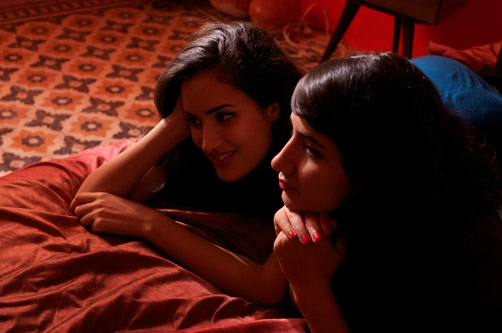
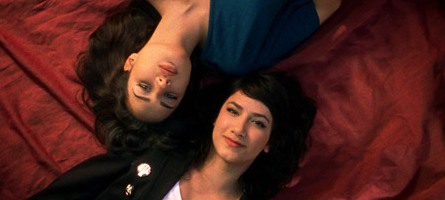
Constraining the success or failure of the film within these four walls endangers the poetic possibilities of the director's vision and our cinema culture. Circumstance can be seen as the apotheosis of an Iranian diasporic imagination - more likely to reveal the desires, nostalgia, and dreams of its writer-director than expose dark secrets of the Orient for the pleasure of Western audiences.  From the opening scene, the audience is lured by luscious imagery and evocative song into the fantasy world of Atefeh and Shireen, two 16-year-old girls on the brink of becoming women and who dream of absconding away together. Shireen, whose parents were writers deemed radicals and likely executed, is taken in by the warmth and security of Atefeh's upper-class family. Atefeh's beloved brother, Mehran, is a recovering drug addict so desperate to stay clean he sacrifices his passion for classical piano to adopt the higher-ground of religiosity. Meanwhile, Atefeh pulls Shireen out with her in a quest for every outlet of creativity they can find within an underground youth culture of black market films, rave night clubs, and rap music. The three young protagonists could be interpreted as facets of one character who takes different paths - a multifarious reflection of engaging with protest, the state, and fantasy under different circumstances.
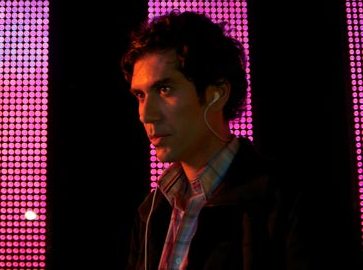 Animosity soon replaces tenderness as the siblings head in opposite directions. Despite the parents' efforts to create a haven within their home, repression steadily encroaches on their private lives and impossible compromises must be made to hold together what remains of their family. Keshavarz cast an ensemble of serious acting talents (some even, making their feature film debut in Circumstance) from Vancouver, Los Angeles, Tehran, Paris, and Toronto. Nikohl Boosheri, Sarah Kazemy, Reza Sixo Safai, Soheil Parsa, and Nasrin Pakkho worked together with remarkable chemistry telling of past, and hopefully, future collaborations.
Cinematographer Brian Rigney Hubbard and composer Gingger Shankar create a cinematic language and atmosphere that viscerally moves between the duality of public and private, the "reality" and fantasy worlds of the characters. 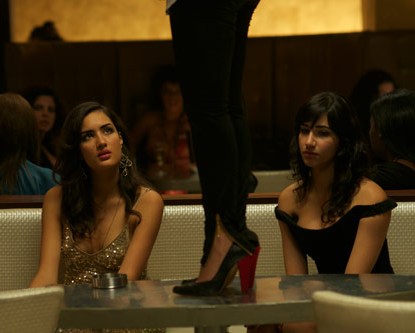 The widest shots cue us into a place of unbridled freedom - for the young protagonists, this looks like fantasies of belly dancing lovers sparkling behind billowy smoke and escaping to a Dubai that looks like Miami. The "reality" of the film is represented in tighter, almost claustrophobic shots and darker hues. The coldest images seen are the footage taken by a surveillance camera. Atefeh confronts the camera's intrusive lens directly, challenging her brother's attempts to capture "the truth."
Revealing the dangers of the camera, Circumstance sets us up to be weary of adopting images on screen as true, authentic documents of reality. 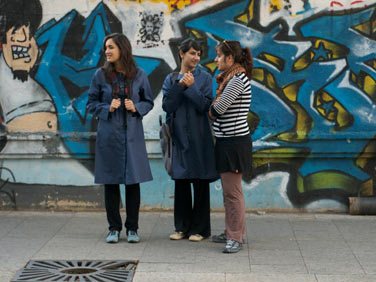 The film is a manifestation of the director's imagination, made with the deliberate choice to be a piece of fiction, even after Keshavarz gained critical praise for her charming feature documentary film about romance amongst Iranian youth, The Color of Love (2004). A male Iranian journalist for The Daily Beast recently reported that Circumstance presented an inauthentic portrayal of women in Iran, based on information he himself had ascertained from "real" Iranian women who said the film was not reflective of their lives. But what an unreasonable expectation to put on a storyteller - how can we demand any fiction film (or even documentary film, for that matter) to be representative of the life experiences and histories of an entire nation and peoples? Artists are not native informants. It is unfortunate when we demand them to deliver an impossible universal truth.
Even so, the concepts of truth and fantasy can indeed be recognized within each other. Keshavarz has described how she overcame her own self-censorship in order to dig at a deeper truth within multiple drafts of the story. This is an internal truth that belongs to the experiences and thoughts of the writer/director herself - a child of immigrants who was born in Brooklyn, a filmmaker trained at New York University, and a creative storyteller whose imagination was captivated by the people she grew up with when visiting family and friends in Iran.
 It is not a truth obligated to reflect the experiences of the many different people living in Iran. Past expectations of providing authentic testimony of human rights abuses, state repression, or underground youth culture, what shines through Circumstance is this intimate truth born out of a deeply personal vulnerability. And if audiences open themselves wide enough to enter the world imagined, they might just be able to find something of their own truth put to light. ***
All images from Roadside Attractions, courtesy of Brian Rigney Hubbard