
iPhone app iPad app Android phone app Android tablet app More

Featuring fresh takes and real-time analysis from HuffPost's signature lineup of contributors
Samuel S. Epstein

GET UPDATES FROM Samuel S. Epstein
 

The Danger of Toxic Consumer Products, Fragrances

Posted: 07/07/10 01:30 PM ET

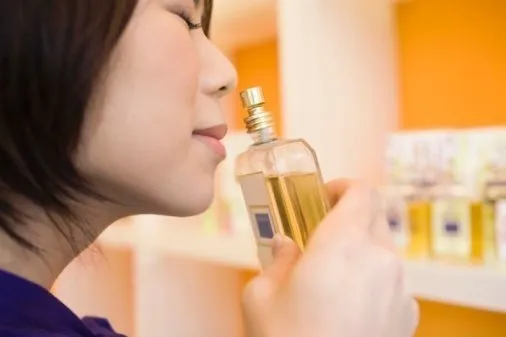
Perfumes and fragrances are the single largest category of cosmetic and personal care products, especially hair, facial, and eye. These products represent nearly 50 percent of all prestige beauty dollars now spent in the US Fragrances are also extensively used in a wide range of everyday household cleaning products.

Exposure to toxic ingredients in cosmetics and personal care products is predominantly through the skin. In contrast, exposure to toxic ingredients in household cleaning products is predominantly through inhalation.

The Food and Drug Administration (FDA) has direct authority under the terms of the 1938 Federal Food Drug and Cosmetic Act to regulate toxic ingredients in cosmetics and personal care products. However, seven decades later, it has still failed to do so. Similarly, the Environmental Protection Agency has also still failed to regulate these toxic ingredients in household cleaning products.

In the disturbing absence of any federal regulations, the policies and practices of the cosmetics and personal care products industries are determined by its International Fragrance Association (IFRA). This is an international trade organization of over 100 perfume and fragrance manufacturers, representing 15 regions including the US, Europe, South America, Australia and the Far East.

The primary objectives of IFRA are to protect the self-regulatory practices and policies of the industry by the development of a Code of Practices and safety guidelines. However, these include maintaining the "trade secret" status of perfume and fragrance ingredients, and pre-empting international legislative labeling and safety initiatives.

Of the more than 5,000 ingredients used in the fragrance industry, approximately 1,300 have so far been evaluated by the industry's International Research Institute for Fragrance Materials. This Institute is a "non-profit" organization, created by IFRA in 1966 to conduct research and testing of fragrance ingredients. However, this testing is minimal and restricted to local effects on human skin, and short-term toxicity tests in rodents. Evaluation of ingredient safety is then made by an "independent" board of toxicologists, pharmacologists and dermatologists, without disclosure of their qualifications, let alone conflicts of interest. Their findings are presented to IFRA's Scientific Advisory Board, and then published in its trade journal, Food and Chemical Toxicology. The information reported in this journal is the basis on which IFRA formulates its own "safety guidelines." However, due to the "trade secret" status of fragrances, manufacturers are still not required by the FDA to disclose their ingredients on the label or in any other way.

These ingredients include a wide range of allergens. They also include synthetic musks, particularly tonalide and galaxolide, designed to mimic natural scents derived from musk deer and ox. They are persistent and bioaccumulate in the body, have toxic hormonal effects, and have been identified in breast milk.

In efforts at damage control, IFRA agreed that information on allergenic ingredients in perfumes like Eternity should be made available, but only on request from dermatologists, for diagnostic purposes. This "Fragrance On-Call List" action denies the public its right to know.

In 1973, in further efforts at damage control, IFRA created a Code of Practice listing prohibited ingredients, based on its own safety analyses. This listing has been subsequently periodically updated.

In May 1999, in response to repeated complaints of respiratory, neurological, and other toxic effects following the use of Calvin Klein's Eternity perfume, the Environmental Health Network of California hired two testing laboratories to identify the ingredients in the perfume. Analysis of these results by the Cancer Prevention Coalition, summarized in the author's 2009 Toxic Beauty book, reveal the following:

• 26 ingredients whose "Toxicological properties have not been investigated," or "toxicology properties have not been thoroughly investigated."

• 25 ingredients that are "Irritants."

• 5 ingredients that are "Skin sensitizers," or allergens.

• 3 ingredients that show "Fetal, hormonal, and reproductive toxicity."

• 2 ingredients that "May cause cancer."

More disturbingly, Dr. Vey, president of IFRA, failed to respond to repeated warnings from August to October 2003 from the Cancer Prevention Coalition. These urged "all fragrance products be labeled to the effect that, apart from the absence of known skin and respiratory allergens, they contain no known carcinogens, gene damaging, hormonal, or otherwise toxic ingredients."

As reported in "What's That Smell," a June 2010 report by Women's Voices of the Earth, faced with continuing criticism of unresponsiveness, IFRA initiated a "compliance program" in 2007. However, this is based on testing of a mere 50 fragranced products from the global market place to detect prohibited ingredients.

Clearly, IFRA is recklessly irresponsible. Also, clearly the public should be protected from further exposure to toxic ingredients in cleaning products, besides those in cosmetics and personal care products. These objectives would be implemented by passage of Senator Frank Lautenberg's Safe Chemicals Act of 2010, and Congressmen Henry Waxman and Bobby Rush's companion Act of April 2010. Both these Acts were based on the 1976 Toxic Substances Control Act. The new Acts require manufacturers to provide information on "chemicals of concern" in consumer products. This would also provide the public with information on the dangers of cosmetic and personal care products, especially as the FDA has recklessly failed to do so since passage of the 1938 Federal Food, Drug, and Cosmetic Act.

Click here to endorse these concerns.

Samuel S. Epstein, M.D. is professor emeritus of Environmental and Occupational Medicine at the University of Illinois at Chicago School of Public Health; Chairman of the Cancer Prevention Coalition; Recipient of the 1998 Right Livelihood Award ("Alternative Nobel Prize") and the 2005 Albert Schweitzer Golden Grand Medal for International Contributions to Cancer Prevention; Author of over 270 scientific articles and 20 books on the causes and prevention of cancer, including Toxic Beauty (BenBella Books, 2009) and Cancer-Gate: How To Win The Losing Cancer War (Baywood Publishing, 2005).

CONTACT:

Samuel S. Epstein, M.D.
Chairman, Cancer Prevention Coalition
Author of the 2009 Toxic Beauty, and the 2005 Cancer-Gate books
Professor emeritus Environmental & Occupational Medicine
University of Illinois at Chicago School of Public Health
Chicago, Illinois
Tel: 312-996-2297
Email: epstein@uic.edu
www.preventcancer.com
Please join the CPC on Facebook.


Perfumes and fragrances are the single largest category of cosmetic and personal care products, especially hair, facial, and eye. These products represent nearly 50 percent of all prestige beauty dol...
 
 
  • Comments
  • 29
  • Pending Comments
  • 0
  • View FAQ
Comments are closed for this entry
View All
Favorites
Recency  | 
Popularity
This user has chosen to opt out of the Badges program
05:32 AM on 07/10/2010
While I love a good perfume, as I love a beautiful and fragrant rose, I am deathly allergic to both. If someone walks into a room wearing strong perfume or cologne, I must quickly leave, or suffer a very uncomfortable asthma and/or allergy attack. Thus, those who know and respect me avoid being odoriferous in my presence.
This user has chosen to opt out of the Badges program
CrankyGal
My micro-bio itches like hell
09:04 PM on 07/09/2010
I love good perfume.

Women have been scenting themselves for at least five thousand years.

If you don't enjoy it, fine, don't use any. Just don't take mine away from me.
This user has chosen to opt out of the Badges program
05:35 AM on 07/10/2010
Many years ago I found a small shop in Old Albuquerque that made their own perfumes that I both loved and could be around. Perhaps it is only the unusual chemicals that are in some perfumes that I am allergic to.
10:55 AM on 07/09/2010
The fragrance industry and its scientists find Dr. Epstein’s arguments incorrect and inflammatory.

IFRA and RIFM are separate organizations formed at different times, for different reasons. RIFM was founded in 1966 as a research organization to determine safe use levels. IFRA was formed in 1973 as a federation of national associations (such as FMA). Since then, RIFM has compiled over 100,000 studies, which IFRA uses to set fragrance ingredient Standards.

The fragrance industry prides itself on its science and takes proactive, responsible steps to protect the public. It has invested in 40 years of scientific research, dictates restrictions or bans on ingredients when necessary, and developed a compliance program facilitated by a third-party testing lab. It is confusing as to why Dr. Epstein would consider this form of self-regulation an irresponsible business practice. Ingredients used in consumer and personal care products are ultimately regulated by the EPA and FDA, adding a government layer of safety controls to an already responsible and robust industry self-regulation system.

Further, the Fragrance Industry and its associations do not publish a trade journal. It submits its manuscripts to Food and Chemical Toxicology, a peer-reviewed scientific journal. Unlike Dr. Epstein’s use of media sources to promote his authored books, fragrance scientists allow their work to be reviewed in open literature.

Dr. Epstein’s statements about industry’s lack of accountability are just plain wrong.

For the full fragrance industry statement, visit fmafragrance.org.

Fragrance Materials Association
International Fragrance Association
Research Institute for Fragrance Materials
10:23 PM on 07/07/2010
Continuing my point, do we all know who are the members in IRFA? They are International Fragances and Flavors, Givaudan and other companies that are the creators of synthetic scents and flavors. And how many people know how perfumes are created? They're not created by Giogio Armani or Coco Chanel, but by a 'nose' working in one of those flavor companies. And in the link i posted earlier natural absolutes were banned...

to blame an perfume ingredient for causing cancer or health concerns with little or no proof is quite hard to accept, especially when in the past it was used and there were no comments against that. Bergamot oil has recently been banned for causing photosensitivity but it has been used in Eau De Colongue for more than 200 years and nobody complained. Why now? what is going on?
03:08 PM on 07/08/2010
Bergamot oil was banned because it can't be patented just like many other natural substances that have been banned. If they are in competition with a chemical that can be patented then they are at risk of being banned. So what consumers are complaining about is toxic chemicals that put their health at risk. What companies complain about is safe natural chemicals that can't be patented and sold at a major markup.
09:22 PM on 07/07/2010
As a fan of perfume I can say that the IRFA has killled many timeless and exotic scents, most of which we will never be able to smell. Chanel no5 was no longer the same after civet musk was removed from the formula, and Mitsouko, the legendary chypre from 1919 was effectively marred beyond recognition due to the ban of oakmoss. Parure, a creation that Jean Paul Guerlain created in memory of his mother, had to be discontinued to regulations.

Thousands of scents that the younger generation will never know has been killed off by such regulations.

with the advent of watery and insubstantial cheap water that they call perfumes these days, the art of perfumery is now effectively dead as companies now only focus on sales and not on the art itself.

Oakmoss, Jasmine Absolute, Rose absolute and even Vanilla absolute has all been banned from perfumery and there has been little or no proof that these are allergens or that they cause cancer. Without these ingredients, we will be relegated to smelling cheap and foul synthetic creations one after another. Although i understand the health concerns, but sadly besides synthetic musk the banning of the other natural ingredients aforementioned has not been justified and there are no documents or research that supports such justifications.

read more here: http://1000fragrances.blogspot.com/2009/08/lost-battle-of-forbidden-ingredients.html

If health is an concern, why not just stop using perfumes?
03:10 PM on 07/08/2010
Like I posted above, the natural oils and extracts are banned due to lobbying from corporations that make synthetic competitors that can be patented. The regulations themselves aren't doing this it's the conflict of interest between companies and the regulators. Because the regulators aren't actually regulating anything except keeping safe products off the market so their cash cows (the companies bribing them and dinning them) can make a fortune.
photo
HUFFPOST SUPER USER
organicconnect
06:45 PM on 07/07/2010
Personally, I go out of my way to avoid the "fragrance" sections of many department stores or kiosks in malls that sell them. I can't even walk into Sephora. This is not because I am hyper-sensitive. These stores just stink and it is not the real fragrances, but the cheap petrochemical components of many that make them so offensive. This field is another component of chemicals in the home that people happily pay for yet are not good for you, making the home a surprisingly toxic environment: http://organicconnectmag.com/wp/2010/02/slow-death-by-rubber-duck/
02:23 PM on 07/07/2010
Get a life and start enjoying some of the wondrous and exotic perfume creations: Shalimar, Parure, Chanel No. 5, Chanel No. 22, Chanel No. 19, the other original Chanel perfumes, to name just a few.

The odd person may be allergic to perfumes but most who say they are have never been tested and are simply reacting to the overuse of some of the new tinny, shallow and musty fragrances.

Perfume should be sprayed on delicately and from afar, so that the fragrance is more like an essence, a fleeting suggestion.

As for all cosmetics, when you read the warnings of naysayers, you would think women, who have been wearing the same cosmetics with the same ingredients for hundreds of years, would be banging on hospital doors. That, of course, is not the case; and women continue to have the incredible option of working their faces with design, contour, color and beauty.

Far more dangerous are cosmetics that are not kept spotlessly clean and mascara that is not renewed every three months.
05:07 PM on 07/07/2010
Don't leave out every single scent by Jo Malone!! :)
05:49 PM on 07/07/2010
Gosh, I'm not familiar with them. Just looked on the internet. The packaging looks great. I'll have to check them out.
09:05 PM on 07/07/2010
oooh you're a true perfumista! Guerlain Parure has been discontinued thanks to the IRFA. In the name of health these beautiful creations were destroyed...
This user has chosen to opt out of the Badges program
01:55 AM on 07/08/2010
In the name of health, how dare they think of our health?
09:25 AM on 07/08/2010
No it hasn't. I buy it all the time. I have been using Guerlain for years. I think I can safely bet that I am a good deal older than you -- probably more healthy.

As I exercise every day, avoid too much sun, don't smoke, eat really healthy food (lean protein, omega 3, fruit and vegetables, very minimal high-density carbs and added sugar [mostly none]) -- and have been doing so for years, I am in a whole lot better shape and much healthier than many who are quite a bit younger than I am -- even those who won't use perfume.

Trust me, poor lifestyle, bad eating habits and lack of exercise are going to do someone in a whole lot faster and more seriously than perfume. I recommend all those fixated on the "dangers of perfume" to focus on changes that will really will make a difference to their health.
photo
HUFFPOST SUPER USER
Amerela Tica
01:27 PM on 07/07/2010
If beauty products were properly regulated I might not have chemical intolerance today from my overexposure to chemicals in hair school. Thank you for shedding light on these undisclosed chemicals that ruin your health.
02:26 PM on 07/07/2010
Every single material object in our world -- liquid, powder, cream, solid -- everthing -- is a chemical.

So when women flog products with all the chemicals removed, they immediately tell a tale about their ignorance and immediately discredit their own products.
photo
HUFFPOST SUPER USER
Amerela Tica
08:57 AM on 07/08/2010
I couldn't agree more.