

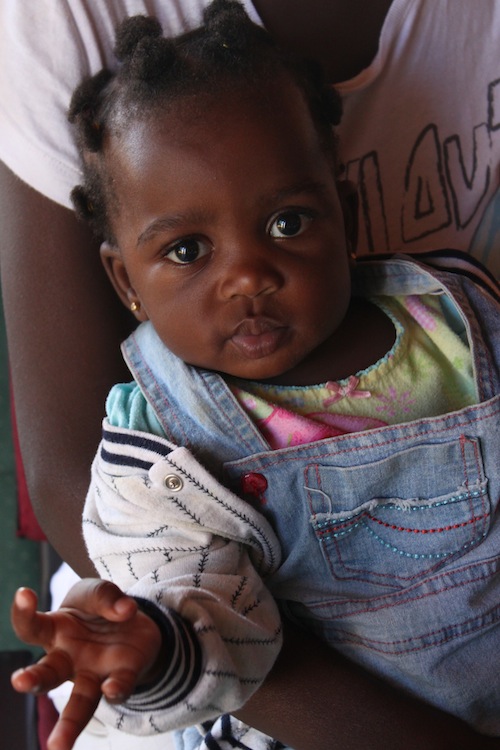
Rachel's life was saved when White Ribbon Alliance Uganda worked with the membership to make sure that the government provided essential drugs. She named her beautiful baby White Ribbon.
In Uganda, 16 women die every day due to pregnancy or childbirth related complications. Almost 99 percent of these deaths are preventable! Only 42 percent of births are assisted by a skilled health provider and 63 percent of women in rural areas give birth at home.
In response to this shocking fact, and with the objective of budgeting for and recruiting additional midwives and health workers, WRA Uganda, along with civil society organizations, started engaging with Parliament on budgetary advocacy work during August and September of last year.
According to Ministry of Health and UNFPA Uganda, Uganda is actually in need of 2,000 more midwives as they are the cornerstone of maternal and new-born health. There is a need for midwives to be recruited, equitably deployed and retained, but better support for these workers is imperative to keeping them in post.
As one of the strategies to push for change towards this, WRA Uganda, midwives, and partners petitioned Hon. Rebecca Kadaga, the speaker of Parliament, highlighting midwives' working conditions and the struggles they face in the delivery of health care. The petition called for bold leadership from government and an appeal to put midwives and other health workers at the heart of efforts to improve the health of mothers and their children in Uganda.
In addition, after intense engagements with the Social Services Committee of Parliament in scrutinizing the Ministerial Policy Statement for financial year 2011/2012, the committee report, and its recommendations including recruitment and retention of health workers, was presented to and adopted by Parliament. The final outcome of this was a reallocation of Uganda shillings -- 5.57 billion to pay for recruitment of health workers -- a 20 percent increase in the budget line for maternal health. The struggle is still on to ensure that the government fulfils its commitment of increasing the health budget to 15 percent as per the Abuja Declaration.
In Uganda as in other Sub Saharan countries, dying in childbirth is the single biggest killer of women of reproductive age. Recognizing that it was nearly a year since the launch of the U.N. Global Strategy for Women's and Children's Health without the government of Uganda's commitment to the strategy, WRA Uganda mobilized other partners and advocated for Uganda's commitment in front of the U.N. General Assembly in September 2011. The strategy focused on three areas: reducing financial barriers, creating a stronger policy environment and strengthening and improving the delivery of health services. This was secured and the task ahead is ensuring that the government matches it with the necessary financial appropriation for it to be realized.
District level work has also seen improvements. We are stepping up the pace to engage parliamentarians and district officials on maternal health with encouraging results already. In Kabale and Bugiri districts, WRA-Uganda members and partner organizations, in collaboration with the local governments, have advocated to increase the recruitment of critical maternal health workers by 30 percent in community health centres.
Encouraging recent developments include a tripling of midwives in Kabale in six months and pledges by district council members in Bugiri to press for more funds for health workers. The encouraging results yet uncompleted advocacy strategy act as a motivation to continue pushing for the realization of our desired change of not letting any woman die from preventable pregnancy and childbirth related causes.
From radio slots to local coalition building, health facility assessments to media briefings, WRA-Uganda is getting stronger every day. However, to continue building momentum and achieving such successes in the battle to save 16 women's lives every day, WRA Uganda critically needs funds to continue our work. Financial support is imperative to allowing WRA Uganda to continue inspiring action and creating change. A little goes a very long way in this push for change. I hope you can donate to the White Ribbon Alliance and assist in preventing needless deaths in childbirth.
By giving to the Alliance, you can make a difference in the lives of thousands of women and newborns.
Visit www.whiteribbonalliance.org to learn more about how you can help.