Sarah Seltzer

Sarah Seltzer

Posted: November 26, 2008 11:35 AM

That's What Vampires Are For: Fangs, Sex and Society

digg Share this on Facebook Huffpost - stumble reddit del.ico.us RSS

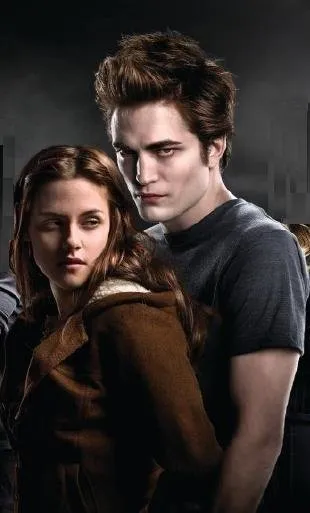
Teen vampire flick and pop-culture juggernaut Twilight, like Mama Mia! and Sex and the City before it, shattered records this weekend and made female moviegoers hard to ignore. 

Twilight is far from a feminist triumph, though: it's been interpreted by more writers than this one as a purity allegory perfectly tailored for a (hopefully fading) era of abstinence-hype and hand-wringing about "hook-up culture." With a heroine who yearns to both be ravished and bitten, and a hero loath to rob her of either soul or virginity, the Twilight plot arc sells a pseudo-empowering fantasy (men as the sexual and moral gatekeepers, leaving women free to express their desires) while wholeheartedly embracing patriarchal norms. 

The film somewhat mitigates the book's rabid antifeminist message, providing more room to chuckle at the smoldering pouts of its young protagonists (whether that campiness was intended is unclear) and downplaying the extent to which human Bella's singular fixation with vampire hunk
Edward precludes everything else. But the basic storyline of "I won't bite you, it's for your own good" can't be changed. It's the core of the tale. 

Putting a Stake in Victorian Mores

This not the first time vampires in pop culture have been a perfect expression of the currents and anxieties of their time. In fact, one might argue that that is their purpose.  

With immortality, a killer instinct, and a life on the fringes, Vampires are a perfect conduit
for musings on the human condition.  "Vampires have long served to remind us of the parts of our own psyches that seduce us," writes Salon's Laura Miller (in a superb analysis of the Twilight books). But the metaphor is often less existential than that, as the vampire bite is easy shorthand for sex. Vampirism allows consumers to take vicarious pleasure in rule-breaking couplings, while also justifying phobias about sex-because the seducers do have lethal fangs, and their condition is quite contagious. 

Bram Stoker's Dracula, the most prominent sire of today's fictive undead, was a repository of post-Victorian fears: syphilis and shifting gender roles. Thus the book is full of bizarre sexualized imagery that equates gender-bending with evil. Hero Jonathan gets attacked and nearly bitten by a gang of wanton vampiresses. Lucy, an ill-fated flirt, juggles three suitors; by story's end all three of them must stake the undead Lucy in a scene that critics compare to a gang rape. Mina, the less transgressive woman in the story, is forced to drink blood from a wound in Dracula's chest, a reverse-breastfeeding image that emphasizes the feminine qualities of the Count.  

The entire book feels like a last gasp of Victorian purity--as well as an anticipation of the
sexual revolution that was around the corner. It's probably no coincidence that the first film version of Dracula was a huge hit just as the Depression ushered out the Jazz Age and its socio-sexual upheaval.

Vampires in the Modern Era 

Indeed, pop culture vampires have always adapted to rapidly shifting sexual politics. A film remake of Dracula in the late 1970s (starring Frank Langella) gave the Count a real romance with Lucy, no longer a doomed Edwardian flirt but instead an independent woman. In her history of vampires, Nina Auerbach describes this new Lucy as "everything a feminist vampire should be. Her romance with Frank Langella could be one of the swoonier inserts in Ms. Magazine. He loves her strength and self-assertion..." 

Anne Rice's beloved vampire hero Lestat (in books from the 70s onward) is a rule-breaking iconoclast (even a rock star) whose lack of gender preference when it comes to victims and vampire companions give bisexuality that familiar terror-and-titillation combination. In the 1994 film adaptation of Interview With the Vampire, more than a few reviewers noted the AIDS metaphors now found in a story conceived before the disease was known. 

In the 1990s we had Buffy, a kick-ass vampire-slayer struggling both to save the world and grow up--all while wearing hip, form-fitting outfits. She's the embodiment of the third wave feminist ideal, and the field of feminist criticism of Buffy is an intensely crowded one.  Her very human struggles to "do it all," rid the world of demons, take care of her friends and family, and maybe meet a nice soulful vampire, interrogated the limitations of the "girl power" mantra and gave the world a truly multi-dimensional heroine. Buffy's protracted love affairs with two male vampires-Angel and Spike-range from sublime to abusive to egalitarian, reflecting the complex dynamics of sex and power in the modern world. 

Today we have the HBO series True Blood, whose lusty vampires have started drinking fake blood, and are struggling for social and political equality. Comparisons to both racial and sexual civil rights battles are unavoidable, but the fact that some members of this oppressed minority don't want their rights--they just want to eat humans--complicates the metaphor. 

And then there's Twilight. If Buffy was the teen vamp tale of the Clinton years, Twilight is definitively its equivalent for the Bush era. Rather than kicking ass, Twilight's Bella stumbles into danger, excusing her vampire-love-interest Edward's creepy protectiveness. Sigh. 

It's unfortunate that the story (as the past decade has been) is so old-school. But before we
feminists concern-troll Twilight's besotted teenage fans, let's remember this: the part of the formula that appeals so widely is not the story's morality, but rather its adolescent hunger. It's the sexual budding, the fraught glances across the cafeteria, the craving to be singled out, and in Dana Stevens' words "the grandiosity that can make self-destructive decisions feel somehow divinely fated." It's teenagedom. Edward gives younger girls a chance to express their nascent desires en masse, loudly.  

Just as Dracula's reactionary plotlines failed to bring back Victorian mores, Twilight's unfortunate gender roles will join abstinence-only on the trash heap of history. Some of its screaming young fans will grow up to be sexually empowered, some won't, and some won't end up fancying men (dead or undead) at all. But they'll all share the fact that Twilight's dangerous liaison turned them on. And that's what Vampires, even sparkly ones, are for.


Previously posted at RH Reality Check

Teen vampire flick and pop-culture juggernaut Twilight, like Mama Mia! and Sex and the City before it, shattered records this weekend and made female moviegoers hard to ignore.  Twilight is f...
 
Comments
13
Pending Comments
0
iPhone App Promo

Want to reply to a comment? Hint: Click "Reply" at the bottom of the comment; after being approved your comment will appear directly underneath the comment you replied to

View Comments:
photo

This is what happens when the crappy vampires are the publicized ones... DOWN WITH TWILIGHT!!!!

    Favorite    Flag as abusive Posted 03:10 AM on 12/17/2008

May I recommend a recent vampire book series that's sexy, funny and gripping? Tanya Huff has written two series featuring vampire Henry Fitzroy, illegitimate son of Henry VIII (the historical Henry Fitzroy died at 17 of a mysterious illness and was buried under somewhat peculiar circumstances). In Huff's series, young Henry chose to "die" so he could be with the woman/vampire he loved and eventually lost. When the series starts, he's got 450 plus years of surviving wars and superstition, outliving friends and lovers, and adapting to a changing world -- an old soul in an eternally young body.

The first series consists of Blood Price, Blood Trail, Blood Lines, Blood Pact and Blood Debt, chronicling Henry's adventures as a somewhat reluctant assistant to a private investigator, Vicki Nelson, a tough and commitment-shy ex-cop. The second series, Smoke and Shadows, Smoke and Mirrors and Smoke and Ashes, focuses more on Henry's mortal friend and former lover, Tony, who's a production assistant on a low-budget TV show about -- what else? -- a vampire detective. Henry and Tony have a bit of a Dracula-Renfield "my Master calls" thing, but in a much healthier way since Henry got Tony off the street, back into school and into more-or-less responsible adulthood.

And yes, the series does have bite. And sex. And a few bad puns.

    Favorite    Flag as abusive Posted 02:25 AM on 12/04/2008
photo

The show was sort of ok as well....

    Favorite    Flag as abusive Posted 03:11 AM on 12/17/2008

What is the vapire's favorite holiday? Fangsgiving.

    Favorite    Flag as abusive Posted 07:46 PM on 11/27/2008
photo

I'm a teenage girl of 18, directed here by a fellow teenage girl. We share a healthy disdain for Twilight. When I read the first and (half of) the second book, I was appalled. Edward is in control of Bella's sexuality--he decides when she can kiss him "for her own safety," him being a volatile vampire. He is in control of her movements--he pulls wires out of her car when she tries to visit a friend he disapproves of. He is hovering around her day and night--he often snuck into her room and watched her sleep before they even met. Bella trips over her feet all the time; she has no discernable hobbies or interests (besides Edward?!); she gets rescued nearly every other page--he even saves her from a trio of creepy rapists when she has the GALL to wander around a city at night unchaperoned. That's all par for the course for the first book, which at least had an ending where Bella tried to acquit herself well in a protracted action scene (which ended with Edward rescuing her and chiding her for being so silly).

    Favorite    Flag as abusive Posted 12:26 PM on 11/27/2008
photo

But the second book? My God. I couldn't believe it. Edward decides he"ll "be cruel to be kind" and stages a break-up--again, for Bella"s own good, since he's a vampire and she's a human. But he doesn't explain that to her. No. He instead tells her, basically verbatim, "You are dirt. You're not good enough for me. This is goodbye forever." And off he goes. How does Bella react to this? She spends months "comatose," as the book describes, unable to move on, pining for him endlessly. But it gets better--she discovers that in near-death situations he will telepathically speak to her, saying inane sh.it like "Watch out!" So she proceeds to attempt suicide several times to get the equivalent of a phone call from the man who told her she was worthless. Book II also includes such lovely tropes as the lover of a werewolf who, having had half her face ripped off when he was in the throes of transformation, tells Bella it doesn't matter! I stick by him! I love him! I'm a tough woman because I can take the pain for love! Again and again Bella gets herself into ridiculous situations. Again and again she mopes over Edward. Again and again she rejects the idea of college or family so that she can be with Edward...FOREVER. Again and again she proves to us she only wants to be a vessel for his existence.

    Favorite    Flag as abusive Posted 12:30 PM on 11/27/2008
photo

My disgust with Twilight goes deep. It's hard for me to understand why so many of my peers love it so much. Surely Dracula, Lestat are just as good--better? Surely there's better YA vampire fiction? Surely?! Guys?! But your article helped remind me that these girls have no nefarious ideals themselves, necessarily--they just, like me, like vampires, love stories of the fantastical. They probably aren't seeing the same things in Twilight as I am. Maybe that's not the best thing--I don't want anyone internalizing Edward as THE IDEAL MAN, as so many girls describe him (someone who cuts the wires in my car is ideal...?). But I'm going to say that you're probably right. They love Twilight because the vampire appeals to them the way all vampires do, even ones that sparkle. I"ll keep telling them what I see that"s wrong in Twilight, because I think it's dangerous to give it a free pass based on it being a vehicle for budding sexual expression and romantic appetite, but if that's what it's really functioning as for some girls and it doesn't go any deeper--than that's more okay than just "EDWARD." At least I can tell you that most of my pals despise Edward and his sparkly fingers as much as anyone could. We'll stick to fantasy heroines with a little more girlpower: Lyra Belacqua, Lucy Pevensie, Princess Leia, Buffy and Kate from Lost fit the bill better than Bella Swan ever could.

    Favorite    Flag as abusive Posted 01:24 PM on 11/27/2008
photo

But the second book? Whoa. Edward decides he"ll "be cr.uel to be kind" and stages a break-up--again, for Bella"s own good, since he's a vampire and she's a human. But he doesn't explain that to her. No. He instead tells her, basically verbatim, "You are di.rt. You're not good enough for me. This is goodbye forever." And off he goes. How does Bella react to this? She spends months "comatose," unable to move on, pining for him endlessly. But it gets better--she discovers that in near-death situation he will telepathically speak to her, saying such inane stuff as "Watch out!" So she proceeds to attempt su.icide several times to get the equivalent of a phone call from the man who told her she was worth.less. Book II also includes such lovely tropes as the lover of a werewolf who, having had half her face ripped off when he was in the throes of transformation, essentially tells Bella it doesn't matter! I stick by him! I love him! I'm a tough woman because I can take the pain for love! And on, and on, and on. Again and again Bella gets herself into ridiculous situations. Again and again she mopes over Edward. Again and again she rejects the idea of college or family so that she can be with Edward...FOREVER. Again and again she proves to us she is simply content to be a vessel for his existence.

    Favorite    Flag as abusive Posted 12:36 PM on 11/27/2008
photo

One small correction, The first filmed version of Dracula was the silent film Nosferatu, (all they changed was the name of the lead & truncated the story line) but I guess it didn't fit your premise, the character was portrayed as an ugly little loathsome predator.

    Favorite    Flag as abusive Posted 10:07 PM on 11/26/2008

Klaus Kinski...did the remake.

    Favorite    Flag as abusive Posted 07:46 PM on 11/27/2008

"...the fact that some members of this oppressed minority don't want their rights--they just want to eat humans--complicates the metaphor. "

To say the least! True Blood is entertaining alright, but I really don't get the connection between discrimination against vampires and the larger issues of social equality that the show repeatedly makes reference to. True Blood's vampires are portrayed, for the most part, as offensive and dangerous---which begs the question: Why wouldn't you shun people who keep threatening to eat you, even if only in jest?

I haven't seen Twilight, but it is hard not to call any movie "socially irresponsible" that glamorizes "adolescent hunger." Victorian mores aside, it can't be a good thing to encourage kids to indulge their deep-seated, irrational urges. Don't we as a society have enough trouble already?

    Favorite    Flag as abusive Posted 12:36 PM on 11/26/2008
photo

The teens in "Twilight" are all celibate. This includes the vamps in all ways, no bite of the apple, no bite of anything. It's a "we do don't want an STD" teen romance with celibate fangs.

    Favorite    Flag as abusive Posted 07:20 PM on 11/26/2008

About True Blood...how is Bill offensive and dangerous? You said "for the most part," and Bill is THE vampire in Bon Temps, the others are just supporting characters...

    Favorite    Flag as abusive Posted 09:17 PM on 11/26/2008
Comments are closed for this entry

You must be logged in to reply to this comment. Log in  or  Connect