iPhone app iPad app Android phone app Android tablet app More

Featuring fresh takes and real-time analysis from HuffPost's signature lineup of contributors
Scott Barry Kaufman, Ph.D.

GET UPDATES FROM Scott Barry Kaufman, Ph.D.
 

The Creative 'Flow': How to Enter That Mysterious State of Oneness

Posted: 11/26/2011 3:30 am

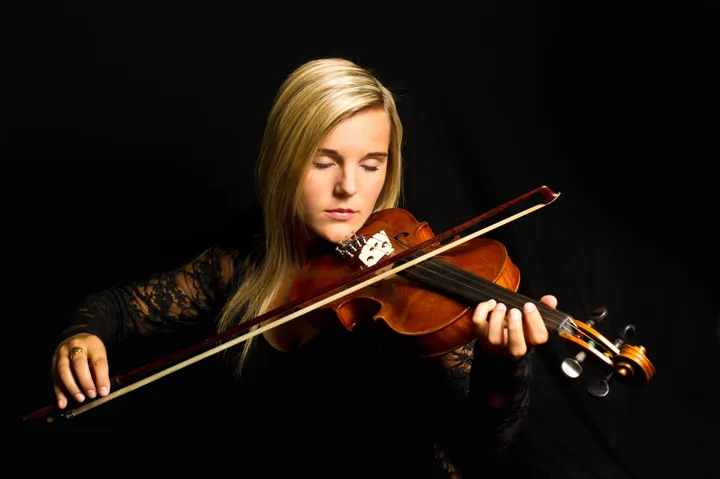
Flow -- the mental state of being completely present and fully immersed in a task -- is a strong contributor to creativity. When in flow, the creator and the universe become one, outside distractions recede from consciousness and one's mind is fully open and attuned to the act of creating. There is very little self-awareness or critical self-judgement; just intrinsic joy for the task. Since flow is so essential to creativity and well-being across many slices of life -- from sports to music to physics to religion to spirituality to sex -- it's important that we learn more about the characteristics associated with flow so that we may all learn how to tap into this precious mental resource.

But who enters flow? What are these lucky folks like? Recent research shows that people differ quite a bit from each other in the frequency and intensity of their flow experiences. These differences aren't just found in Western cultures. In a study conducted on Japanese students, those who reported experiencing flow more often in their daily lives engaged in more daily activities, and were more likely to have higher levels of self-esteem, Jujitsu-kan (a sense of fulfillment), life satisfaction, better coping strategies and lower anxiety.

In a hot-off-the-press paper in the journal Personality and Individual Differences, Mihaly Csikszentmihalyi (author of "Flow: The Psychology of Optimal Experience") and his colleagues in Sweden set out to investigate the associations between flow proneness, intelligence, and the major dimensions of personality. Across two samples of participants with a wide age range, they found some intriguing associations with flow. "Proneness to experience flow" was measured by having participants report how frequently they have flow experiences during three slices of life: work, maintenance (i.e., household chores) and leisure time. They then looked at relations with personality and cognitive ability.

Neurotic participants experienced less flow across multiple domains in their daily lives. The researchers offer some possible mechanisms that could account for this association. One possibility is that the negative emotions that come with high neuroticism interfere with the state of joy that occurs when in a flow state. Another possibility is that the fluctuations in emotion that come with neuroticism can also affect both the cognitive and emotional aspects of flow, causing a disruption in flow. A third possibility is that neuroticism impacts on flow indirectly, through the life choices those high in neuroticism make on a moment-to-moment basis. Research has shown that those high in neuroticism do tend to have less motivation to become involved in activities and experience a greater sense of futility in engaging fully in life.

The researchers also found an association between flow and conscientiousness. Those who were more dutiful and persevering also tended to report higher levels of flow in their daily lives. This association is probably due to the fact that conscientiousness is positively related to other variables that are also associated with flow, such as social problem solving, life satisfaction, subjective happiness, positive affect and intrinsic motivation. Conscientious individuals are also more likely to spend the time practicing to master challenging tasks, conditions which make flow more likely. As the researchers note, "It seems likely that high conscientiousness involves emotional and motivational mechanisms that make an individual engage in flow promoting activities."

The researchers didn't find significant relation with other factors of personality, which I found surprising. I expected them to find an association with Openness to Experience, as prior studies have found a positive link. Perhaps a reason for their lack of association with Openness may be that their Openness measure had quite a few items relating to a preference for intellectual engagement mixed in with items which are more strongly related to flow, such as an openness to aesthetics, feelings, and sensations. Indeed, there was only a very weak association between flow proneness and performance on an actual measure of intelligence, which required participants to find patterns. At first blush, it would seem as though intelligence would be related to flow. After all, intelligence is related to the ability to control attention.

But as the researchers note, the mental state of flow differs markedly from the mental state involved in solving problems on an IQ test. In a prior study conducted in Sweden led by Örjan de Manzano (who was a co-author of the study with Dr. Csikszentmihalyi), the researchers asked professional pianists to play a musical piece five times and rate their level of flow each time. The respiratory patterns and emotion-related activity of the facial muscles found in those entering flow more frequently suggested that they were experiencing an emotional state of enjoyment and a lack of mental effort. Contrast this with taking an IQ test, where it's difficult to bring your expertise to bear on the task. Instead, flow seems most likely to occur when a person engages in a task with a moderate level of challenge that is well matched in difficulty to a person's current skill level. Flow also shares some commonalities with the mental states of high concentration seen during meditation, which also seems to be a form of concentration uninhibited by our critical facilities when one is fully immersed in the moment. The researchers sum it up: "Flow may thus be a state of subjectively effortless attention that occurs during skilled performance and has different underlying mechanisms from attention during mental effort."

I'm excited to see that this is an active area of research. The finding that flow is more strongly related to personality than cognitive ability is fascinating and hopeful. Minor tweaks in your personality might make it more likely you will enter flow. The changes are well worth it.

© 2011 by Scott Barry Kaufman.

Follow me on Twitter or Google Plus.


Follow Scott Barry Kaufman, Ph.D. on Twitter: www.twitter.com/sbkaufman

FOLLOW HEALTHY LIVING
Flow -- the mental state of being completely present and fully immersed in a task -- is a strong contributor to creativity. When in flow, the creator and the universe become one, outside distractions ...
 
 
  • Comments
  • 24
  • Pending Comments
  • 0
  • View FAQ
Comments are closed for this entry
View All
Favorites
Recency  | 
Popularity
11:53 PM on 12/04/2011
I was since birth very prone to the flow, and it brought me much grief from my teachers, my governess, my parents, my relatives, even my son, because when in the flow one is on another level of consciousness and those outside of it, those surrounding one, perceive one as being absent, elsewhere, inattentive, impolite, etc. I was constantly punished for being so often and easily in the flow - even punished corporally at times - I was berated, insulted, humiliated, scolded, physically shaken to "shake me back to reality", put in detention, yelled at, and so on. My son would panic because he felt that I was not there when in the flow, and he would become hysterical. So, people around me constantly interrupted and broke my flow. My flow was principally in music and graphic creation, as well as natural innate meditation.
photo
HUFFPOST SUPER USER
Chuck Bluestein
Always searching for latest health breakthrough
06:49 PM on 11/30/2011
Sigmund Freud had talked about an oceanic feeling where one feels a oness with the universe. Many professional sports people got that good because they would feel this flow experience when playing, so they could play/practice for hours. The Positive Psychology Network (PPN) is researching this and what makes people happy. Also this is exactly what Eckhart Tolle is talking about when he talks about being in the present.

In his book, Authentic Happiness (© 2003), Dr. Seligman describes the flow experience like this: "When does time stop for you? When do you find yourself doing exactly what you want to be doing, and never wanting it to end? Is it painting, or making love, or playing volleyball, or talking before a group, or rock climbing, or listening sympathetically to someone else's troubles?" http://bit.ly/9JTjUW He is director of PPN.

Of course this is what yoga is all about. It is about raising the consciousness so a person can feel this more of the time and at deeper levels. I have been doing yoga since age 12. That is also when I started doing martial arts and tai chi that also help one to experience this more and more.
HUFFPOST SUPER USER
Robert Gudzikowski
free,natural,harmless,individual
07:48 PM on 11/29/2011
Repetition is the mother of skill. As skill increases it tends to plateau. To enter the "flow or zone" direct ratios of complex carbs to protein can make the approach to the zone much easier. It dosen't put you in the zone but the flow is a big part. Try it with your fav sport you may be thanking me later.
This user has chosen to opt out of the Badges program
photo
Woodsie
nulli dei, nulli domini
04:52 PM on 11/29/2011
Can neurotics ever be really happy? How do you get through to people that are so self-absorbed or wallowing in "my life sucks" outlook? It seems some people are just comfortable being miserable, not to mention ever finding a good flow....
03:26 PM on 11/28/2011
This is fascinating. What you are really describing is Karma Yoga, ie: 'actionless action'. I am a practicing architect and artist. I also happen to be a yoga tacher too and everyday I see how flow allows us to 'connect' with an action of creativity, bringing a wonderful sense of effortless action and creativity which always seems to work. The trick is getting oneself out of the way and concentrating on the action itself. The key is to tell oneself this is not me drawing, this is simply drawing. By not considering oneself as the doer, agent or originator of the action, and thereby not the recipient of any results of that action everting becomes so wonderfully easy, fluid and achievable. Its all in the Bhagavad Gita but its great that science is catching up.
photo
HUFFPOST SUPER USER
Jared Keith Jones
your friendly neighborhood buddhist
12:25 AM on 11/28/2011
Interesting article. The quantity of quality of the articles over here in the mindful living section seems to vastly outweigh the quantity of quality in the Buddhist section. Sad. I have been studying "The Unfettered Mind" recently. It is all about this kind of mind. The mind which never stops. Most people can only generate that in relationship to an activity of considerable difficulty and technicality: musical instruments, martial arts, dance, painting, calligraphy, tea ceremony, etc. However, the real art it to take this mind into all of our activities and all the periods of time between our activities. Then, you are a virtuoso of being alive in every moment.

A favorite poem of mine says:

"The flower in the garden gives up its fragrance regardless.
I sit and stare.
How rueful this world."

The flower fluidly flows from moment to moment without stopping, releasing it's fragrance. Our mind stops on the flower and the fragrance and elaborates: "Oh how wonderful, how beautiful. There were flowers like this at my old house. I wonder how long this flower will last? I don't want it to go." Etc. Meanwhile, our mind is no longer fluidly flowing. We should take the example of the flower itself, which releases its fragrance regardless.
05:02 AM on 11/27/2011
The minor personality tweak you mention is already available :-)
Your fellow blogger Jeanne Ball’s article "The Key To Health And Happiness: A 'Lost' State of Consciousness?" is all about a technique to enter the flow.

Or, more accurately, about a technique for preparing to enter the flow. Transcendental Meditation "cleans" your brain and lets it function more as a whole. After some time of doing that regularly, people notice it becomes easier and easier to enter the flow.

In the context of that article, the 4th state of consciousness is the meditative state, and being in the flow would be a 5th state combining waking consciousness with the inner restfulness of the meditation.

Yes, this is an active area of research, and it’s high time, too!
05:14 AM on 11/27/2011
Oops. For clarity, I should have written "outer activity" instead of "waking consciousness". Seems like I’m not in the flow currently...
photo
HUFFPOST SUPER USER
jessivehadit
Philosopher, Scientist, Writer, Researcher
03:47 AM on 11/27/2011
All religions are based on this idea, the idea of oneness. They all get it wrong. There is no need to invoke a deity. The power of oneness comes from within.
photo
HUFFPOST SUPER USER
anitaroosevelt
want some Ayn Rand with those fries?
10:40 PM on 11/26/2011
As a person with ADHD, I find that I need more stimulation to experience "flow" than my friends without it.

I experience it primarily when doing dangerous activities like skiing, scuba diving, roller blading, etc. If my life isn't on the line, it's difficult for me to focus.
photo
HUFFPOST SUPER USER
Jared Keith Jones
your friendly neighborhood buddhist
12:16 AM on 11/28/2011
Interesting position for a fan of Objectivism.. ^_^ What happened to the preservation of one's life being at the peak of ones self-interest?
photo
HUFFPOST SUPER USER
anitaroosevelt
want some Ayn Rand with those fries?
09:58 AM on 11/28/2011
I'm sorry if my micro-bio isn't clear. It was meant to be sarcasm as in - Greenspan, following Ayn Rand's ideas destroyed our economy and the only jobs are minimum wage. My bad.
05:49 PM on 11/26/2011
I wonder about the self-reporting in these studies. It's my observation in the people I personally know that the most conscientious are also the least creative. My mother-in-law, for example, is rigorously conscientious but has difficulty even understanding what creativity means. To give you an idea of her personality, she retired, then after three months returned to her job at a lower pay rate because she had no hobbies and was unhappy not being useful to others. She might very well describe herself as entering flow - she loves vacuuming, for example - and mean by that a mental state entirely different from what I mean as a professional artist when I get lost in the creation of a painting, or as an athlete when I "see" exactly the right move to make.
This user has chosen to opt out of the Badges program
photo
05:25 PM on 11/26/2011
Thanks, Scott.

I am not surprised to hear that the experience of flow is not strongly dependent on cognitive ability. A certain level of intelligence is necessary for engaging in creative pursuits, but that itself is not necessarily highly correlated with attention skills as measured by IQ and other tests (those skills can be quite lousy in the brightest and certainly in the most creative individuals).

Also not surprised that different states of flow -- and therefore different types of attentional engagement -- are involved in skilled and well-practiced performance and solving new (or old) mental problems that require sustained and directed attentional effort.

The most intriguing, I'd say, are the states of flow associated with artistic and other creativity. Those involve employing a high level of practiced skills in solving a new mental problem (creating an invention, a piece of art, etc.), and thus engaging both types of attention. This kind of attentional engagement is strongly mediated and augmented by non-cognitive factors: emotion and imagination, which allow creators, whose everyday attention for the mundane may be poor, fully invest their minds in the creative process.

Look up the concept of overexcitability (OE; it correlates with openness to experience, but goes beyond it). It is quite certain that OE (some of its specific forms and types) are necessary for the experience of flow.
photo
HUFFPOST SUPER USER
artist-53
Wordy opinionated poor spelling Liberal
08:51 AM on 11/26/2011
Drawing is a kind of hypnotism_Picasso

To draw, you must close your eyes and sing._Picasso

Each time I undertake to paint a picture I have a sensation of leaping into space.

I have never had time for the idea of searching. Whenever I wanted to express something, I did so without thinking of the past or the future._Picasso

While I am working I am not conscious of what I am putting on the canvas._Picasso
____________________________________________________________________

For myself, being one with the canvas, is an innate sense, to which I have no idea of how I arrived.

Nor am I aware of the route of the journey , as there is no beginning and no end ....it just is....not segmented stages to analyze , scrutinize or even agonize over.

It just is. Very much like a meditative state.

To study the space or the flow by scientific methods, may prove difficult because the researcher is not in that space or flow.But rather they're looking in from outside and may miss the totality of the very space or flow they are trying to observe in others. Though they can measure particulars, that space and flow is elusive and fluid. Just my opinion, but I also think the data studies yield will have benefits, though I don't think they will ever be able to encapsulate it, because that space/flow is also personal.
10:12 AM on 11/26/2011
and it is difficult to understand right brain thinking and creating from the left brain attitude
photo
HUFFPOST SUPER USER
artist-53
Wordy opinionated poor spelling Liberal
10:54 AM on 11/26/2011
Yes I agree with your statement. In order to study the flow/space, I would think researchers would have to dive into that space, experience it from within.

But I also feel that the flow/space is related to levels of brainwave activity. much the way a meditative space and non meditative spaces are ascribed to particular levels , Alpha Beta ,Theta & Delta.

In technically driven creative spaces, we tend to utilize I think all wave levels from each skill specific hemisphere for particular actions.

One may begin the creative process in say ,Theta or Delta, but the to carry out or reproduce it in the arts , we also rely on Beta.

However when one is truly in the space, it's an area that goes beyond academics or measurable areas. Because we enter a neuronal space and it transcends the obvious skill related entities of Rt-Lt brain shifts. It's a space that is truly unique, yet as old as time itself and very personal space unique to each individual.

Measuring it by scientific methods can only record bits of the whole, then it's pieced together to try to understand it. It may be the only approach we have at the moment, but it can only record specifics,using tools like, FMRI,EEG's, as well as many other forms of scientific recording methods.

They're studying the outward recordable effects not the intuitive or intrinsic ingredients that make up the whole.....and this probably made no sense:-)
This user has chosen to opt out of the Badges program
photo
stargazer13
To Love One Is To Love All
04:45 PM on 11/26/2011
I agree and that,s why we should appeal to both sides of the brain
for we all have both a left and right

and one side is underdeveloped while the other side is bombarded