More

Featuring fresh takes and real-time analysis from HuffPost's signature lineup of contributors
Scott Cairns

Scott Cairns

GET UPDATES FROM Scott Cairns

Who's to Blame for Human Suffering?

Posted: 09/ 4/10 07:43 PM ET

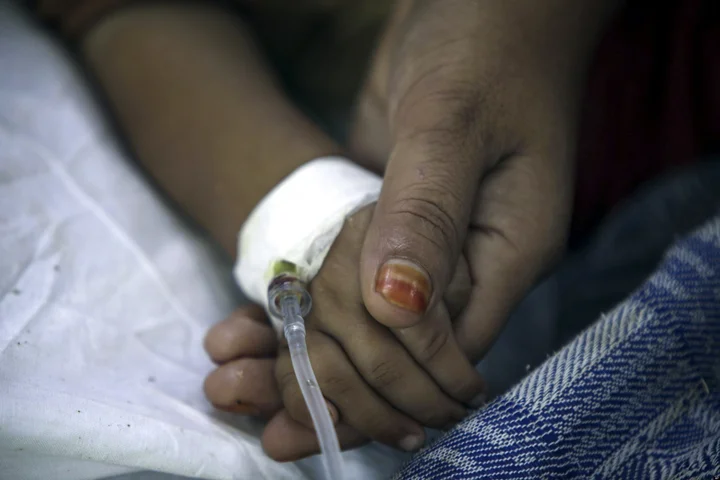
How can one believe in a loving God who allows the innocent to suffer? I've been asked this many times, and I've never been quick to answer. Subconsciously, I've probably asked much the same thing in the past.

While I may not frame the matter this way now, it remains a useful question, if only because it reveals a premise I am no longer willing to buy -- the illusion of individual autonomy.

The question reveals a keen ignorance regarding how intimately we are connected to one another -- both now and forever -- and more or less ignores the extreme freedom that the God appears to insist upon in creation. Those phenomena, together, provide a clue about why all this suffering isn't exactly God's doing.

Sooner than later, we'll want to puzzle over the God's curious insistence on the radical freedom of creation -- its inhabitants and the volatile earth itself; but for now, let's attend to the business of our intimate connection with one another and to the suffering caused by human failure.

I daresay that if the innocent suffer they do so because one of us -- you or me or some other thug -- now or in the past has set their pain in motion. If the innocent continue to suffer they do so because we have yet to take responsibility for their pain; we have yet to take sufficient responsibility for their relief.

Our failure to appreciate the degree of our own responsibility enables our famous disinterest in those who suffer, allows us a continuing, dim-witted, and blithe condemnation of those in pain or in poverty. We suspect that something has caused their situation, but our failure to see our own hands in the mess leaves us thinking those suffering are somehow to blame. We shake our heads as we stand by or as we turn away, feeling both helpless and -- assuming that we're not completely dead yet -- a little culpable.

That faintest whiff of our own culpability is subtle evidence that there may be hope for us yet.

In The Brothers Karamazov, Dostoevsky's Father Zosimas manifests a keen sense of this culpability. "There is only one salvation for you," he says to his gathered brotherhood: "take yourself up, and make yourself responsible for all the sins of men. For indeed it is so, my friends, and the moment you make yourself sincerely responsible for everything and everyone, you will see at once that it is really so, that it is you who are guilty on behalf of all and for all."

And there is an even greater consequence that Zosimas would alert us to: "Whereas by shifting your own laziness and powerlessness onto others, you will end by sharing in Satan's pride and murmuring against God."

You might even join the grim chorus of those who cannot believe in a God who would allow such things.

In the midst of his own suffering unto death, the elder Zosimas makes clear his sense of this great mystery of our mutual complicity:

"Remember especially, that you cannot be the judge of anyone. For there can be no judge of a criminal on earth until the judge knows that he, too, is a criminal, exactly the same as the one who stands before him, and that he is perhaps most guilty of all for the crime of the one standing before him. When he understands this, then he will be able to judge. However mad that may seem, it is true. For if I myself were righteous, perhaps there would be no criminal standing before me now."

In his book about the life and witness of his own spiritual father, Saint Silouan the Athonite, Archimandrite Sophrony, a modern-day ascetic of the Holy Mountain, further recovers for us this ancient understanding when he writes:

"Sin is committed first of all in the secret depths of the human spirit but its consequences involve the individual as a whole. ...Sin will, inevitably, pass beyond the boundaries of the sinner's individual life, to burden all humanity and thus affect the fate of the whole world. The sin of our forefather Adam was not the only sin of cosmic significance. Every sin, manifest or secret, committed by each one of us affects the rest of the universe."

My time with the fathers and mothers of the Church has made clear to me the truth that my own sin is not only about me. The general consensus would have it that your sin is not only about you either. Every choice that separates us from communion with God, and every decision that clouds our awareness of His presence, or erodes our relationships with one another, has a profound and expanding effect -- as the proverbial ripples in a pool.

That profound effect is to give us precisely what, by so choosing, we prefer over communion with God, what we prefer over our cultivating an awareness of His presence, and over our having healthy relationships with one another -- namely, ourselves alone.

Ourselves alone, it turns out, is a circumstance that must finally be appreciated as the antithesis of our becoming human persons. The very notion of the Holy Trinity (in Whose image we are made) should lead us to suspect that personhood requires relationship, that genuine personhood depends upon it.

My hope for healing, therefore, lies in my becoming more of a person, and more intimately connected to others. To succeed as we are called to succeed, we must all come to share this hope.

Satan himself (should we say, rather, itself?) proves an exemplary case in point. In Satan, we have a figure of one who has doggedly opted for isolation, for nonbeing, and for acute (albeit a comically moot) independence. Except for the Book of Job -- another perplexing study in affliction -- we do not find much about Satan in the scriptures. A good bit of our "Satan" has come to us by way of Milton's epic poem, Paradise Lost, rather than from Scripture. That isn't to say the Miltonic construction isn't useful to our thinking; Milton took his theology seriously. One revealing passage occurs in Book IV, where Satan speaks thus:

"So farewell, hope; and with hope farewell, fear; Farewell, remorse! all good to me is lost; Evil, be thou my good; by thee at least Divided empire with Heaven's King I hold, By thee, and more than half perhaps will reign; As Man ere long, and this new world, shall know."

With a bit of dramatic irony, Milton offers up a Satan who -- even in the midst of his strenuous denial of God's authority -- fails to notice how his own moral economy (in which God's evil becomes Satan's good) nonetheless depends upon God's having established the prior economy in the first place.

With a keen sleight of the poetic hand, evil is revealed as merely a denial of the good, an absence of the good, and nothing of itself -- nothing, really, beyond spiteful, infernal response.

Early in the 7th Century, the beloved Saint Isaac had already come to a comparable conclusion concerning the figure of Satan, and also came to understand the ontological status of sin, of Gehenna, and of death as similarly vexed:

"Sin, Gehenna, and death do not exist at all with God, for they are effects, not substances. Sin is the fruit of free will. There was a time when sin did not exist, and there will be a time when it will not exist. Gehenna is the fruit of sin. At some point in time it had a beginning, but its end is not known. Death, however, is a dispensation of the wisdom of the Creator. It will rule only a short time over nature; then it will be totally abolished. Satan's name derives from voluntary turning aside from the truth; it is not an indication that he exists as such naturally."

In his translation of the above, Sebastian Brock puts it even more plainly: "'Satan' is a name denoting the deviation of the human will from truth; it is not the designation of a natural being."

One might say further that 'Satan' is not the name of natural being, period.

It is the name for that which rejects being, that which is satisfied to become aberration. It is necessarily the name for that which, turning away from the natural, the good, and the beautiful -- and away from the God whose communion gives life to all things -- has turned, instead, toward it's own isolation, severance, and death.

So much for Satan.

Writing in the 14th Century, Saint Gregory Palamás made a similar observation regarding the nature of evil: "It should be remembered that no evil thing is evil insofar as it exists, but insofar as it is turned aside from the activity appropriate of it, and thus from the end assigned to this activity."

As both Saint Isaac and Saint Gregory Palamás are eager to establish, while sin is to be understood as nothing of itself, it can be quite something in terms of its effects. Admittedly, our particular English noun, sin, can be misleading, given that, generally speaking, when we bother to put a name to a thing, we expect that thing to exist. The Greek precursor, amartía (literally, missing the mark), is a good deal more instructive for our apprehending the status of things; the Greek word's construction, beginning with that familiar a -- which is to say, beginning with not -- attends to sin's ontology, its originating energy. It is the great not, the infernal no to God's eternal yes. It is ever and always mistaken. Dissing the marker, it misses the mark. It is the failure -- the refusal -- of being, plain and simple.

Those of us who struggle with habitual sins -- and we know who we are -- are very likely to break our hearts over the business of turning away from those chronic mark-missings. Our problems with recurring sin, and the more general human problem of being enslaved by sin, is never solved simply by our rejecting that sin, no matter how many times we try, no matter how strenuously we struggle to reject it.

This is because merely rejecting sin -- that is, focusing on not sinning -- is finally just another species of infernal no. "Just say no" is an insufficient principle.

The strongest man or woman in the world is not nearly strong enough to triumph over his or her sin simply by saying no to it. What we need is the strength-giving grace occasioned by our saying yes to something else, by our saying yes, and yes, and yes--ceaselessly--to Someone else.

It is not finally our turning away from sin that frees us from sin's recurrence; rather it is the movement of our turning toward Christ--and the mystery of our continuing turn into Him--that puts sin behind us.

One other illustration comes to mind. Orthodox Christians generally observe three fasting seasons during the year besides Great Lent; many also observe most Wednesdays and Fridays as discrete days of fasting throughout the year. These are days when, for the most part, neither meat nor dairy foods are eaten. In any case, the tradition is keen to insist that fasting be accompanied by almsgiving. One forgoes expensive foods in favor of inexpensive food, and one is encouraged to share with the poor whatever money is saved by eating on the cheap. Not to put too fine a point on the matter, the tradition teaches us that a fast--or any manner of self-deprivation--that is not accompanied by good things done for others is understood to be "a Satanic fast."

Forgive my inserting a bit more poetry to bring home the point. This particular piece is one of a sort of playful, mostly serious series of poems having to do with word studies in New Testament Greek; in this case the word is metánoia.

Repentance, to be sure,
but of a species far
less likely to oblige
sheepish repetition.

Repentance, you'll observe
glibly bears the bent
of thought revisited,
and mind's familiar stamp

--a quaint, half-hearted
doubleness that couples
all compunction with a pledge
of recurrent screw-up.

The heart's metánoia,
on the other hand, turns
without regret, turns not
so much away, as toward,

as if the slow pilgrim
has been surprised to find
that sin is not so bad
as it is a waste of time.

The good, on the other hand, is what actually exists; our long and continuing tradition tells us that all that is worthwhile is good, and all that is good is worthwhile. Moreover, all that partakes of the good is by good's efficacious agency brought into existence, and is by that selfsame agency kept there.

Regardless of our situations, we are inevitably partaking of something or other at every moment. The catch is that we will either partake of what is, or we will partake of the absence of what is. We partake either of life (all that has true being by way of its connection to God) or of death (all that has opted to sever that connection).

As we all must have guessed by now, we actually are what we eat.


Follow Scott Cairns on Twitter: www.twitter.com/ScottCairnsPoet

How can one believe in a loving God who allows the innocent to suffer? I've been asked this many times, and I've never been quick to answer. Subconsciously, I've probably asked much the same thing i...
 
 
  • Comments
  • 681
  • Pending Comments
  • 0
  • View FAQ
Comments are closed for this entry
View All
Favorites
Bloggers
Recency  | 
Popularity
Page: 1 2 3 4 5  Next ›  Last »  (12 total)
09:58 AM on 09/16/2010
From the Buddhist perspective, sentient beings themselves are responsible for their own suffering, operating, as they do, out of ignorance first and foremost. We create the causes and conditions for either our own suffering or our own happiness. When you destroy ignorance at it's root, you destroy karma which perpetuates one's suffering in the world.

As Buddhists don't believe in a creator God, it is only ourselves who are responsible for our suffering.
This user has chosen to opt out of the Badges program
09:44 AM on 09/16/2010
The question should not be, "How can one believe in a loving God who allows the innocent to suffer?" Instead, how can so called "Christians", "Jews", "Muslims", etc. call themselves what they are and let human suffering occur.

"A religion that takes no account of practical affairs and does not help to solve them is no religion."
- Mohandas Gandhi


"I like your Christ, I do not like your Christians. Your Christians are so unlike your Christ."
- Mohandas Gandhi
12:15 PM on 09/14/2010
There is plenty of human suffering that has nothing to do with fellow human beings, i.e. natural disasters and epidemics. Mr Cairns appears to be using the Pontius Pilate defense by washing God's hands of this. If there is a God and He is indeed as all powerful as He is claimed to be, then He bears a good deal of responsiblility for human suffering.
nanjemoy
first, check your satire-o-meter.
05:04 PM on 09/13/2010
"You might even join the grim chorus of those who cannot believe in a God who would allow such things."

We are told that (1) god created the universe, (2) with full foreknowledge of what form it would take, and (3) with full power to create it any way he desired.

This is a simple equation. God is to blame. The argument that it does not implicate god ultimately, and to the last degree, is partisan sophistry.

If god granted us "free will" then he clearly did grant absolute free will. But he could have. And if he is okay with limiting free will some ways, why not others? He could have made the consequences of evil against others as plain to our senses as burning fire on our skin. He could have made our minds as unable to conceive of a lie as to conceive of a language never uttered. He could have made sex only appealing with one other person. Our bodies could have been built to heal from any assault. Or he could have made possessions touched by another smell despicable to us.

There are billions of things god could have done to make evil not in the world. He saw it all coming - so the story goes. But he didn't.

No. those who believe in an omniscient and omnipotent god are in a trap. God leaves his children in a cage with a tiger. His defenders blame the clock for its error, ignoring the clockmaker.
photo
HUFFPOST SUPER USER
rougebaisers
03:25 AM on 09/13/2010
All religions and politicians.
photo
JoeBlough
The Horror. . .The Horror. . .
04:24 PM on 09/12/2010
" God's curious insistence " - Which one? There are dozens available and they aren't all alike.
photo
HUFFPOST SUPER USER
realitytrumpsbull
two 'alves of coconut!
10:56 PM on 09/11/2010
A friend of mine once told me: "Into every life, some rain must fall." Well, I say, that might be true, but if you're SMART, and don't waste the entire rainstorm writhing and wailing and wallowing in human suffering, and instead, you set up your tent, to keep the rain off your head, you'll sleep a lot drier, kind of under the heading that 'the lord helps them, that help themselves', not in the context of helping yourself to other people's personal property under cover of darkness, that's what video surveillance is for, to prevent that kind of thing, but rather helping yourself by striving to learn your way out of difficult situations, as with the tent example.


Now, there's coming up on 7 billion people out there, and, most have a dry place to sleep, and something to eat. But, many do not. Many are even illiterate, and couldn't read a camping manual if you put it in front of em. But, if you drew pictograms, and tried to make some canvas available, somehow, they might do OK. But, unfortunately, resources aren't sufficient to build hotels for everyone. So, people are still going to have to figure out how to make some of their own arrangements, here and there.  Luckily, there's China, and they're past masters at mass production, now, and if other countries worked with them to make raw materials like cotton available, maybe there'd be more of that canvas. Progress, baby!
researcher
researcher
09:50 PM on 09/11/2010
Ignorance is the cause of all suffering.

The Buddha realized that over 2500 years ago.

Few know what the Buddha realized.

Most confuse symptoms of suffering with its origin.

The origin of all suffering is ignorance.

Most Buddhists will tell you that attachment, grasping, and craving are the origin of suffering. They confuse symptoms with origin or root cause.

Attachment, grasping, craving are symptoms of ignorance. I.e. unawareness.

Some will state that desire is the origin of suffering.

It is misguided desire that causes much suffering and it is a symptom of ignorance.

Most Buddhists on here will challenge this; watch and see.

Even rebirth is a symptom of ignorance. Even that suffering we appear to have no control over; if we are reborn it is due to our ignorance/unawareness of reality. So we come back for more joy and suffering. I.e. drama drama drama.

A synonym for ignorance is unawareness.

Human life is a journey of greater and greater awareness of reality.

Now ask yourself what is the meaning and purposes of that ignorance and you will have discovered one of the greatest of mysteries of life.

The Buddhists won’t ask that question because their Buddha did not tell them so they don’t ask. That is the downfall of following a master. It has limitations but also can have great benefits. I.e. a path to awakening.
08:52 PM on 09/13/2010
The purpose of ignorance is to perpetuate the creation process.
09:47 AM on 09/16/2010
I agree with a great deal of what you're posting. I don't think many Buddhists would dispute your statement that ignorance is the root cause of all suffering. It is one of the three poisons (ignorance, attachment, aversion) but holds the central place in being the root cause of suffering.

Ignorance is about misapprehending the true nature of the self and phenomena, which is their lack of inherent existence. Self and phenomena are perceived by us to exist from their own side when in fact, they do not. The antidote to ignorance, therefore, comes down to a non-conceptual realization of emptiness or dependent arising.

To ask what the "purpose" of ignorance is seems to imply that it serves a useful function? I don't think ignorance has a purpose, but rather, is a state of mind that endlessly perpetuates suffering. As all beings wish to be free of suffering, ignorance is the central roadblock to finding a lasting happiness.
10:51 AM on 09/11/2010
The author can't even make a decent start at establishing his point (which is doomed to failure in any case). He appears to be unaware of most human suffering, as he states:

"I daresay that if the innocent suffer they do so because one of us -- you or me or some other thug -- now or in the past has set their pain in motion."

Apparently earthquakes and tsunamis don't count. Nor malaria, smallpox, cancer, etc. For some fresh material to supply you with horrific nightmares, look up "harlequin syndrome".

That's not "us" at work. If you believe in a Creator God, that's God at work, and no way around it.
photo
Scott Cairns
Poet and Essayist
09:09 PM on 09/11/2010
Have one more look at the 4th paragraph, eh? Good luck.
researcher
researcher
12:17 AM on 09/12/2010
"sooner than later, we'll want to puzzle over the God's curious insistence on the radical freedom of creation -- its inhabitants and the volatile earth itself; but for now, let's attend to the business of our intimate connection with one another and to the suffering caused by human failure."

the culprit for human failure is always unawareness.

we were not created perfect but innocent of our oneness with all.

the only way creation can occur is that we are not created perfectly aware.

if we were were perfectly aware that would not be creation but duplication and infinite cannot be duplicated. creation must be relative. a relative world is a world of living forms that lack perfect awareness.

the underlying reality of a relative world is unawareness.

unawareness of what?

our perfection within infinite.

the world paradigm is one of culpability but the culprit is always our unawareness of our reality within the mind of oneness.

now the human ego takes to guilt and culpability like a duck takes to water. it is self confirmatory ideation to feel guility and be culpable.

this need for guilt and culpability is what makes us so judgemental towards ourselves and others.

the great masters saw this human ignorance and this is why they showed such compassion.

who among us had compassion for those that flew through the twin towers nine years ago.

they were perfect example of human unawareness. to call them evil misses much of advanced spiritual teachings.
05:37 PM on 09/12/2010
4th paragraph doesn't begin to excuse the omission. "curious insistence"??? "radical freedom"???

Even if we were to grant that it does, and that the author's concern is "suffering caused by human failure", the problem remains that "if the innocent suffer they do so because one of us -- you or me or some other thug -- now or in the past has set their pain in motion" ...is still a categorical statement, mis-identifying a universal cause, without qualification.
blogisti
Approved Knowledge Only
09:34 PM on 09/10/2010
How many times does God have to be "missing in action" for you to know he's not there? Go back to the Garden of Eden and start there. That's one. I don't know if you can count to a billion but you may have to.
photo
HUFFPOST SUPER USER
h1ren
I am ghostwriting my micro-bio...
04:07 PM on 09/10/2010
Us humans...
photo
HUFFPOST SUPER USER
MisteRational
04:15 PM on 09/09/2010
It is all a matter of balance. Light, dark, pleasure, pain, joy,suffering. you cannot have one without the other.To look for "who is to blame ?" is folly.
sure, some suffer at the hands of others, some are simply born in to irreversable suffering through no fault of theiri own perhaps due to illness or other factors as simple as matter of geography.

It appears the human mind is not capable of accepting the fact that all things in nature are simply that. the idea that, somehow, we should be exempted form the forces that are applied to all other living things is simply the arrogance of self awareness.
06:05 PM on 09/13/2010
The truth... One needs not look any further.

Fanned...
photo
HUFFPOST BLOGGER
rtgmath
There has got to be a better way!
11:34 PM on 09/08/2010
"Sin, Gehenna, and death do not exist at all with God, for they are effects, not substances. Sin is the fruit of free will. There was a time when sin did not exist, and there will be a time when it will not exist. Gehenna is the fruit of sin. At some point in time it had a beginning, but its end is not known. Death, however, is a dispensation of the wisdom of the Creator. It will rule only a short time over nature; then it will be totally abolished."

In other words, "free will" will be totally abolished.

The question of who is to blame for human suffering is more complex than a discussion of sin. Consider the tsunami in the Indian Ocean several years past which claimed the life of a quarter million people. Or the floods in Pakistan affecting milliions. Earthquakes.

Those are not the results of sin. If "anyone" has control over such, it must be God. And God either controls nature, or He does not, or He does so selectively.

I agree - our sins affect others directly and indirectly. I agree - we must not simply "blame the victim".

But suffering is not about sin alone. Remember that God claims to "create calamity" (Isaiah 45:7). God Himself lays claim to the creation of human suffering in His declaration of His power.

Everyone, including God, shares the blame for Human Suffering. As humans, we must try to alleviate it, even when God obviously causes
photo
Scott Cairns
Poet and Essayist
03:11 PM on 09/09/2010
Just that particular "fruit" of free will, according to Saint Isaak, is to be abolished. In wisdom, one trusts, our will may come to manifest more efficacious fruit. Cheer up.
photo
somsoc
All humans are atheists at birth.
10:22 PM on 09/08/2010
More than any other single source of suffering, religion has been and continues to be the foundation of the same. It is a total fiction that religion is uplifting, it is h8, big0try and divisiveness to the core. The world would be a far far better place and a great deal more advanced, and less populated, but for religion.
photo
HUFFPOST SUPER USER
fjg
a jolly good fellow
12:22 AM on 09/09/2010
Godless government had 3 famous swings at hitting it out of the park back in the 20th century.

Cambodia, China and the USSR...none brought about a "heaven on earth."

Religion's influence in the world has waned since the Enlightenment, yet the killings go on...and on. Inhumanity, bigotry and violence are problems of mankind, not religion.
photo
HUFFPOST SUPER USER
Adam Warrenchak
it is only when you fear nothing that you can do a
02:07 AM on 09/09/2010
and what godfilled nation hit it out of the ball park?

im pretty sure theres still suffering everywhere.
HUFFPOST SUPER USER
gappedtoothgodwarrior
09:59 PM on 09/09/2010
France seems to do pretty well
As does all of Scandinavia

One doesn't need to ban religion, one simply needs to stop treating it with any sort of reverence.

This is why it would have been a better world had Flavius Claudius Julianus lived longer and Christianity had become just another faith in the large free market he was establishing prior to his death.
This user has chosen to opt out of the Badges program
06:53 PM on 09/08/2010
god obviously as he created pain.
photo
Scott Cairns
Poet and Essayist
07:02 PM on 09/08/2010
Oy.
photo
HUFFPOST SUPER USER
Adam Warrenchak
it is only when you fear nothing that you can do a
02:04 AM on 09/09/2010
wrong, pain is an evolutionary adaptation the body uses to signal we are in danger. if we didnt have pain we could leave our hand on a hot stove and burn it off without knowing. but because of EVOLUTION, we dont do that. its not got saying "hey, hes toching a stove, thats suppose to hurt" then BAMM, like magic you feel pain. take god out of the equation and then sit in the corner of a room for 15 minutes and come back with an explanation for HUMAN suffering. thank you for your cooperation.
10:38 AM on 09/11/2010
it's not simply a matter of either/or....we haven't worked out the mystery of life or the universe just yet...