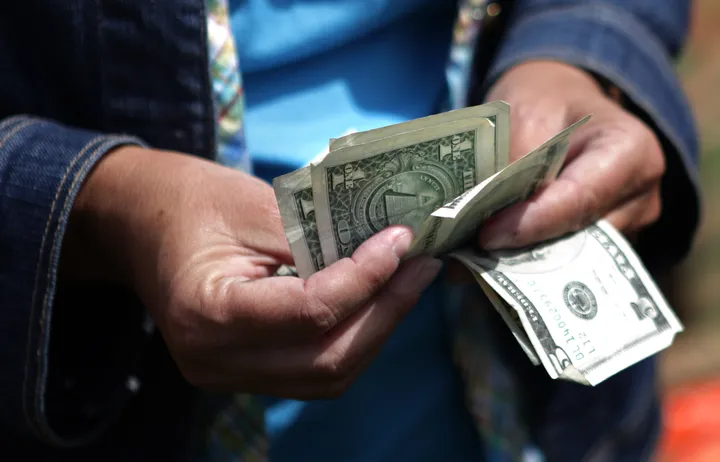
Q: While my company generates great total annual revenues, we often find ourselves in month-to-month cash flow crunches. What tools and strategies can I employ to bridge cash flow gaps and create a more steady cash flow?
--Laura, North Dakota
The following answers are provided by the Young Entrepreneur Council, an advocacy group founded by serial entrepreneur Scott Gerber that works to take action against youth unemployment by teaching young people how to build successful companies. The council's members include Generation Y entrepreneurs and experts in a variety of fields.
A: Offer Discounts For Pre-Payment
You'd be surprised how many of your customers might be willing to pre-pay for your services or products if you offer a nominal 2-5% discount. You can also use any number of invoice factoring services, who will buy your unpaid customer invoices at a discount of face value, or even better get a line of credit from your bank secured by receivables or company assets.
--Matt Mickiewicz (
), co-founder of
A: Are your growing pains self-inflicted?
The fact that you have "great total annual revenues" but sometimes struggle with monthly cash flow leads me to believe your fiscal priorities may need to be reexamined. Perhaps you are simply spending too aggressively and trying to grow too fast. Identify your overall trends (there should be some consistency) and challenge your greatest expenses to see what you can outsource on a need-to basis.
--Kent Healy (
), founder of
DontGetBurnedBlog.com
A: Focus on Revenue Generating Activities
The largest problem entrepreneurs face is the pull between revenue generating and "brand building" activities which do not generate in steady cash flow.To bridge cash flow gaps, focus on your top 3 revenue generators and put your "brand building" on hold.Focus on what is actually driving new business and what has worked!Create products that are priced to sell, rather then selling high priced items
--Kris Ruby (
), founder of
A: Try to get a line of credit from your bank
If you've been in business for a while and are growing revenue year over year, then ask your bank for a line of credit. This can be an effective way of bridging your cash flow in cyclical businesses, or businesses where there is large short-term investment happening. You'll be surprised how easy getting a line of credit can be--if your business is a few years old and has been growing.
--Eric Bahn (
), founder of
A: Create a Continuity Program
Building a product or service that has recurring monthly income that automatically bills the customer is the holy grail of cashflow; the meter is always running. Deliver value on a monthly basis and lock in your consumer at a lower rate. Think how easy financial projections are for a "book of the month club" or a property manager who has year long contracts.
--Matt Wilson (
), co-founder of
A: Learn to save for a rainy day
If you can't get a line of credit (need 2 years tax returns with profits) from the bank to allow you to dip and pay back when times are good, you must have a month to month budget based on forecasting revenue vs expenses by using past numbers to form the budget. In the good times, you must put away more money instead of distributing it as profits. This will be used during the bad months and take away cash flow problems.
--Michael Sinensky (
), co-founder of
A: 0% Interest Is Your Best Friend
Many credit card companies offer limited time specials such as 0% interest for 3-18 months. In addition, these credit cards enable you to consolidate all of your existing debt. But be forewarned, you MUST pay back the debt before the promo rate ends or else you will face massive balloon payments. After you pay back the balance, cancel the card, then repeat this process again when needed.
--Scott Gerber (
), founder of
Our 2024 Coverage Needs You
It's Another Trump-Biden Showdown — And We Need Your Help
The Future Of Democracy Is At Stake
Our 2024 Coverage Needs You
Your Loyalty Means The World To Us
As Americans head to the polls in 2024, the very future of our country is at stake. At HuffPost, we believe that a free press is critical to creating well-informed voters. That's why our journalism is free for everyone, even though other newsrooms retreat behind expensive paywalls.
Our journalists will continue to cover the twists and turns during this historic presidential election. With your help, we'll bring you hard-hitting investigations, well-researched analysis and timely takes you can't find elsewhere. Reporting in this current political climate is a responsibility we do not take lightly, and we thank you for your support.
Contribute as little as $2 to keep our news free for all.
Can't afford to donate? Support HuffPost by creating a free account and log in while you read.
The 2024 election is heating up, and women's rights, health care, voting rights, and the very future of democracy are all at stake. Donald Trump will face Joe Biden in the most consequential vote of our time. And HuffPost will be there, covering every twist and turn. America's future hangs in the balance. Would you consider contributing to support our journalism and keep it free for all during this critical season?
HuffPost believes news should be accessible to everyone, regardless of their ability to pay for it. We rely on readers like you to help fund our work. Any contribution you can make — even as little as $2 — goes directly toward supporting the impactful journalism that we will continue to produce this year. Thank you for being part of our story.
Can't afford to donate? Support HuffPost by creating a free account and log in while you read.
It's official: Donald Trump will face Joe Biden this fall in the presidential election. As we face the most consequential presidential election of our time, HuffPost is committed to bringing you up-to-date, accurate news about the 2024 race. While other outlets have retreated behind paywalls, you can trust our news will stay free.
But we can't do it without your help. Reader funding is one of the key ways we support our newsroom. Would you consider making a donation to help fund our news during this critical time? Your contributions are vital to supporting a free press.
Contribute as little as $2 to keep our journalism free and accessible to all.
Can't afford to donate? Support HuffPost by creating a free account and log in while you read.
As Americans head to the polls in 2024, the very future of our country is at stake. At HuffPost, we believe that a free press is critical to creating well-informed voters. That's why our journalism is free for everyone, even though other newsrooms retreat behind expensive paywalls.
Our journalists will continue to cover the twists and turns during this historic presidential election. With your help, we'll bring you hard-hitting investigations, well-researched analysis and timely takes you can't find elsewhere. Reporting in this current political climate is a responsibility we do not take lightly, and we thank you for your support.
Contribute as little as $2 to keep our news free for all.
Can't afford to donate? Support HuffPost by creating a free account and log in while you read.
Dear HuffPost Reader
Thank you for your past contribution to HuffPost. We are sincerely grateful for readers like you who help us ensure that we can keep our journalism free for everyone.
The stakes are high this year, and our 2024 coverage could use continued support. Would you consider becoming a regular HuffPost contributor?
Dear HuffPost Reader
Thank you for your past contribution to HuffPost. We are sincerely grateful for readers like you who help us ensure that we can keep our journalism free for everyone.
The stakes are high this year, and our 2024 coverage could use continued support. If circumstances have changed since you last contributed, we hope you'll consider contributing to HuffPost once more.
Already contributed? Log in to hide these messages.