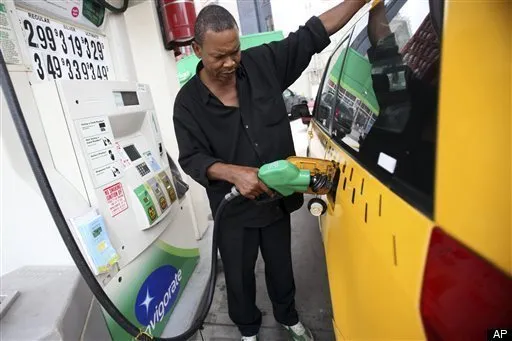
It was only a year ago when the price of a barrel of oil surged above $140. Indeed, amid charges of oil price manipulation by greedy speculators, several leading contenders for the 2008 U.S. presidential race seized on the escalating petroleum price as a major campaign issue. Remember when senators Hillary Clinton and John McCain offered to eliminate Federal gas taxes as an inducement to desperate voters?
The Global Economic Crisis, emerging with full fury after the near collapse of the world's financial system last fall, brought about an even more spectacular collapse in oil prices. Recently, amid reduced demand sparked by a synchronized global recession, the price of a barrel of black crude descended below $40 a barrel, sending OPEC into fits of despair.
Now, however, the price of oil is once again moving upward. In part, suggest analysts, this is due to a perception that the worst of the economic free fall is behind us. Whether those perceptions are valid or not (and I don't believe they are), psychology is an important factor is establishing commodity valuation. However, I believe there are other forces at work, or which may intervene in the future, that could radically escalate the price of hydro-carbon energy irrespective of recessionary constraints on consumption. Here, briefly, are factors to consider in anticipating any future oil shock:
1. China hedging on oil. Apparently, the Chinese are shifting investments allocated from their sovereign wealth fund from U.S. Treasury bills to commodities, including oil. With a sharp drop in exports only partially redressed by a stimulus-funded drive at boosting domestic consumption, it appears that China is building up an oil reserve in anticipation that this commodity will eventually rise greatly in price, simultaneously with the future depreciation of the American dollar. Should China's oil hoarding increase in tempo, a significant upside in the price of petroleum will become highly probable.
2. Political instability in the Persian Gulf. The political upheaval occurring in Iran in the aftermath of a presidential election widely perceived by the Iranian people to have been rigged has an unpredictable dynamic. However, most scenarios, either involving prolonged violence or the perpetuation of a radical regime committed to acquiring nuclear weapons, will likely facilitate events that will impact the supply of oil from the most energy-intensive real estate on the planet. Even the mere perception that things might go bad will be enough to drive up the price of oil. Actual events, including internal and external violence, will impose a significantly higher cost penalty.
3. A terrorist attack involving a strategic target related to the oil industry. Al-Qaeda is well aware of the vulnerability of the global economy, at a time of profound financial and economic crisis, to a targeted attack on a vital element related to the oil industry. Only one single but highly significant target would be enough to send the price of oil to a much higher level. Unfortunately, Al-Qaeda and its allies have many choices to select from a menu of targets. In terms of extraction, transportation to consumers as well as refining and storage infrastructure, there are literally thousands of targets across the globe, any one of which would prove impactful to the stability of oil prices. It would be unduly optimistic to assume that Al-Qaeda is not focussed on such an objective, or that security forces are so effective that they can protect every possible target.
The fall in oil prices from their record highs of last summer amounts to, in effect, a tangible economic stimulus program. Unlike government stimulus spending programs, the fall in oil prices required no deficits, and meant an immediate infusion of money into the pockets of private and corporate consumers. Conversely, the return to higher energy prices at a time in which the world is experiencing its worst economic crisis since the Great Depression of the 1930s would, in terms of impact, be a major tax penalty being imposed on any attempt at a sustained recovery. In essence, the entire global economy is being held hostage to the volatile pricing forces of an essential commodity. Clearly, when it comes to oil price levels, the market does indeed rule.
Follow Sheldon Filger on Twitter: www.twitter.com/EconomicCrisis
Want to reply to a comment? Hint: Click "Reply" at the bottom of the comment; after being approved your comment will appear directly underneath the comment you replied to
Walk. Don't drive.
Ans. NO!
But wouldn't T. Booger Picker love it.
There is a glut of oil, even at current production levels. My husband and son are both in the oil business in different ways, and virtually every storage tank and tanker in the world is full, many sitting there hoping that prices will surge and they can make a killing. There are months and months of total world need just in storage and production levels could be increased dramatically in days.
Gasoline stores here in the United States are higher than they have been in years, yet we saw this surge in oil prices which was all speculation and improper. Congress needs to make trading more transparent so we can at least identify the thieves who are behind the speculation.
A few percent more production capacity over demand during a time of severe economic downturn is not "a glut". As for the "storage"... there are a couple of months worth of oil in the pipeline at all times, but they are required anyway to assure that refineries can operate continuously. Once part of that system "runs dry", there would be significant shortages and mile high prices at the pump.
At the same time low oil prices are suppressing drilling activity. There simply is no money in deep offshore projects right now, which has many operators reduce their expenses on opening up new reservoirs.
Finally, gasoline inventories have no effect on the market's price discovery mechanism. I would discount that for what it is: idle analyst talk, just the same as "Nigerian terrorists".
Legalize hemp thats the way to have clean farming and clean industry and if diesel is that expensive it should be hemp diesel.
yes gas prices will eventually surge
lately it's been going up and down
but..., soon..., it'll just go up
right now world oil production is on a plateau
when we end up in terminal decline, then's when the prices rises, and rises, and rises
and makes $140 some odd barrel oil look like nothing
kewl
???? So because people have to pay a few bucks left at the pump the US economy will be stimulated???? How so? We gave some $150 billion away last year as a stimulus program. It didn't do a thing (just as expected), worst case it increased our trade deficit by another couple ten billion. I would really like to heat ONE logical reason why this will do any better.
A stimulus program is meant to create long term effects, e.g.by creating jobs in new technologies, by improving transportation or communications infrastructure, by improving quality of life or people's health. Paying less at the pump does none of that.
and the best part is that obama cares most about sovel ready projects
he wants to keep construction workers employed more then engineers
hhahahhahhaa
Employment among engineers (at least the ones who are any good) is not a problem. Never has been.
:-)
Low oil prices kill the oil and alternative energy sectors, which means lower total investment and less jobs. The oil sector also supports the steel sector to a large extent, as well as the natural gas and the coal sector (which is also supported by the steel sector, and which also supports the railroad sector). There is also a strong oil equipment manufacturing sector in the US, most of it producing for export. Higher oil prices also supports energy producing economies like Russia, and the last thing we need is worldwide political, social, and economic instability from such countries that will put our country at further risk.
ExxonMobil made a record profit of 45 billion. They dedicated 26 billion of it to new projects - so ungrateful Americans can continue their self-defeating, crybaby antics for cheap energy.
26 billion represents a large number of US jobs. They can afford to keep going, but a lot of oil companies have "turtled down", which means less supply and higher prices in the future.
Yes, they will due to Goldman Sachs and the other swindlers at Morgan Stanley and others due to Obama refusing to reform and regulate the Commodities and Futures Market and end this criminal manipulation..!
You are so correct. Barclays, Goldman Sachs, and J. P. Morgan, and some soverign funds were largely behind last year's thieving. The Congress and Obama have to act to regulate and to make the trading more transparent to prevent this manipulation in oil and other commodities.
How can we run a country with Oil prices subject to such criminality and treasonous manipulation..?
I think you're correct about surging oil prices. The sudden drop in gas/oil prices was due in fact to the beginnings of the global economic meltdown. With decreasing demand, and a large number of oil supply available, prices were going to drop. Now that the production of oil is down, if demand for oil were to suddenly increase, the prices of oil would increase dramatically. An if there's major hedging, prices will increase even more greatly. So I believe this scenario of spiking oil prices is highly likely now or in the soon future.
Jermaine Holmes
http://www.bizness-geek.com
You must be logged in to comment. Log in or connect with