
A year ago, Haiti was struck with one of the worst earthquakes in history. The 7.0 magnitude quake killed an estimated 212,000 people and tore apart a country already in shambles. People around the world quickly responded using social media and their mobile phones to raise money, spread the word and activate volunteers on the ground. The devastation continues to break records in terms of donations, with over 1.4 billion raised over one year.
According to a survey by the Chronicle of Philanthropy of 60 major relief organizations, only 38 percent of that money has been spent to provide recovery and rebuilding aid. One of the non-profits that has been on the ground for the past year is Architecture For Humanity.
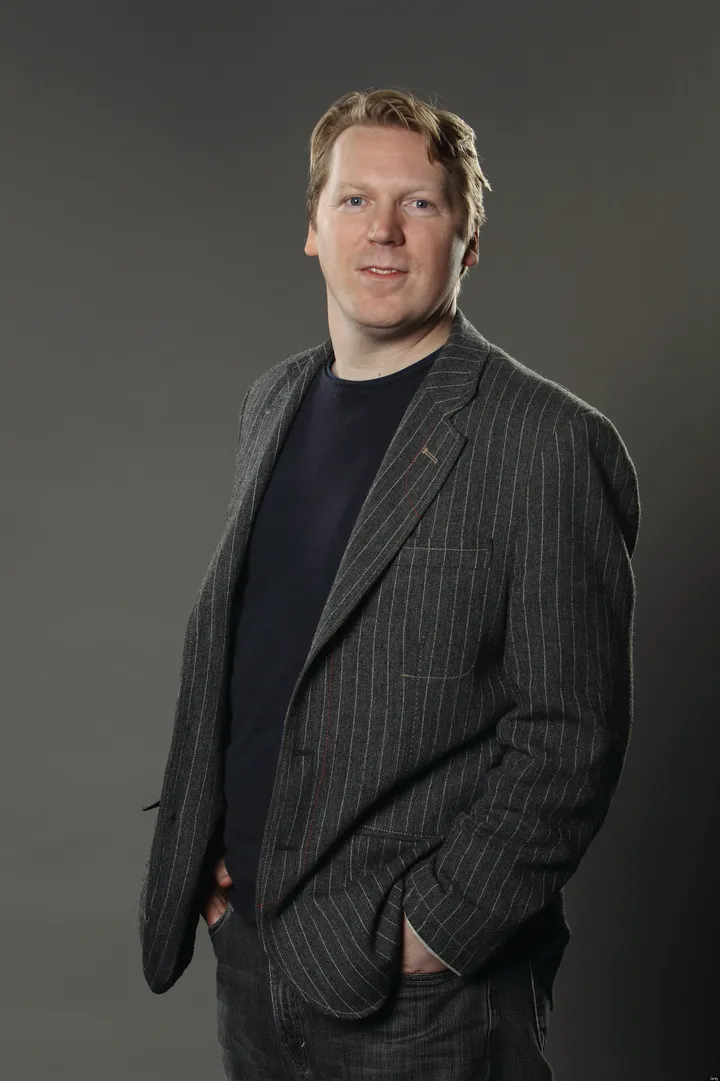
Over the past 12 years, they have become experts at literally rebuilding communities in need. On today's "The Inspired Nation", I talk to co-founder Cameron Sinclair about how he grew AFH to what it is today, the current state of Haiti, what countries are still in need, and ultimately what options there are for all of us to help too.
Lets first talk about how Architecture for Humanity got started and what's it all about:
Architecture for Humanity provides architectural and construction services to communities in need. We've worked in 38 countries building schools, health clinics, community structures and low-income housing for those who have suffered from natural disasters or face systemic issues of poverty. We channel building expertise and funding to meaningful projects that make a difference locally. On the Gulf coast we were involved in the building and repair of over 700 homes and we are completing a series of youth sports facilities across sub-Saharan Africa. On a national level we have over 70 city based chapters that deal with a range of issues that include homelessness, public space and community gardens.
I didn't choose this job, it chose me. I grew up in tough neighborhoods in South and East London and even as a child was fascinated by the way poor environments affected communities. Lack of respect, violence and social unrest was common and from this place an idea to become an architect of change emerged. By the time I graduated this thought became my philosophy. I couldn't find anywhere to practice this sort of socially responsible design so with Kate Stohr, a writer on urban issues and documentary producer, I co-founded the Architecture for Humanity. The rest is history.
How do you prioritize what issues and locations need the most help?
We need to be asked. We don't impose our solutions or ideas on a community it starts with creating a strong relationship. This means partnering with a strong community group, the potential of funding in place and a desire by the community to improve the building standards. Due to the scale of our organization we still we have to say no to 60 percent of the requests.
Once we've committed to a project we begin a community led development process. Our architects and designers don't fly in on weekend trips, they live in the villages and towns from 9 to 18 months. They become part of the community and begin to understand the nuances of how to make the biggest impact with the budget they have. Recently we were asked to build a series of schools in a country emerging out of a bloody civil conflict. By listening to the community we realized they didn't need schools, they needed a school system, complete with teachers, curriculum and facility support. It was obvious to our team that the first thing that was needed was not a classroom but a teacher training facility and staff housing near existing remote schools.
Describe a moment in your work that defines why you do what you do.
To understand the impact of this moment you have to understand that I'm English. We tend to be stoic, I'm not even sure many of us have tear ducts. It was the anniversary of the Tsunami and I happened to be sleeping on the beach (no fancy hotels for us). I woke up early and ended up meeting a man in his '60s sitting by the water. He began talking and told how he lost 17 members of his family and it was just his daughter and his mother in law left. I asked him how was holding up and he replied very calmly "we're fine but of all people, my mother in law?" We looked at each other and started laughing. Then for the next hour we drew in the sand how to build a house that included mother in law quarters (separated but with shared kitchen and bathroom). At the end I got up and he threw his arms around me. He hugged me really tight for almost 10 minutes. I didn't know what to do. Being English I just froze and stood there like a totem pole. In the awkwardness of the situation, I realized that for a whole year no one had really listened to this man and it was the simple things that mattered.
With so much bad going on in the world and do you keep people caring and part of the conversation?
The world has always been going bad. The late 13th century sucked and the 15th wasn't much better. Guess what? We are the most resilient species on the planet. We survive because we respond, we adapt and we find a way to persevere. It's easy to be negative but to come together and step up requires unwavering optimism and stubborn determination. There are no problems, there are opportunities that have yet to be seized.
It's not about checkbook giving, it's about developing a dialogue with your funders. People invest in you because they believe in what you do and want to be apart of the process. The most amazing group of donors we have now are not big companies or celebrities but hundreds of secondary school students who are raising money via http://www.studentsrebuild.org/ -- They are 50 percent of the way to reaching a 500,000 matching grant and part of our commitment is to bring them along the journey of rebuilding. Through video blogs, weekly diaries and links to latest drawings, our donors can become an active part of our team.
What was your immediate reaction when the earthquake happened a year ago and what was your immediate plan of action?
Honesty I was pissed. Really pissed. We were already in Haiti and working to develop youth sports facilities that doubled as emergency relief shelters in case of hurricane or other natural disaster. We spent a year trying scrape together funding, deal with land tenure and local capacity issues -- and we were too late.
After 24 hours I knew we had to act and we needed to go public very quickly. We usually develop an internal long-term reconstruction plan that acts as our guideline over the next four years. Communities don't need architects and engineers immediately, they need doctors and basic supplies. We're the last responders but it was important to have a plan in place and let people know we were committing to Haiti. I wrote my plan and instead of distributing it internally I put it on the Huffington Post and told people to steal it. Then we did exactly what we said and hoped people would fund us.
How have you seen things progress over the year?
Yes. This is our ninth post-disaster situation -- and this is the worst. Everything is fighting against the rebuilding effort yet local communities are still stepping up to the plate. Teachers are returning to makeshift schools, small businesses are emerging and people are investing in Haitian entrepreneurs instead of treating the earthquake as a business as usual. There are small moments of victory that don't get reported. The opening of a birthing clinic built by tent bound Haitians, structural reinforcements made to a refugee camp that saved hundreds of lives and the extreme patience of huge numbers of people waiting for food and water. These are not 'sexy' stories but it's the reality. Slow community focused progress is better than cheap media.
Describe the situation now, a year later.
Despite escalating violence, political instability, little sanitation (leading to spread of disease) and lack of rubble removal we've laid good foundations. We are on step seven of our 11 point plan. We are growing the capacity of local professionals and figuring ways to maximize workforce while upgrading construction standards. I am concerned by the lack of Haitian businesses being hired in the construction work and we are hoping that as many of the "big aid" organizations leave that funds will be channeled into the economic base of the country.
If we can create a climate where Haitians can lead the conversation and work alongside international partners under a common goal then progress with move in an exponential manner. I've been extremely encouraged by the desire to figure out the economic sustainability needed to recover and the need for transparency in aid.
Why is it important to continue getting the word out about Haiti?
There are two ways to look at this. As an optimist, solving the worlds toughest problems right on your doorstep is an incredible opportunity, or as a hawk, you understand that when people have nothing to live for, they have everything to die for. Either way we need to act.
What's next after Haiti?
For us it doesn't stop. We are staying in Haiti until we are redundant, which I estimate to be another three years. Additionally, our teams are also working in 15 other countries, including Chile, Pakistan and the United States. On Monday I'm running a workshop in Barcelona to develop and implement community facilities to prevent war in fragile states and in a few weeks we will launch a couple of projects around the world and hire more folks. Yes, we are hiring.
What's your ultimate goal with all of this?
To improve the living standards of everyone on the planet.
What inspires you to continue your work?
I have tens of thousands of people who inspire me. They are our clients and our designers. Together they can make magic happen.
Have you had any mentors or inspirations?
The two biggest influences in my life were Samuel Mockbee, who founded the Rural Studio in Alabama and my grandmother Kathleen. Both are no longer with us but I probably think about their lives' work at least once a week.
I'm heavily online and use social networks to communicate with supporters and designers around the world so I am really impressed by @corybooker - He almost makes me want to get into politics. Almost.
What's your favorite motto or quote you live by?
Quote (from my mum): There is nothing worse than being all mouth and no trousers.
Motto: There is no room for egos or logos. [In 12 years Architecture for Humanity has not put their name on a building]
Originally posted on CBSNews.com.
The Inspired Nation is a weekly series profiling people changing the world and inspiring all of us to do the same.