I flew from here to there last night. As sometimes happens in Business, I ran into somebody who is in business. We swapped a few observations for a while. After some time, I felt so appalled that I was forced to feign sleep. I think it was over St. Louis.
I should have known I was in some trouble when we were still on the ground in Los Angeles. The chief flight attendant had just announced that turkey wraps were available for $10 each to people in Coach. "Boy," he said. "Why don't they just charge an extra $10 for the ticket and give the things away for free?" I didn't know and told him so. "These guys who run the airlines are so stupid at that kind of little stuff. What makes you think we can trust them to service and fly airplanes with all these people on them?"
This violated the first rule of in-flight discourse: No talk about anything related to airplane malfunctions.
It developed that we had both been in the same business at one point. I asked him what he did now. "I sold my business a little while back for a small fortune," he said, indulging in the kind of bragging you get used to after a while. Not. "Now I'm an investor."
"You must be taking it on the chin," I said, possibly to get back at him for being so forthcoming about all that "small fortune" stuff. He allowed that he had been hurt, but was still investing. We then discussed a variety of issues relating to a number of business sectors. By the time we got over Nebraska, it was clear that this guy knew absolutely nothing. I'm not talking about insight here. I'm talking about events. Facts. Things that are happening. Mergers that took place and rocked the world. Companies that were no longer in business. Guys who had died. I'm not going to go into all of it. It was when he expressed surprise that you could download movies and watch them on your computer that I tuned him out.
Perhaps he's smart and informed in other things. He seemed up on politics. He did seem knowledgeable about Warren Buffett's less successful investments. He was reading an intelligent book, I saw, over which he fell asleep two or three times. Perhaps he's just one of those people who do nothing but watch CNBC and read soft economics and analysts' reports from firms that are now receiving bailouts. Maybe he knows a lot about cheese futures or something.
A few years ago there was a big debate about "Who owns the corporation" and all the wizards who know nothing at a very high level came to an agreement: It was the shareholders who owned the company. Not the employees who make the product, who work over years to build the value of the operation and live and die by its fate. Not the customers who use the stuff they make. No, it was guys like this one, who have a little bit of the enterprise and can unload it at any time without feeling a pinch.
Look at the paper. This is where that kind of thinking has led us.
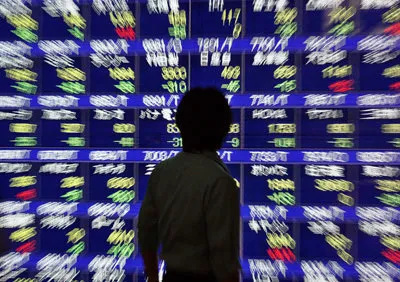
At this point I believe that Wall Street and our entire stockholder-centric culture is killing American business. What's good for investors is not always good for the companies and the workers who have to live in the system, not just feed off it after paying a small price for admission. Is it possible, that at some time in the future, the welfare of the companies we serve could be divorced from the fear, the greed, the feral hysteria of the securities marketplace?
Want to reply to a comment? Hint: Click "Reply" at the bottom of the comment; after being approved your comment will appear directly underneath the comment you replied to
Take an eye shade; put it on, get out your special ear phones; [the ones that drown out all sound]; put them on. Mr Bing, you got nothing out of the conversation. Why bother telling us about it?
It is true that longer-term employees have a stake in their companies--the contacts and connections built up, goodwill, etc--even if they don't own any stock. Maybe corporations should all offer some sort of ownership to employees, especially if you work there more than a year or 5. Then again, I suppose you would have to let them sell the stock if they wanted to. I think we are seeing that "Naked Capitalism" doesn't always work so well--it rewards greed and often, malfeasance.
We got off track somewhere. You are totally right. Capitalism and the Free Enterprise has now somehow come to mean shareholder instead of producer or entrepreneur. We are turning into a country of "service" industry beings, producing marketing ideas instead of products.
Where do we go? Good question. So many hurdles come to mind: How do we undo the idea that the only REAL reason to put together a start-up is so a larger mega company buys you out? When did having a small business become a liability when there was a Walmart coming to town? What happened to the dignity of labor and how did it morph into life in a cubicle?
I suppose some of our problems have come to pass because we've fostered a society that wants a bargain at any cost, (small stores are too expensive, shop BIG store...) but obviously we are now paying for all those cheap deals we got on credit!
By "society", I assume you mean "all human societies in human history". I challenge you to list the societies typified by consumers shopping for the worst bargain.
The banks must all burn baby burn. Thomas Jefferson warned us about this
Thomas Jefferson was a very complex person. He writes as if he expected to be read long after his death & his era had passed. He also wrote for who lived in his time. Puzzlng out what Pres Jefferson meant for his future audience requires thought, serious, sober, thought. Pres Jackson could burn with a passion; but deliberate & act in a cool disinterested way when he went about doing something which inflamed others with an unyielding, all consuming passion. Perhaps someone has seen & written of how he kept a passion alive. He may have kept the embers of a passion alive in a secret place or simply stored the fuel for a passion in a dry place away from the fire. He may have rekindled some passions only when he saw that the time was right.
As for the banks-they fell recently. All that remains of the pre-meltdown banks is rubble & dust. If banks are to be rebuilt, new materials & plans must be used. The rubble of banks is pea sized gravel, not anything like a usable, salvaged building block. How do you burn rocks & gravel?
This is a good article. . not taken for as much as possible until there is no more. Where employees are paid a decent wage ( some here take exception to my saying this, and ask "What is a decent wage?" answer: enough to live on.) Where employees are given health insurance and rewarded for effort. Compassionate Capitalism, Where jobs would be created where they are needed and all played by the same set of rules... where people thought about each other as people ... not as chumps.
I believe that what is now needed is a new concept... compassionate capitalism ... where corporations big and companies small value the employees and workers like they actually help make the profits. Where the consumer is also valued and nurished..
And yes, to answer my critics, individual responsibility does play a part in this new concept, but so does social responsibility.
Man is that dumb. You can't force people to be nice. Workers are free men that enter into contracts with employers. "Compassion" is irrelevant. Nobody is going to invest in a "compassionate" company that won't lay off employees when the situation demands. "Compassion" in business is for fools. Bankrupt fools.
You have the attitude of someone who's never had to work a "real" job.
Compassion (or at least consideration) is extremely important to the success of a company. I used to work for a company whose stated philosophy was "take care of the customers and employees and the business will take care of itself". It was highly profitable. So profitable, in fact, that it became the object of a hostile takeover. The new management tried to adopt more "business-savvy" practices. The result was low morale and (surprise) poor performance. Two years later (after the best employees left) the company was re-sold for a fraction of the original price. I've seen this pattern repeated numerous times.
The bottom line is that no company can survive long if they treat people like things. It's a concept that escapes a lot of MBA types. I find it ironic (and both amusing and tragic) that the people who value only power and money tend to destroy the very mechanisms that could deliver it.
>Workers are free men that enter into contracts with employers.
Technically true but irrelevant in practice. In the real world, the average worker below the top executive grades is not going to be able to negotiate a custom employment agreement with a company of more than 100 workers. Other than salary (and often that, too) it's pretty much a take-it-or-leave-it affair. To the corporation an employee is just another "part" to be obtained from the warehouse.
most of us are trying to feed our families and pay the bills... when the good paying jobs went overseas then we are left to compete for fast food, retail, service industry, jobs... the largest employer in the U.S. is Wal-Mart.. . average wage around seven fifty... it's hard to feed your kids on that. So we work two jobs if we are lucky and scrimp if we are not. We use the emergency room for medical needs and drive without insurance. And go to bed afraid every night.
Twenty years ago, I worked for an employee-owned company. The founder/CEO had 5% and employees had the rest. Employees were engaged and openly debated the best path for the future of the company. I thought that was the model for where American industry would go. It seemed so obvious at the time; after all, it was so "democratic". Twenty years later and all we have are mega-monster companies that are too big to fail, guided by multi-millionaires with golden parachutes whose only real qualifications are that they know the secret handshake. Maybe the new depression will help us figure it all out.
Sounds like an honest operation. I hope you are right about the depression. I hope things start to get manufactured closer to the consumer. Its not about buying the cheapest thing or geting it made the cheapest way. There is a cost in keeping our way of life going and progressing.
Where did it get so fcked up. Maybe it was when IBM almost went belly up, but you have to admit, a heck of alot of industrial production was shifted to China. It needs to come back.
When corporations became an entity....
Democracy is probably the worst possible way to make optimal decisions.
You missed the point entirely. The company was still guided by a Board of Directors, not majority vote of the employees. The difference was that the Board was elected by people who had a stake in the company. Compare that to a publicly-held company where the board is controlled by a combination of huge trusts managing other people's money and individual investors who come and go on a whim.
As to your point about making optimal decisions: how good have the decisions been by, say, Lehman Bros, Enron, Worldcom and GM? Some optimal.
You must be logged in to comment. Log in or connect with