iPhone app iPad app Android phone app Android tablet app More

Featuring fresh takes and real-time analysis from HuffPost's signature lineup of contributors
Stephen H. Dinan

Stephen H. Dinan

Posted: January 20, 2010 03:58 PM

Get Out of Bed With the Bankers, Mr. President

What's Your Reaction:

Mr. President,

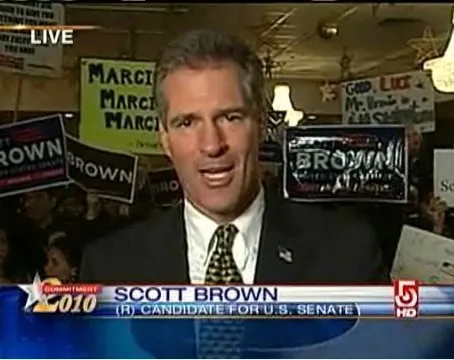
The signal from Massachusetts' special election is clear: a major course correction is required to move forward your agenda over the next three years.

The first order of business is to pour your heart and soul into being a clear, public champion of Main Street against the interests of Wall Street. I do not doubt that Main Street has always been your prime concern but Wall Street has an insidious way of maintaining its grip on power and money.

When you took office in the midst of a global financial meltdown, it was understandable and perhaps even necessary that you hired a coterie of the old economic guard to help you chart the course of action. However, the Summers and Geithners of the world may be very smart and likely quite convincing, but they are fundamentally a product of Wall Street, Goldman Sachs and the like. Their fundamental DNA is that of big-time bankers.

You may be the man who makes the final decisions. But the people who determine what information you pay attention to and therefore what course of action is even thinkable are your advisers. You cannot create meaningful, true economic reform while surrounded with the likes of your current economic team. They may be wonderful people on a personal level, hard-working and well-intentioned. But they are products of an old, broken, and fundamentally parasitic financial system. They will not be able to see the pathway forward and they will ensure your ongoing blindness. For true reform, you need economic innovators, people who have been studying what is fundamentally flawed about the U.S. economic system and what reforms can begin to put America back on track and to get the engine of real businesses to roar back to life.

I thus believe that the first and most important act of course correction is to thank your current economic team for their service during a year of financial emergency, release them all, and bring in a new team bristling with innovation, reform, and pioneering ideas. The less time spent on Wall Street, the better.

The brilliant economist Hazel Henderson pointed out in a radio interview I did with her that the financial sector is 20% of our current GDP and that a truly healthy economy should not have more than 10%. That is because the financial sector is largely a game of intermediaries who don't by themselves create products of value. A healthy financial sector greases the wheels of the real economy but an unhealthy one creates methods to siphon off a larger and larger share of the profits. An unhealthy financial sector is basically a parasite, taking nutrients in the form of money and undermining the health of the host. And that is what we have: a parasitic financial system that has come perilously close to killing the host.

Americans know that a $30,000/year teacher in Kansas is more valuable to our society than a middle-manager at Goldman Sachs who takes home $300,000 in bonuses. They also feel outraged that they are still unemployed while the bailed out banks are now paying outsize bonuses again. They sense that our system is rigged to allow Wall Street to profit off the backs of Main Street, all with the blessing of Washington, and that something very deep has to change.

It has to be clear that you are the champion of that deep, systemic change in the economic system or your presidency will fail.

I am no expert on the economy, but I have studied enough to know that there are plenty of forward thinking economists outside of the Wall Street club who can help you to rebuild the engine of innovation that is America. For your own understanding, try starting out with Ellen Brown's Web of Debt, a brilliant survey of American economic history and what is fundamentally flawed. It's an eye-opener. Or listen to Catherine Austin Fitts, a former assistant secretary for HUD who has detailed the "tape-worm" economy after her years on Wall Street and DC.

I'll give you examples of the kinds of reforms I think should to be on the table for your economic reform work to be real:

    Federal Reserve reform - America needs to take back its constitutional right to create money rather than borrow it from bankers at interest (who simply create it out of thin air anyways). You are a fan of Lincoln and I think his Greenbacks were one of his most important stances our country has ever taken against the banking cartels. The Greenbacks were what allowed us to rebuild after the devastation of the Civil War and we need to do something similar now. One of the few financially healthy states is North Dakota, which has its own bank, a model the U.S. should emulate
  1. Transaction tax in the stock market - Even a quarter of a cent tax on trades could generate billions for the American people and slow some of the arbitrage and day-trading that poisons the financial system. This tax would not be felt by Main Street Americans but only by the elite who squeeze money out of the system through extremely rapid trading that games the system and does not create enduring value.
  2. Microlending fund for small businesses - The Grameen Bank of Nobel Laureate Mohammed Yunus has demonstrated success in empowering millions of entrepreneurs in Bangladesh with microlending and is now showing 99% repayment in pilot U.S. programs. What if we created a massive micro-lending fund for U.S. entrepreneurs with the same principles? It could even be profitable. That would spur enormous innovation without adding to the debt burden. You might use some of the repaid TARP money for this purpose.
  3. Full transparency of the derivatives market - What happens in secret almost always leads to no good in the long run. The trillions of dollars of potentially destabilizing derivatives simply must be brought out into the light of day. Before another financial bomb goes off, we need to know what is happening and to defuse as many bombs as possible.
  4. Too big to fail insurance - For any business that is deemed too big to fail, the American taxpayers should be paid for our insurance of that business. After all, we are shouldering the risk of their bad decision-making, just like an insurance company. A substantial and pricey insurance policy would motivate them to either move off the public too big to fail list (and it should be a clear, public list) or for the taxpayers to earn a decent profit in the good times. If a company is not on this list, then public investors need to know that it is free to fail and that the government will not intervene in its mistakes.
  5. Remove all corporate money from elections - this can be a bipartisan initiative, ensuring that the big banks and other corporations cannot buy votes.

These are audacious reforms to be sure, but they are only a handful of what is necessary to liberate our creative power from the predatory pirates that have taken over Wall Street and who are continuing to manipulate Washington.

The logic here is simple: if the American people see you as in bed with the bankers, the 2010 elections will be a bloodbath and most of the other reforms you want to see will fail.

You have to decisively, publicly break your linkage with Wall Street -- which first means eliminating the Wall Streeters from the White House -- and then take up the mantle of true, deep reform.

When you have shown that you can stare down Wall Street and clean up the corruption and piracy, the American people will again rally by your side. And then you will have the political and social capital to stare down the health insurance giants to create real health care reform.


Follow Stephen H. Dinan on Twitter: www.twitter.com/stephendinan

Mr. President, The signal from Massachusetts' special election is clear: a major course correction is required to move forward your agenda over the next three years. The first order of business is ...
 
 
  • Comments
  • 18
  • Pending Comments
  • 0
  • View FAQ
Comments are closed for this entry
View All
Favorites
Recency  | 
Popularity
01:14 PM on 01/21/2010
Two points:

1. The Supreme Court will rule, very soon, that it is unconstitutional to limit the amount of money corporations can spend on elections. Therefore, a constitutional amendment will be necessary to remove the notion that a corporation has the same rights as an individual citizen.

2. The rich and powerful have become very efficient at manipulating the financial mechanisms of our economy to their benefit. They will continue to do so, no matter what regulations are put in place. The only way to circumvent the accumulation of wealth by the few is to tax it. This would require a return to an Eisenhower-era tax structure where everything over a certain amount (to be determined) is taxed at a high rate (I believe it was 90% back then). I don't have any confidence that this could be accomplished in the current, post-Reagan political environment, but there might be an opportunity after the next big crash (which is, btw, imminent).
03:59 AM on 01/21/2010
Insightful article, thanks.
11:29 PM on 01/20/2010
A transaction tax would, indeed, be felt by "Main Street" -- big time. How?

1) It would reduce the volume business done on the exchanges -- sharply -- thus making it substantially more expensive for individual investors to buy and sell stocks. In other words, that quarter percent tax would represent just the beginning of increased costs that the individual investor would bear.

2) It would drive assets to financial markets in countries that do not impose such taxes. This would reduce investment resources in the US and throw tens, and possibly hundreds, of thousands of people out of work.

3) Market makers -- e.g., the Wall Street pros supposedly the target of such a tax -- would likely be exempted from any transaction tax legislation that actually made it out of the tax-writing committees in Congress, which means that this so-called "tax on Wall Street" would, in fact, fall mostly on investors from, you guessed it, Main Street!

The financial crisis was not caused by the trading of stocks and derivatives on regulated exchanges. The real culprit was (and is) financial transactions that take place "over the counter" and under the table. Let's focus on bringing those transactions to the bright light of regulatory day. Let's make sure these transactions are handled on the world's most transparent, most liquid financial exchanges -- that's right, the ones here in the USA. In so doing, we'll bolster this country's economic competitiveness, and we'll eradicate a major economic risk factor -- the
11:08 PM on 01/20/2010
So happy you are speaking out on this issue, Stephen. Goes to the very heart of the matter. After reading Obama's two autobiographical books, my perception was that he is naive about the way the system works and getting really bad advice--well, really bad from the vantage point of those of us who live on Main Street!
HUFFPOST SUPER USER
429freckles
Ex Republican Now Devoted Democrat
08:14 PM on 01/20/2010
I agree. President Obama -- are you listening? Can you hear us now?
08:10 PM on 01/20/2010
Good points all, but they assume that Obama isn't working for the same people that Scott Brown is. We have one party now, Mr. Dinan. And its color is the color of money.
photo
zzcat
Who says Schrödinger's cat is even in the box?
07:20 PM on 01/20/2010
The teachers are definitely more valuable to society than the middle-manager. Agreed 100%. "Remove all corporate money from elections - this can be a bipartisan initiative, ensuring that the big banks and other corporations cannot buy votes." Also agreed 100%.
photo
Star2000dancer
Pay it forward, the movie..
07:40 PM on 01/20/2010
Fanned & Agreed.
HUFFPOST SUPER USER
Trubulmaker
05:59 PM on 01/20/2010
I'm ready to support Stephen Dinan for Congress. He is right on the money (that WOULD be a pun, if this was funny...it isn't). The financial sector has become parasitic... I'm an advocate of the free market, but we don't HAVE free markets. Health care, just for example is a controlled market, and the reins are all in the hands of the industry... the AMA prevents competition because Congress long ago abdicated to it virtually complete command of who gets into medical schools (which they employ to restrict the number of doctors, the numbers of specialists in each area of practice, and so forth), what is required to "practice medicine", and legal power to prevent anyone from competing with them. Big Pharma owns the drugs they peddle, advertises them shamelessly and dishonestly, and receives huge subsidies (like the "drug benefit" boondoggle) and, again, trade protection from the government. Insurers virtually (and sometimes literally) write the bills that purport to regulate them, and all of these actors have a huge voice in government through campaign contributions. Time to clean House.
photo
HUFFPOST SUPER USER
Ravan A
On the internet, no one knows you're a housecat
01:34 AM on 01/21/2010
Exactly. Our markets are controlled by a parasitic corporate oligarchy, and "run" by people who swap back and forth from public to private jobs and from board to board without their feet touching the ground us mere mortals walk on.

When corporations ghost write our laws and regulations (via lobbyists and lawyers) to suit their thirst for profits, and will do anything and everything not outright illegal to make a profit (and even some things that are if the fines are low enough), it is time to rein them in sharply. We must forcibly throw the corporations out of our political process, and soon. Otherwise, we might as well admit we live in a cyberpunk corporate dystopia, because that is where we're headed.

It is definitely time to clean House, Senate, and the lobby, too.

Corporations exist to make profits, not to run the government or people's lives.
05:47 PM on 01/20/2010
I like your suggestions.
It is my contention that if money were to suddenly cease to have value, and actual abilities and services to communities and individuals was the coin of the realm, many of those who are ridiculously wealthy today, would have little or nothing to trade.
American economics is built on the theft/abuse of natural resources and on the backs of people who work and wish only for a decent life for themselves and their families. The sly who trade on these people's fears and trust, seem to pride themselves on their own lack of service.
Integrity is an "old fashioned" value these days... but one that is integral in every mutually beneficial transaction... and after all isn't that what commerce is meant to be - people joining together to create a better life?
photo
Star2000dancer
Pay it forward, the movie..
07:41 PM on 01/20/2010
Fanned.
photo
HUFFPOST SUPER USER
zetacplus
Conservatism has failed America
05:42 PM on 01/20/2010
Until #5 becomes a reality, everything else is just theater. The American people are at a huge disadvantage with this system. The banks own our government and they have no intention of giving it up anytime soon.
photo
Star2000dancer
Pay it forward, the movie..
07:42 PM on 01/20/2010
Yes. Fanned.
HUFFPOST SUPER USER
brianartstar
05:29 PM on 01/20/2010
Let's not forget the fairness doctrine, as it is the bully pulpit of the creep former veep Cheney and his talk radio shills. This is fundamental. The role of talk radio in revving up the conservative base cannot be underestimated. The dynamic of the election is not so much that Democrats voted for Brown, but that they stayed home. The conservatives were energized, got their base out to vote and won.
photo
Star2000dancer
Pay it forward, the movie..
07:44 PM on 01/20/2010
No. Independents controlled this election. And not to say "vote Republican", but to say "Hear Us".
05:16 PM on 01/20/2010
Ya, and all my family voted for him, not ever thinking he would forsake our need for jobs, infrastructure, for his new war effort. What a joke on us.
05:07 PM on 01/20/2010
It'd be great if he took your advice. Guess we'll have to wait and see. I voted for him in 2008 but won't be voting for him again even if he does everything you ask. He lost me with his war policies.